Guo Qingwen, Dong Qigeqi, Xu Weisheng, Zhang Heping, Zhao Xiangyu, He Wanxiong, He Yuxing, Zhao Guofen
College of Life Sciences, Inner Mongolia Agricultural University, Hohhot 010018, China.
Key Laboratory of Biological Manufacturing in Inner Mongolia Autonomous Region, Inner Mongolia Agricultural University, Hohhot, China.
Heliyon. 2024 Aug 5;10(16):e35801. doi: 10.1016/j.heliyon.2024.e35801. eCollection 2024 Aug 30.
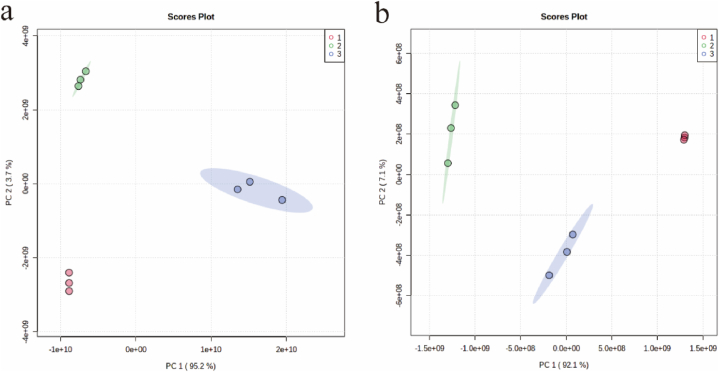
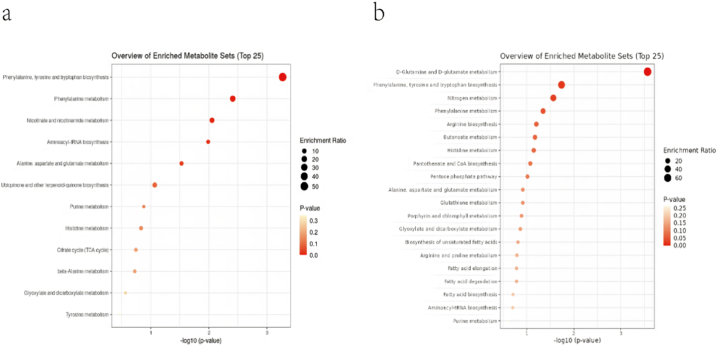
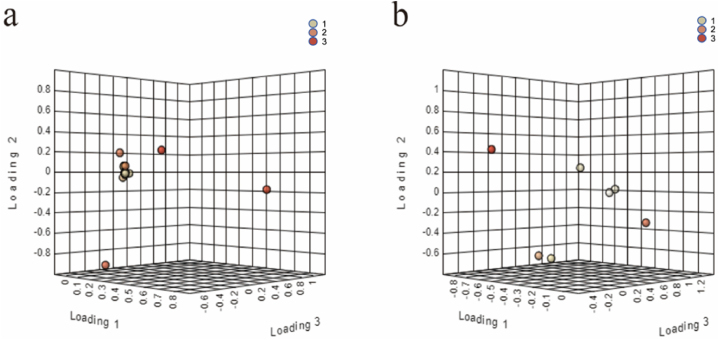
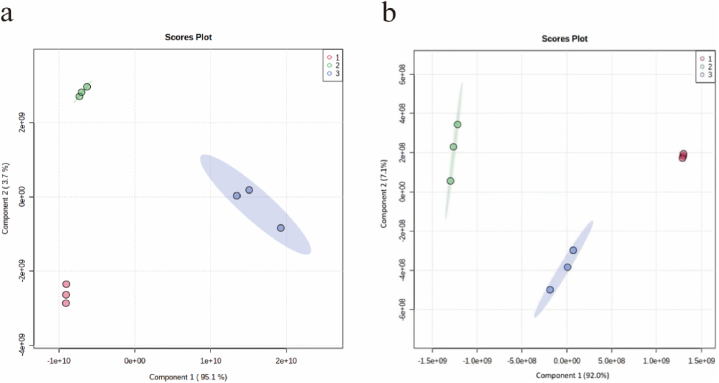
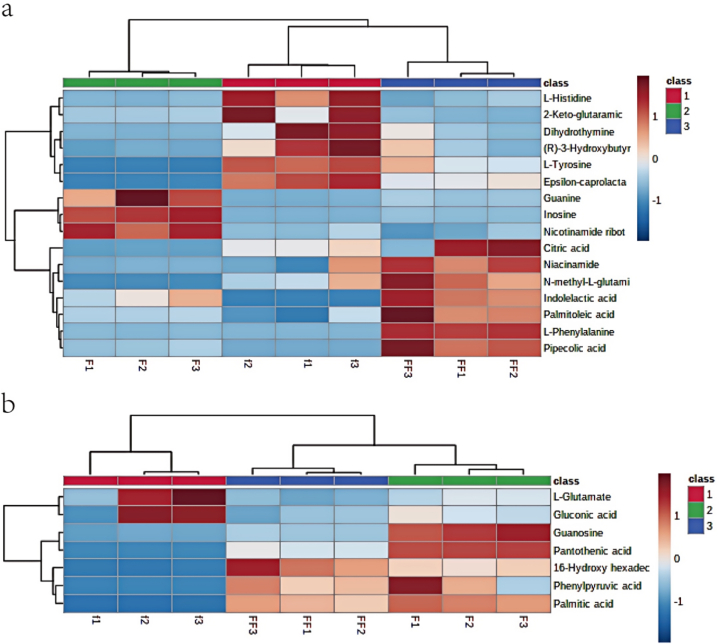
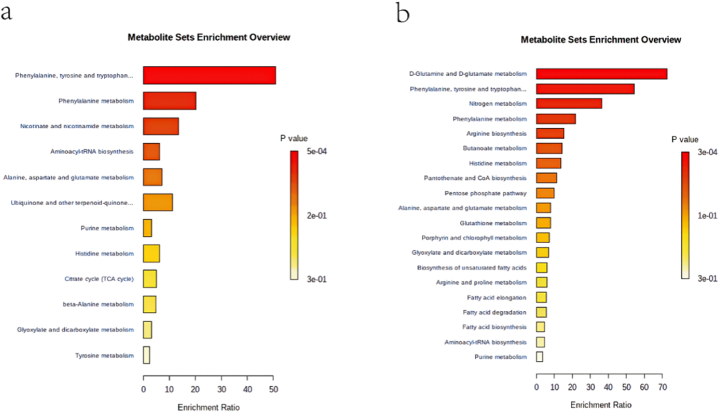
Camel milk is a nutrient-rich diet and fermentation affects its nutritional value and probiotic function. In this study, sour camel milk and oat jujube sour camel milk were prepared using fermentation bacteria agent TR1, and the metabolites of camel milk, sour camel milk and oat jujube sour camel milk were detected using a non-targeted metabolomics approach using liquid chromatography-mass spectrometry (LC-MS).The results showed that the partial least squares discriminant analysis (PLS-DA) with 100 % accuracy and good predictive power detected 343 components in positive ion mode and 220 components in negative ion mode. The differential metabolites were mainly organic acids, amino acids, esters, vitamins and other substances contained in camel milk.It showed that there were significant differences in the metabolites of camel milk, sour camel milk and oat jujube sour camel milk. Based on the pathway enrichment analysis of the three dairy products in the KEGG database, 12 metabolic pathways mainly involved in the positive ion mode and 20 metabolic pathways mainly involved in the negative ion mode were identified. The main biochemical metabolic pathways and signal transduction pathways of the differential metabolites of the three dairy products were obtained. This study provides theoretical support for improving the nutritional quality and probiotic function of camel milk and fermented camel milk products and provides a basis for the development of relevant processing technologies and products for camel milk and fermented camel milk.
骆驼奶是一种营养丰富的食物,发酵会影响其营养价值和益生菌功能。在本研究中,使用发酵菌剂TR1制备了酸骆驼奶和燕麦枣酸骆驼奶,并采用液相色谱-质谱联用(LC-MS)的非靶向代谢组学方法检测了骆驼奶、酸骆驼奶和燕麦枣酸骆驼奶的代谢产物。结果表明,偏最小二乘判别分析(PLS-DA)在正离子模式下检测到343种成分,负离子模式下检测到220种成分,准确率达100%且具有良好的预测能力。差异代谢产物主要是骆驼奶中含有的有机酸、氨基酸、酯类、维生素等物质。结果表明,骆驼奶、酸骆驼奶和燕麦枣酸骆驼奶的代谢产物存在显著差异。基于KEGG数据库中三种奶制品的代谢途径富集分析,确定了正离子模式下主要涉及的12条代谢途径和负离子模式下主要涉及的20条代谢途径。得到了三种奶制品差异代谢产物的主要生化代谢途径和信号转导途径。本研究为提高骆驼奶及发酵骆驼奶制品的营养品质和益生菌功能提供了理论支持,为骆驼奶及发酵骆驼奶相关加工技术和产品的开发提供了依据。