Veras Victor Rezende, da Cruz Paiva Lima Grayce Ellen, da Ponte Melo Ivana, Fernandes Virginia Oliveira, de Moura Lopes Fabia Karine, do Amaral Camila Lopes, Castelo Maria Helane Gurgel, Queiroz Larissa Luna, Araújo Jessica Silveira, Valerio Cynthia Melissa, Montenegro Junior Renan Magalhães
Brazilian Group for the Study of Inherited and Acquired Lipodystrophies (BRAZLIPO), Fortaleza, CE, Brazil.
Clinical Research Unit, Walter Cantídio University Hospital, Federal University of Ceará/EBSERH, Fortaleza, CE, Brazil.
Diabetol Metab Syndr. 2024 Sep 4;16(1):216. doi: 10.1186/s13098-024-01413-w.
Familial Partial Lipodystrophy (FPLD) is a disease with wide clinical and genetic variation, with seven different subtypes described. Until genetic testing becomes feasible in clinical practice, non-invasive tools are used to evaluate body composition in lipodystrophic patients. This study aimed to analyze the different anthropometric parameters used for screening and diagnosis of FPLD, such as thigh skinfold thickness (TS), Köb index (Köbi), leg fat percentage (LFP), fat mass ratio (FMR) and leg-to-total fat mass ratio in grams (LTR), by dual-energy X-ray absorptiometry, focusing on determining cutoff points for TS and LFP within a Brazilian population.
Thirty-seven patients with FPLD and seventy-four healthy controls matched for body mass index, sex and age were studied. Data were collected through medical record review after signing informed consent. All participants had body fat distribution evaluated by skinfolds and DXA measures. Fasting blood samples were collected to evaluate glycemic and lipid profiles. Genetic studies were carried out on all patients. Two groups were categorized based on genetic testing and/or anthropometric characteristics: FPLD+ (positive genetic test) and FPLD1 (negative genetic testing, but positive clinical/anthropometric criteria for FPLD).
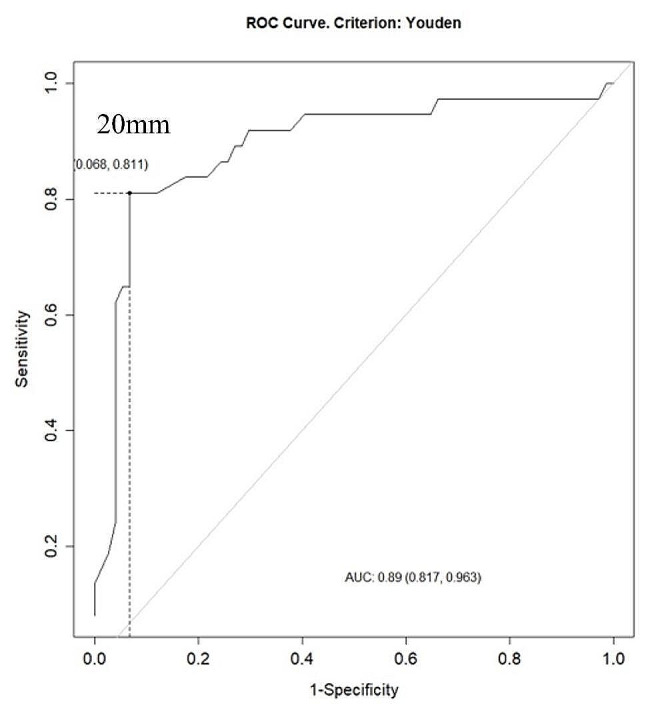
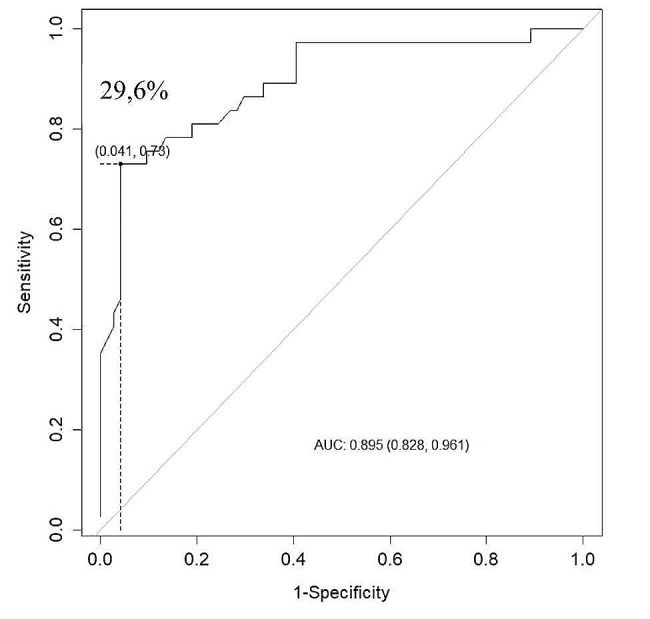
Eighteen (48.6%) patients were classified as FPLD+, and 19 (51.4%) as FPLD1. Unlike what is described in the literature, the LMNA variant in codon 582 was the most common. Among the main diagnostic parameters of FPLD, a statistical difference was observed between the groups for, Köbi, TS, LFP, FMR, and LTR. A cutoff point of 20 mm for TS in FPLD women was found, which is lower than the value classically described in the literature for the diagnosis of FPLD. Additionally, an LFP < 29.6% appears to be a useful tool to aid in the diagnosis of these women.
Combining anthropometric measurements to assess body fat distribution can lead to a more accurate diagnosis of FPLD. This study suggests new cutoff points for thigh skinfold and leg fat percentage in women with suspected FPLD in Brazil. Further studies are needed to confirm these findings.
家族性部分脂肪营养不良(FPLD)是一种临床和遗传变异广泛的疾病,已描述了七种不同亚型。在临床实践中基因检测可行之前,非侵入性工具用于评估脂肪营养不良患者的身体成分。本研究旨在分析用于FPLD筛查和诊断的不同人体测量参数,如通过双能X线吸收法测量的大腿皮褶厚度(TS)、柯布指数(Köbi)、腿部脂肪百分比(LFP)、脂肪质量比(FMR)和以克为单位的腿部与总脂肪质量比(LTR),重点是确定巴西人群中TS和LFP的截断点。
研究了37例FPLD患者和74例体重指数、性别和年龄匹配的健康对照。签署知情同意书后通过病历回顾收集数据。所有参与者通过皮褶测量和双能X线吸收法评估身体脂肪分布。采集空腹血样以评估血糖和血脂谱。对所有患者进行基因研究。根据基因检测和/或人体测量特征将两组分类:FPLD+(基因检测阳性)和FPLD1(基因检测阴性,但FPLD临床/人体测量标准阳性)。
18例(48.6%)患者被分类为FPLD+,19例(51.4%)为FPLD1。与文献中描述的不同,密码子582处的LMNA变异最为常见。在FPLD的主要诊断参数中,两组在柯布指数、TS、LFP、FMR和LTR方面存在统计学差异。发现FPLD女性TS的截断点为20毫米,低于文献中经典描述的FPLD诊断值。此外,LFP < 29.6%似乎是辅助诊断这些女性的有用工具。
结合人体测量评估身体脂肪分布可更准确地诊断FPLD。本研究提出了巴西疑似FPLD女性大腿皮褶厚度和腿部脂肪百分比的新截断点。需要进一步研究来证实这些发现。