Yu Shunan, Shu Xiong, Wang Xinyu, Sheng Yueyang, Li Shan, Wang Ying, Zhang Yanzhuo, Tao Jiangfeng, Jiang Xu, Wu Chengai
Department of Molecular Orthopedics, Beijing Research Institute of Traumatology and Orthopedics, National Center for Orthopaedics, Beijing Jishuitan Hospital, Beijing, 100035, PR China.
Department of Orthopaedics, Beijing Jishuitan Hospital, Capital Medical University, Beijing Research Institute of Traumatology and Orthopaedics, Beijing, 100035, PR China.
Heliyon. 2024 Aug 8;10(16):e35603. doi: 10.1016/j.heliyon.2024.e35603. eCollection 2024 Aug 30.
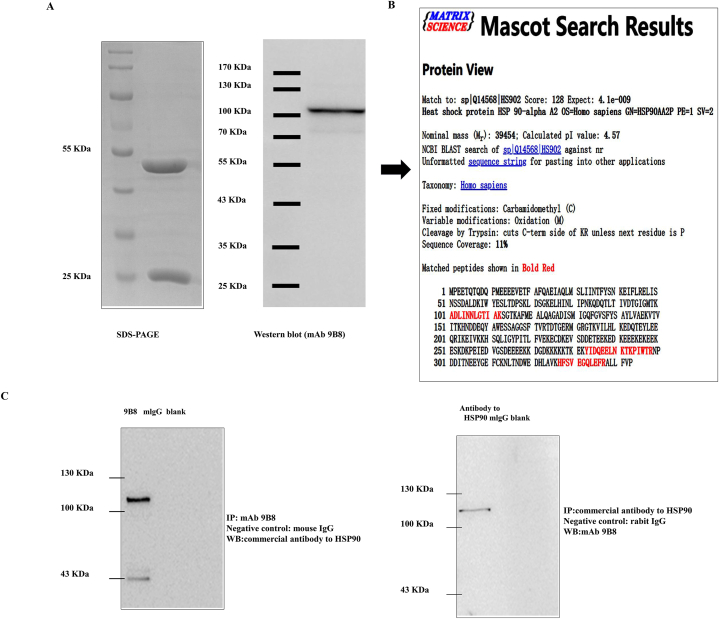
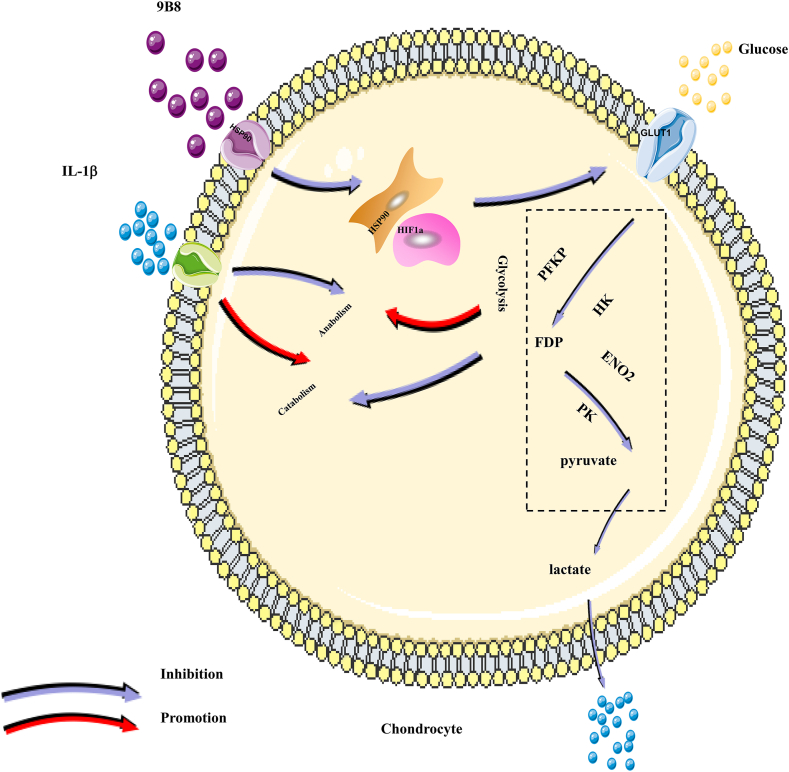
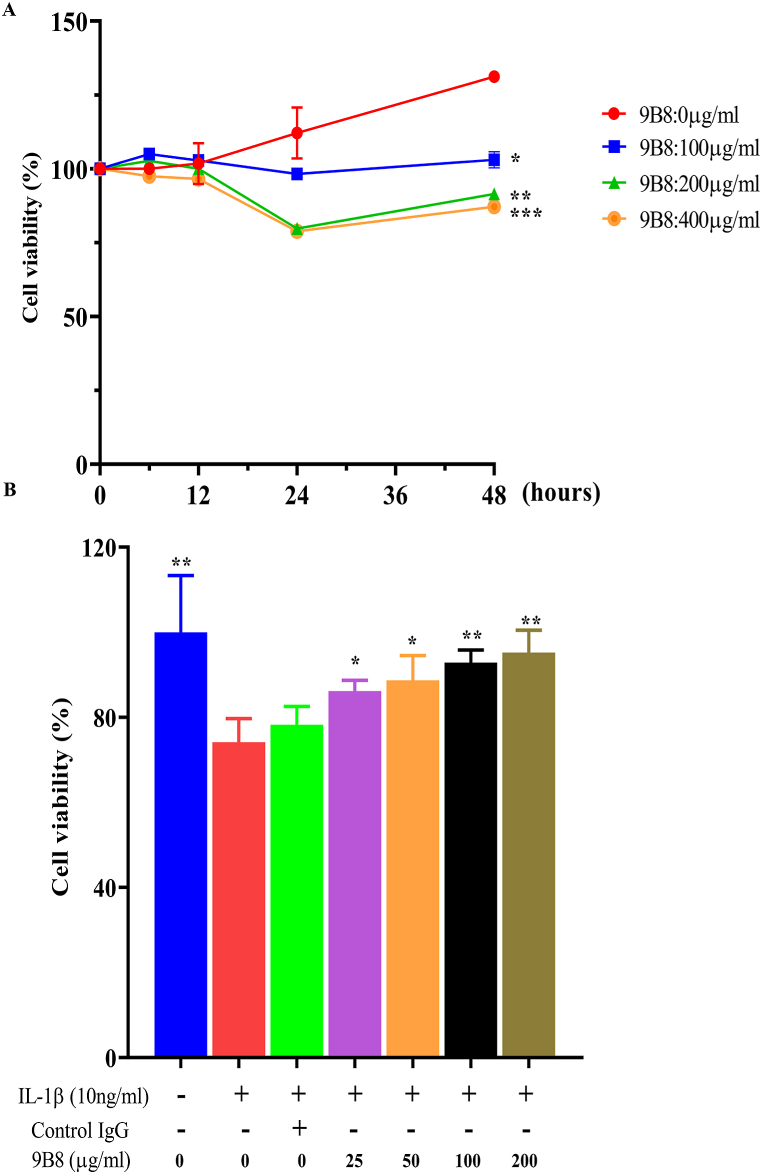
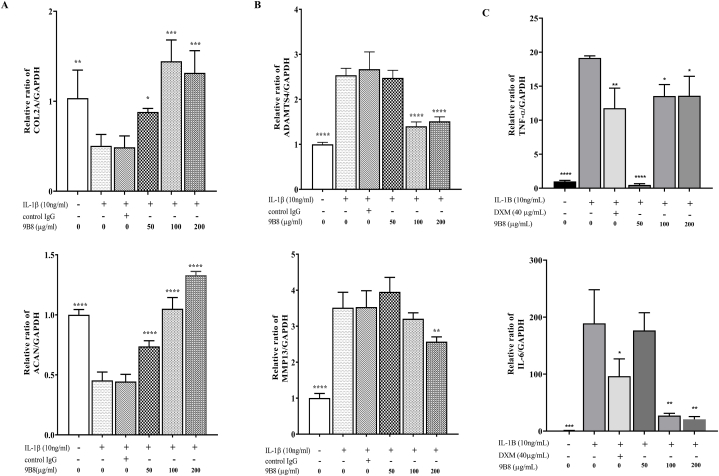
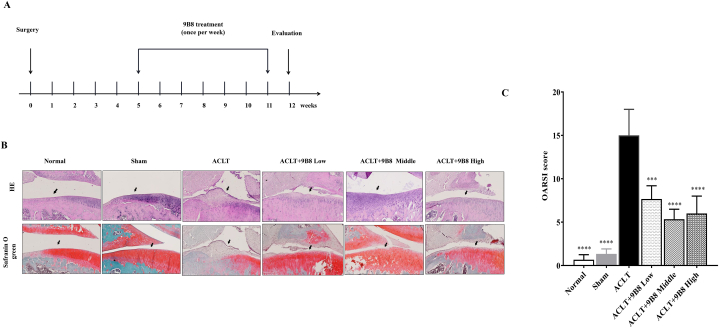
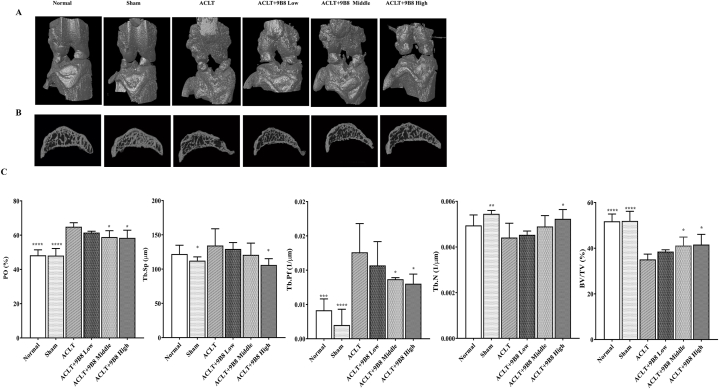
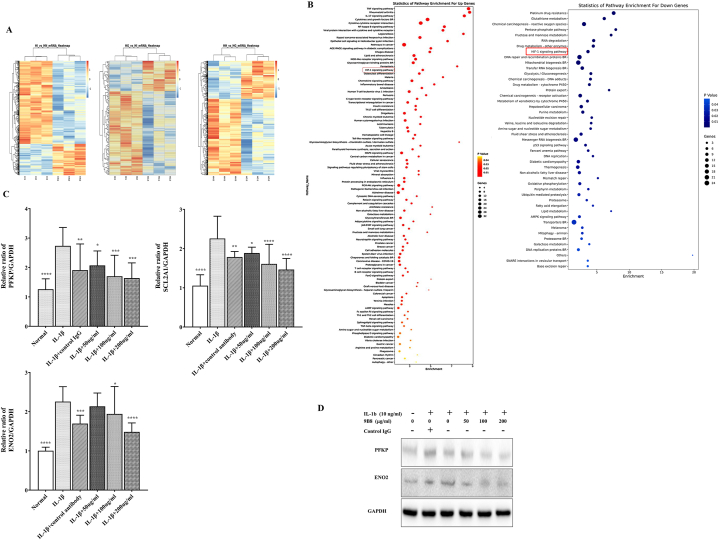
Osteoarthritis (OA) is a prevalent chronic degenerative disease that affects the bones and joints, particularly in middle-aged and elderly individuals. It is characterized by progressive joint pain, swelling, stiffness, and deformity. Notably, treatment with a heat shock protein 90 (HSP90) inhibitor has significantly curtailed cartilage destruction in a rat model of OA. Although the monoclonal antibody 9B8 against HSP90 is recognized for its anti-tumor properties, its potential therapeutic impact on OA remains uncertain. This study investigated the effects of 9B8 on OA and its associated signaling pathways in interleukin-1β (IL-1β)-stimulated human chondrocytes and a rat anterior cruciate ligament transection (ACLT) model. A specific concentration of 9B8 preserved cell viability against IL-1β-induced reduction. In vitro, 9B8 significantly reduced the expression of extracellular matrix-degrading enzyme such as disintegrin and metallopeptidase-4 (ADAMTS4) of thrombospondin motifs, matrix metalloproteinase-13 (MMP-13), as well as cellular inflammatory factors such as tumor necrosis factor-α (TNF-α) and interleukin-6 (IL-6), which were upregulated by IL-1β. In vivo, 9B8 effectively protected the articular cartilage and subchondral bone of the rat tibial plateau from ACLT-induced damage. Additionally, gene microarray analysis revealed that IL-1β substantially increased the expression of SLC2A1, PFKP, and ENO2 within the HIF-1 signaling pathway, whereas 9B8 suppressed the expression of these genes. Thus, 9B8 effectively mitigates ACLT-induced osteoarthritis in rats by modulating the HIF-1 signaling pathway, thereby inhibiting overexpression involved in glycolysis. These results collectively indicate that 9B8 is a promising novel drug for the prevention and treatment of OA.
骨关节炎(OA)是一种常见的慢性退行性疾病,会影响骨骼和关节,尤其在中年人和老年人中较为常见。其特征为进行性关节疼痛、肿胀、僵硬和畸形。值得注意的是,在骨关节炎大鼠模型中,用热休克蛋白90(HSP90)抑制剂进行治疗已显著减少了软骨破坏。尽管抗HSP90单克隆抗体9B8因其抗肿瘤特性而被认可,但其对骨关节炎的潜在治疗作用仍不确定。本研究在白细胞介素-1β(IL-1β)刺激的人软骨细胞和大鼠前交叉韧带横断(ACLT)模型中,研究了9B8对骨关节炎及其相关信号通路的影响。特定浓度的9B8可保持细胞活力,抵抗IL-1β诱导的细胞活力降低。在体外,9B8显著降低了细胞外基质降解酶(如含血小板反应蛋白基序的解聚素和金属蛋白酶-4(ADAMTS4)、基质金属蛋白酶-13(MMP-13))以及细胞炎性因子(如肿瘤坏死因子-α(TNF-α)和白细胞介素-6(IL-6))的表达,这些因子在IL-1β作用下被上调。在体内,9B有效保护大鼠胫骨平台的关节软骨和软骨下骨免受ACLT诱导的损伤。此外,基因微阵列分析显示,IL-1β显著增加了HIF-1信号通路中SLC2A1、PFKP和ENO2的表达,而9B8抑制了这些基因的表达。因此,9B通过调节HIF-1信号通路有效减轻大鼠ACLT诱导的骨关节炎,从而抑制糖酵解相关的过表达。这些结果共同表明,9B8是一种有前景的预防和治疗骨关节炎的新型药物。