Laboratory of Molecular Orthopaedics, Beijing Research Institute of Orthopaedics and Traumatology, Beijing JiShuiTan Hospital, No. 31 Xinjiekou E Road, Xicheng, Beijing, 100035, People's Republic of China.
Department of Pathology, Tianjin First Central Hospital, Tianjin, People's Republic of China.
Stem Cell Res Ther. 2021 Feb 12;12(1):119. doi: 10.1186/s13287-021-02160-9.
Tumor-associated antigens (TAAs) can be targeted in cancer therapy. We previously identified a monoclonal antibody (mAb) 12C7, which presented anti-tumor activity in lung cancer stem cells (LCSCs). Here, we aimed to identify the target antigen for 12C7 and confirm its role in LCSCs.
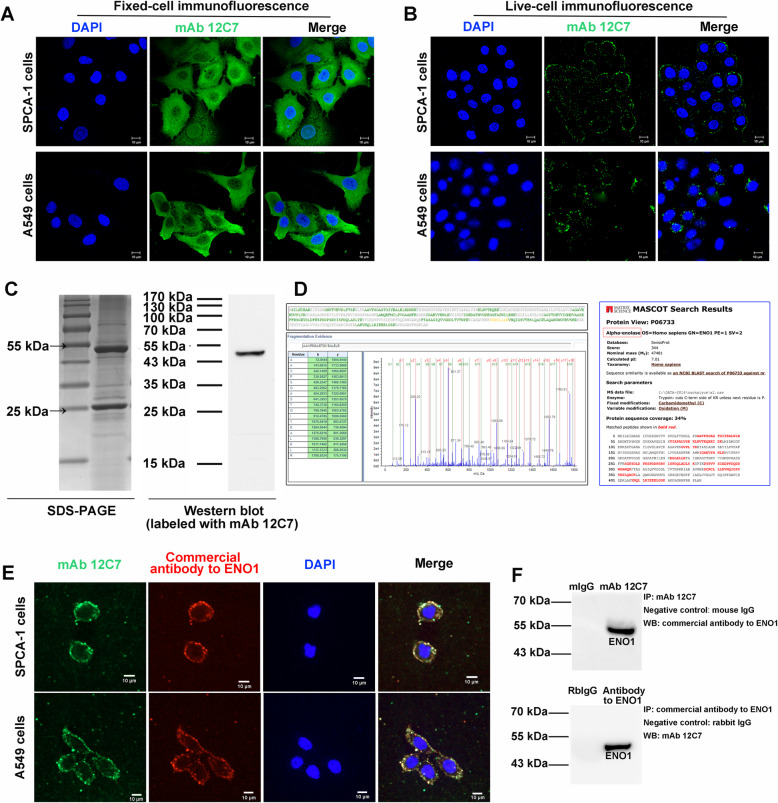
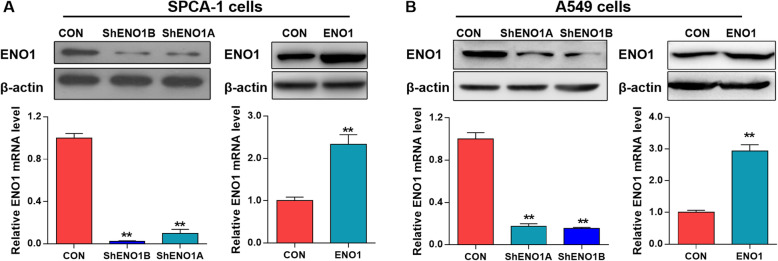
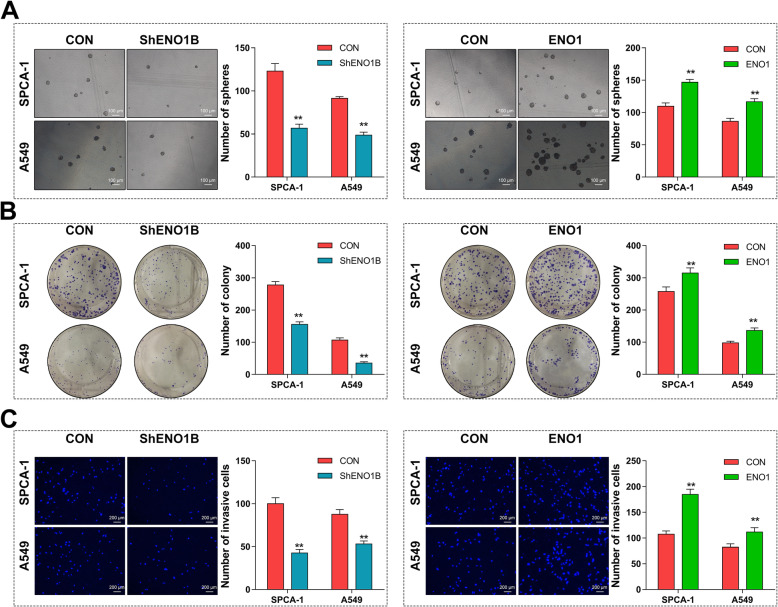
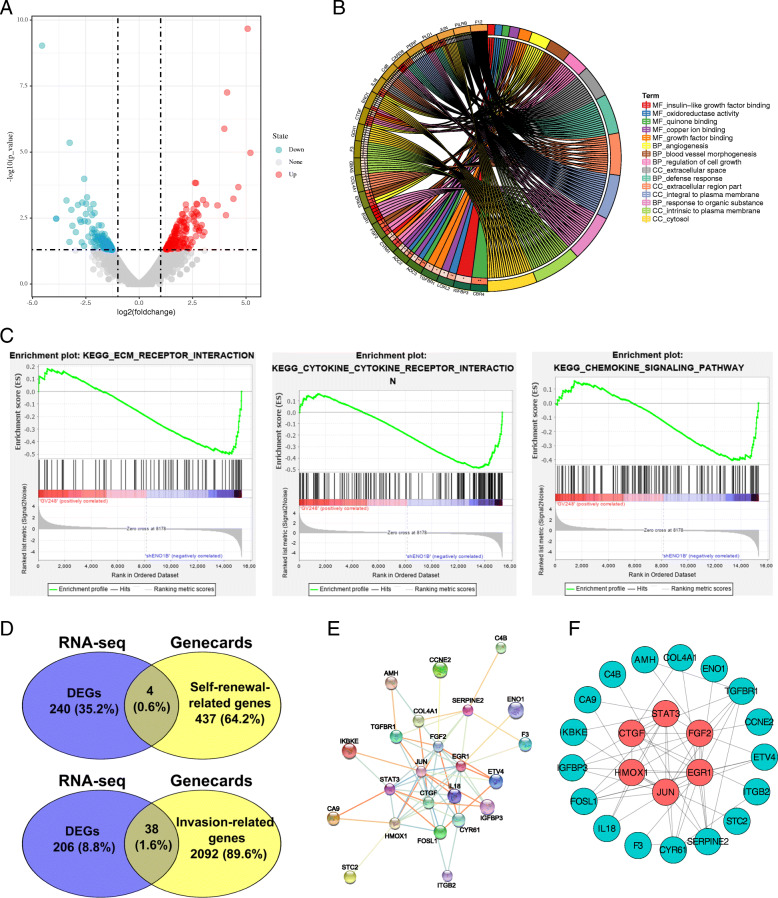
Immunofluorescence was used for antigen localization. After targeted antigen purification by electrophoresis and immunoblot, the antigen was identified by LC-MALDI-TOF/TOF mass spectrometry, immunofluorescence, and immunoprecipitation. The overexpression or silence of ENO1 was induced by lentiviral transduction. Self-renewal, growth, and invasion of LCSCs were evaluated by sphere formation, colony formation, and invasion assay, respectively. High-throughput transcriptome sequencing (RNA-seq) and bioinformatics analysis were performed to analyze downstream targets and pathways of targeted antigen.
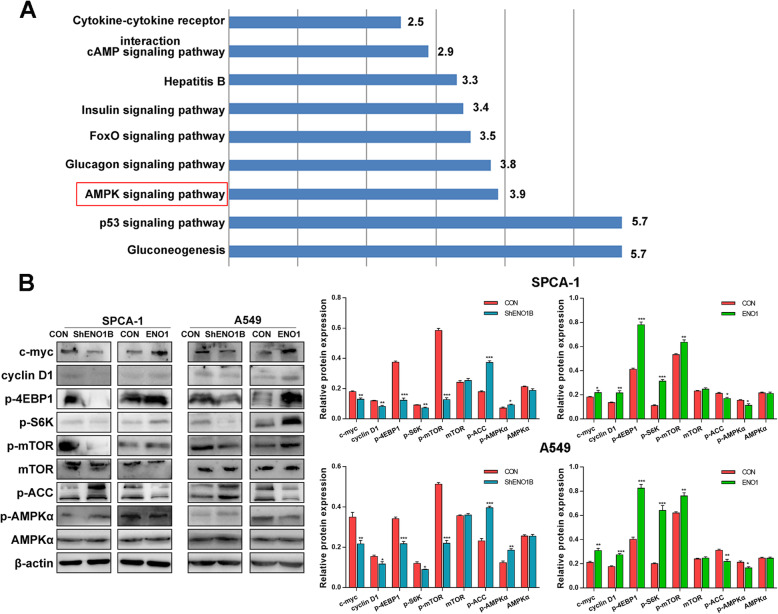
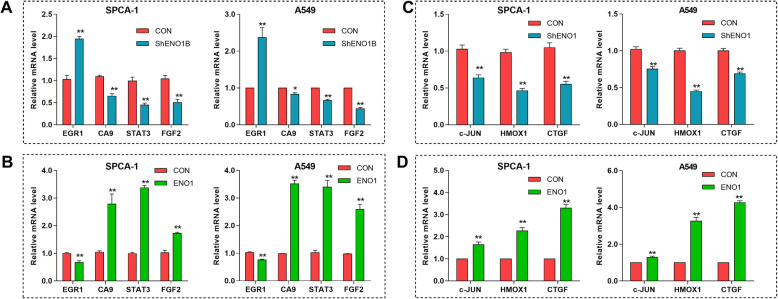
Targeted antigen showed a surface antigen expression pattern, and the 43-55 kDa protein band was identified as α-enolase (ENO1). Self-renewal, growth, and invasion abilities of LCSCs were remarkably inhibited by ENO1 downregulation, while enhanced by ENO1 upregulation. RNA-seq and bioinformatics analysis eventually screened 4 self-renewal-related and 6 invasion-related differentially expressed genes. GSEA analysis and qRT-PCR verified that ENO1 regulated self-renewal, invasion-related genes, and pathways. KEGG pathway analysis and immunoblot demonstrated that ENO1 inactivated AMPK pathway and activated mTOR pathway in LCSCs.
ENO1 is identified as a targeted antigen of mAb 12C7 and plays a pivotal role in facilitating self-renewal, growth, and invasion of LCSCs. These findings provide a potent therapeutic target for the stem cell therapy for lung cancer and have potential to improve the anti-tumor activity of 12C7.
肿瘤相关抗原 (TAA) 可作为癌症治疗的靶点。我们之前鉴定了一种单克隆抗体 (mAb) 12C7,它在肺癌干细胞 (LCSC) 中具有抗肿瘤活性。在此,我们旨在鉴定 12C7 的靶抗原,并确认其在 LCSC 中的作用。
采用免疫荧光法进行抗原定位。经电泳和免疫印迹进行靶向抗原纯化后,采用 LC-MALDI-TOF/TOF 质谱、免疫荧光和免疫沉淀法鉴定抗原。通过慢病毒转导诱导 ENO1 的过表达或沉默。通过球体形成、集落形成和侵袭试验分别评估 LCSC 的自我更新、生长和侵袭能力。进行高通量转录组测序 (RNA-seq) 和生物信息学分析,以分析靶向抗原的下游靶标和途径。
靶抗原表现为表面抗原表达模式,43-55 kDa 蛋白带被鉴定为α-烯醇化酶 (ENO1)。ENO1 下调显著抑制 LCSC 的自我更新、生长和侵袭能力,而 ENO1 上调则增强其能力。RNA-seq 和生物信息学分析最终筛选出 4 个与自我更新相关和 6 个与侵袭相关的差异表达基因。GSEA 分析和 qRT-PCR 验证了 ENO1 调节自我更新、侵袭相关基因和途径。KEGG 通路分析和免疫印迹表明,ENO1 在 LCSC 中使 AMPK 通路失活并激活 mTOR 通路。
ENO1 被鉴定为 mAb 12C7 的靶向抗原,在促进 LCSC 的自我更新、生长和侵袭中发挥关键作用。这些发现为肺癌干细胞治疗提供了一个有效的治疗靶点,并有可能提高 12C7 的抗肿瘤活性。