Kirubakaran Sneha, Kumar Koshila, Worley Paul, Pimlott Joanne, Greenhill Jennene
University of Queensland, Rockhampton, QLD, Australia.
Flinders University College of Medicine and Public Health, Adelaide, SA, Australia.
Adv Health Sci Educ Theory Pract. 2025 Apr;30(2):645-669. doi: 10.1007/s10459-024-10370-y. Epub 2024 Sep 4.
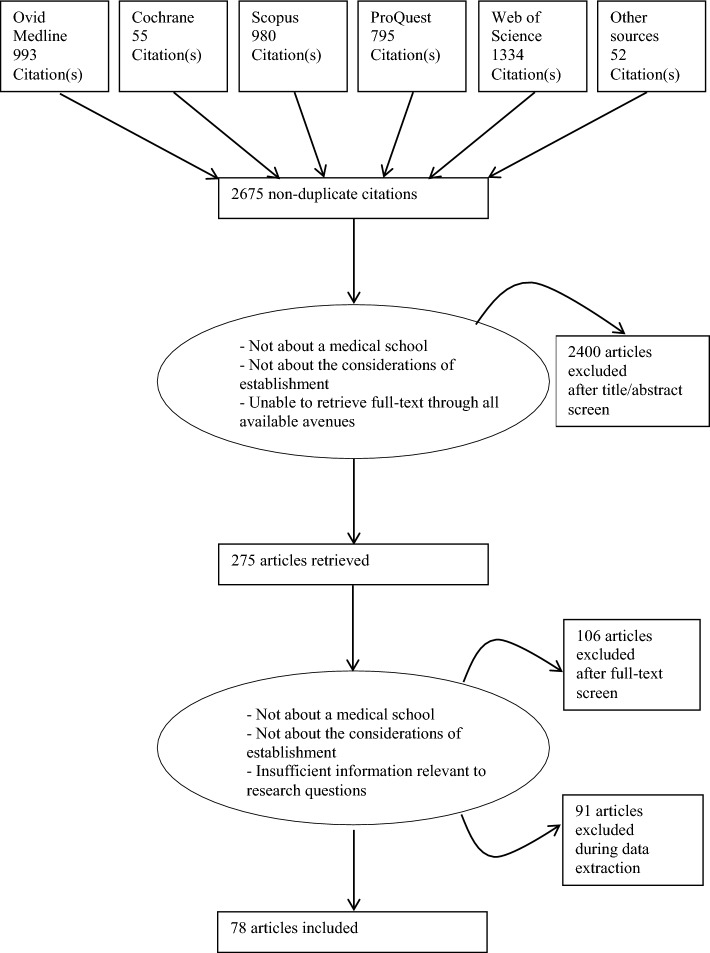
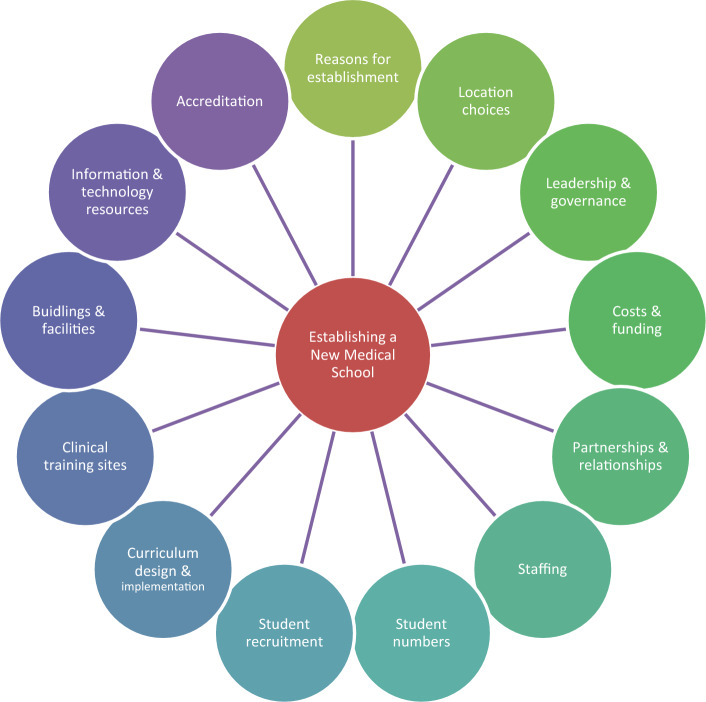
Establishing new medical schools in medically under-served regions is suggested as part of the solution to the problem of doctor shortages and maldistributions. Establishing a new medical school is, however, a complex undertaking with high financial and political stakes. Critically, the evidence-base for this significant activity has not previously been elucidated. This paper presents the first scoping review on this vitally important, yet under-researched aspect of medical education and health workforce planning. To better understand the process of new medical school establishment, this review posed two research questions: (1) What is the nature of the available literature on establishing a new medical school?; (2) What are the key factors to be considered when establishing a new medical school? Five databases and grey literature were searched in 2015 and 2021 for English-language articles, using search terms related to new medical schools and their establishment. Inclusion and exclusion criteria were based on relevance and suitability in answering the research questions. Seventy-eight articles were analysed both structurally and thematically to understand the nature of the literature and the key considerations involved. Structurally, most articles were descriptive pieces outlining personal and institutional experiences and did not make use of research methodologies nor theory. Thematically, thirteen key considerations were identified including reasons for establishment; location choices; leadership and governance; costs and funding; partnerships; staffing; student numbers; student recruitment; curriculum design and implementation; clinical training sites; buildings and facilities; information and technology resources; and accreditation. Significant gaps in the literature included how to obtain the initial permission from governing authorities and the personal costs and burnout experienced by founding leaders and staff. Although, the literature on new medical school establishment is empirically and theoretically under-developed, it is still useful and reveals a number of important considerations that could assist founding leaders and teams to maximise the outcomes and impact of their establishment efforts. Critically, the evidence-base underpinning this complex undertaking needs to be better informed by theory and research.
在医疗服务不足的地区建立新的医学院校,被认为是解决医生短缺和分布不均问题的部分解决方案。然而,建立一所新的医学院校是一项复杂的任务,涉及高额的资金和重大的政治利益。至关重要的是,此前尚未阐明这一重大活动的证据基础。本文首次对医学教育和卫生人力规划这一至关重要但研究不足的方面进行了范围界定审查。为了更好地理解新医学院校的建立过程,本审查提出了两个研究问题:(1)关于建立新医学院校的现有文献的性质是什么?(2)建立新医学院校时需要考虑的关键因素有哪些?2015年和2021年,在五个数据库和灰色文献中搜索了英文文章,使用了与新医学院校及其建立相关的搜索词。纳入和排除标准基于回答研究问题的相关性和适用性。对78篇文章进行了结构和主题分析,以了解文献的性质和所涉及的关键考虑因素。在结构上,大多数文章是描述个人和机构经验的描述性文章,没有使用研究方法或理论。在主题上,确定了13个关键考虑因素,包括建立的原因;选址;领导与治理;成本与资金;合作伙伴关系;人员配备;学生人数;学生招募;课程设计与实施;临床培训地点;建筑与设施;信息与技术资源;以及认证。文献中的重大空白包括如何获得管理当局的初步许可,以及创始领导人和工作人员所经历的个人成本和倦怠。尽管关于新医学院校建立的文献在实证和理论方面仍不够完善,但它仍然有用,并揭示了一些重要的考虑因素,这些因素可以帮助创始领导人和团队最大限度地提高其建立工作的成果和影响。至关重要的是,这一复杂任务的证据基础需要通过理论和研究得到更好的充实。