Department of Electrical Engineering, The Pennsylvania State University, University Park, Pennsylvania 16802, United States.
Center for Atomically Thin Multifunctional Coatings, The Pennsylvania State University, University Park, Pennsylvania 16802, United States.
ACS Appl Mater Interfaces. 2024 Sep 18;16(37):49041-49052. doi: 10.1021/acsami.4c09571. Epub 2024 Sep 4.
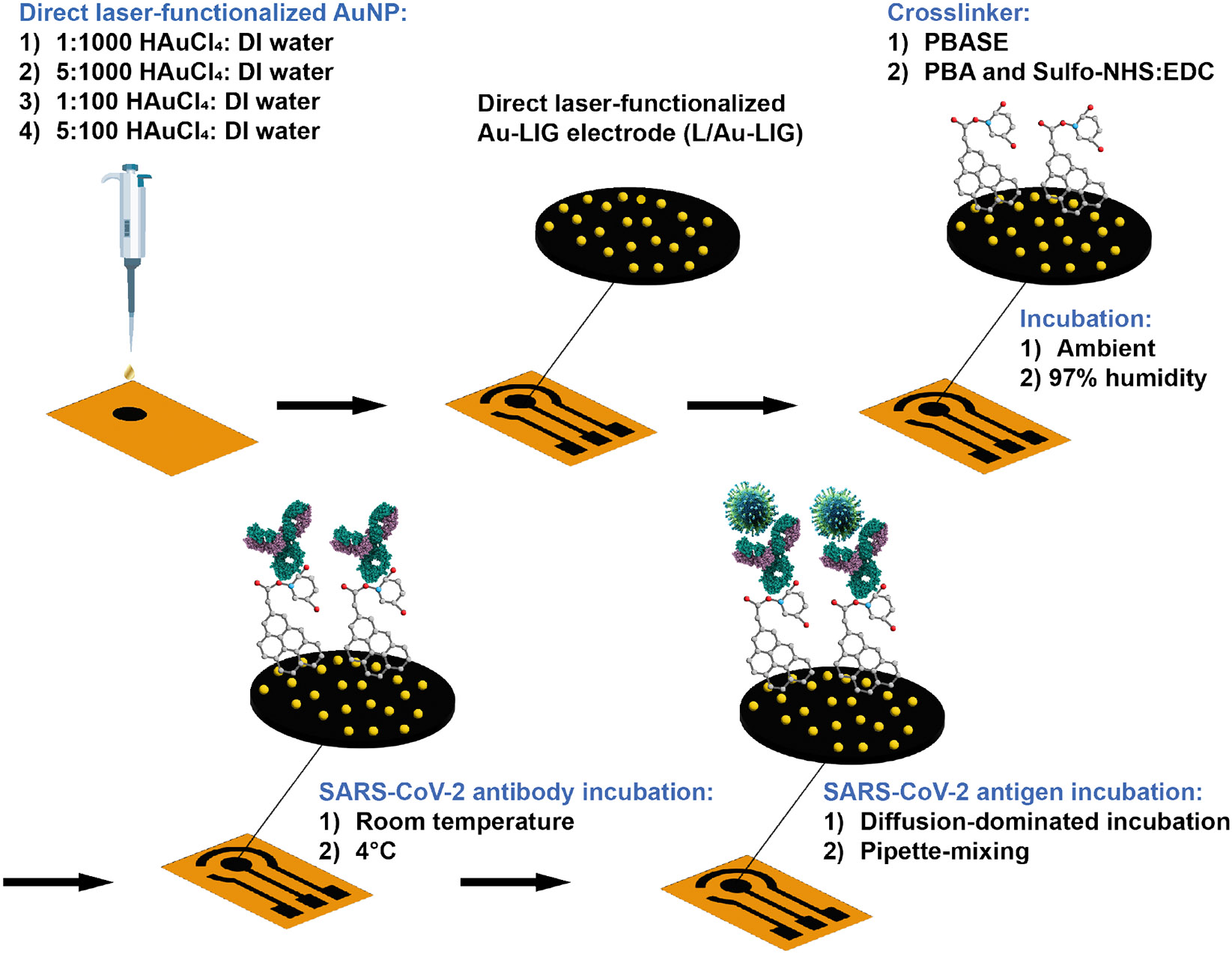
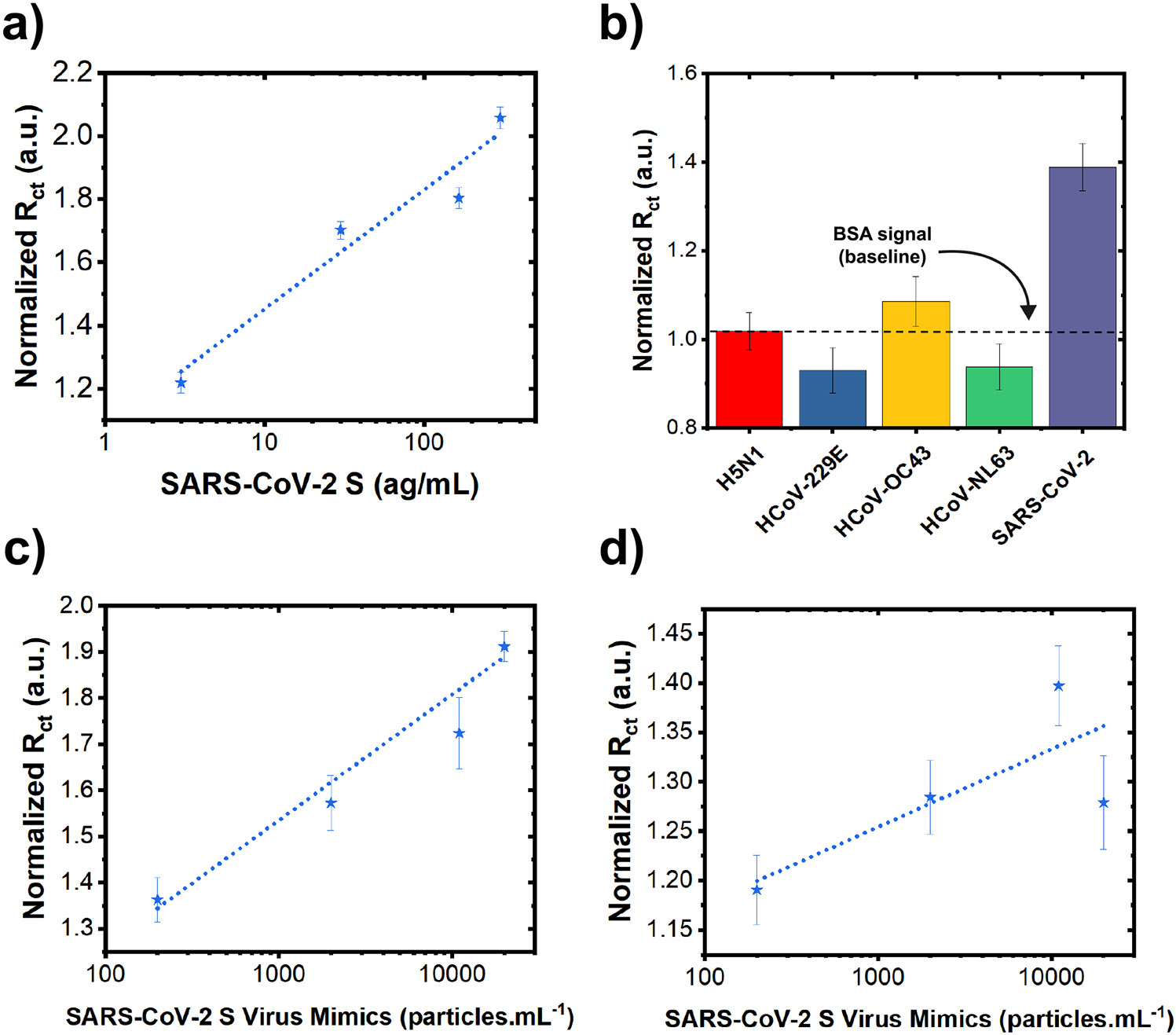
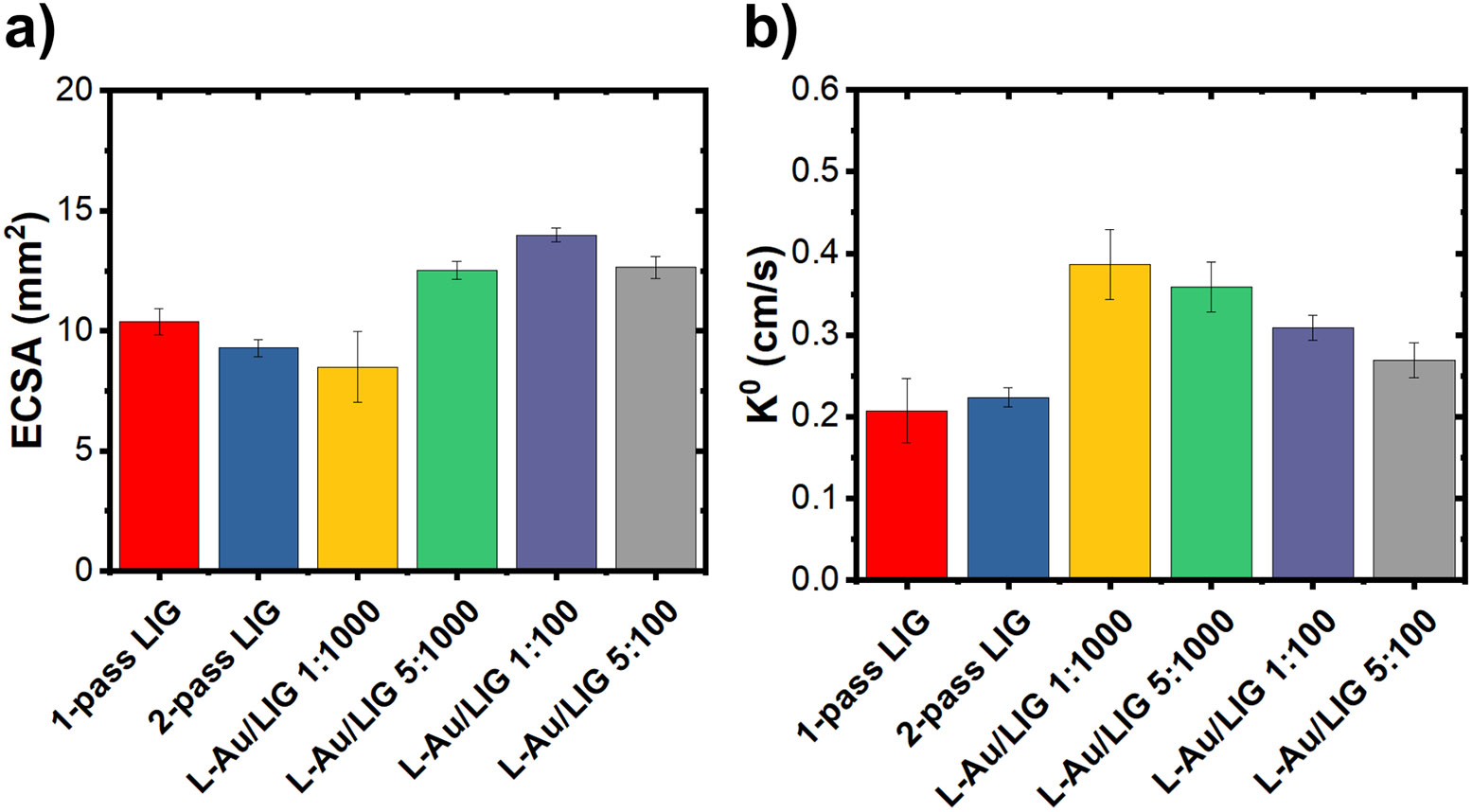
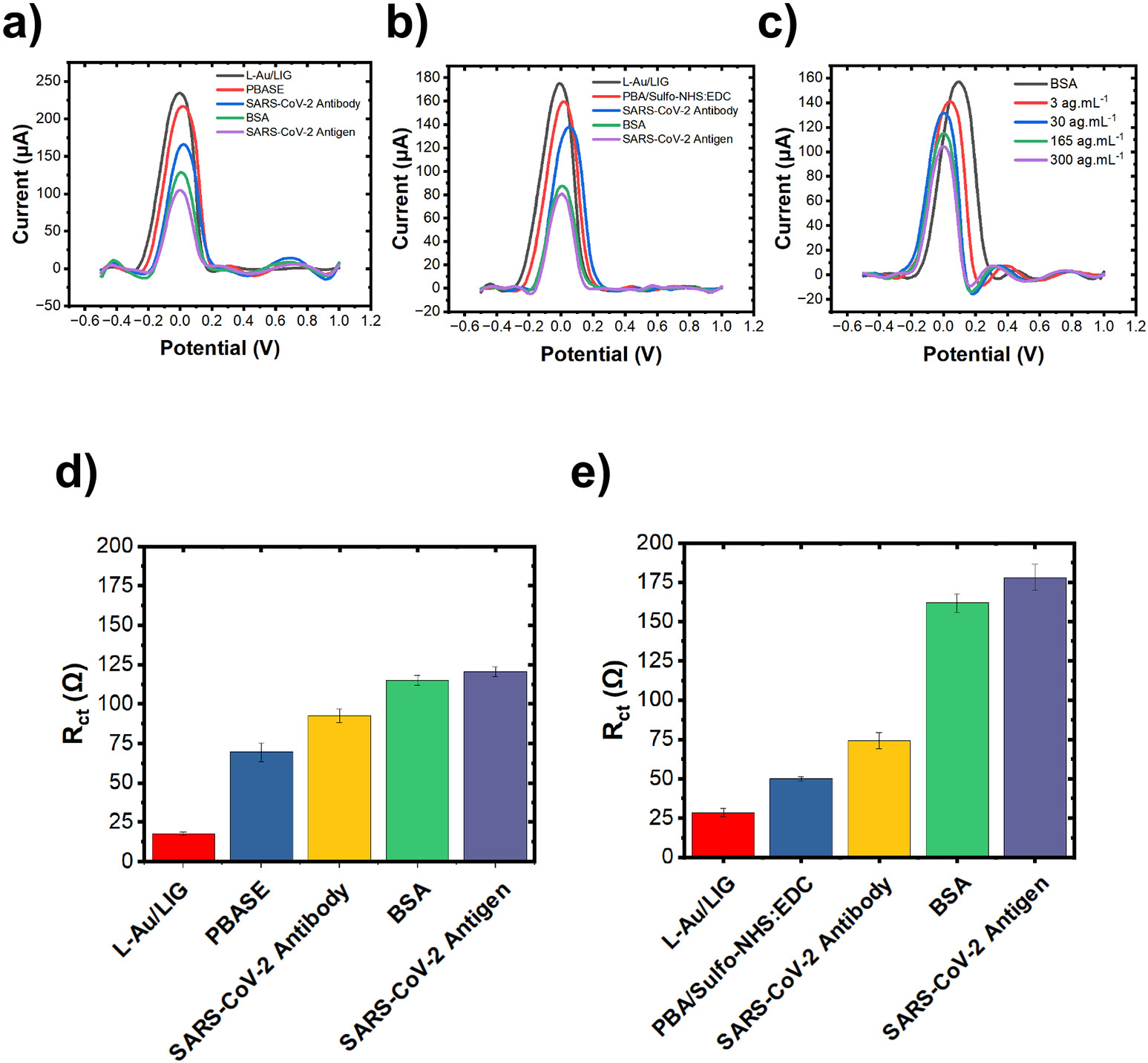
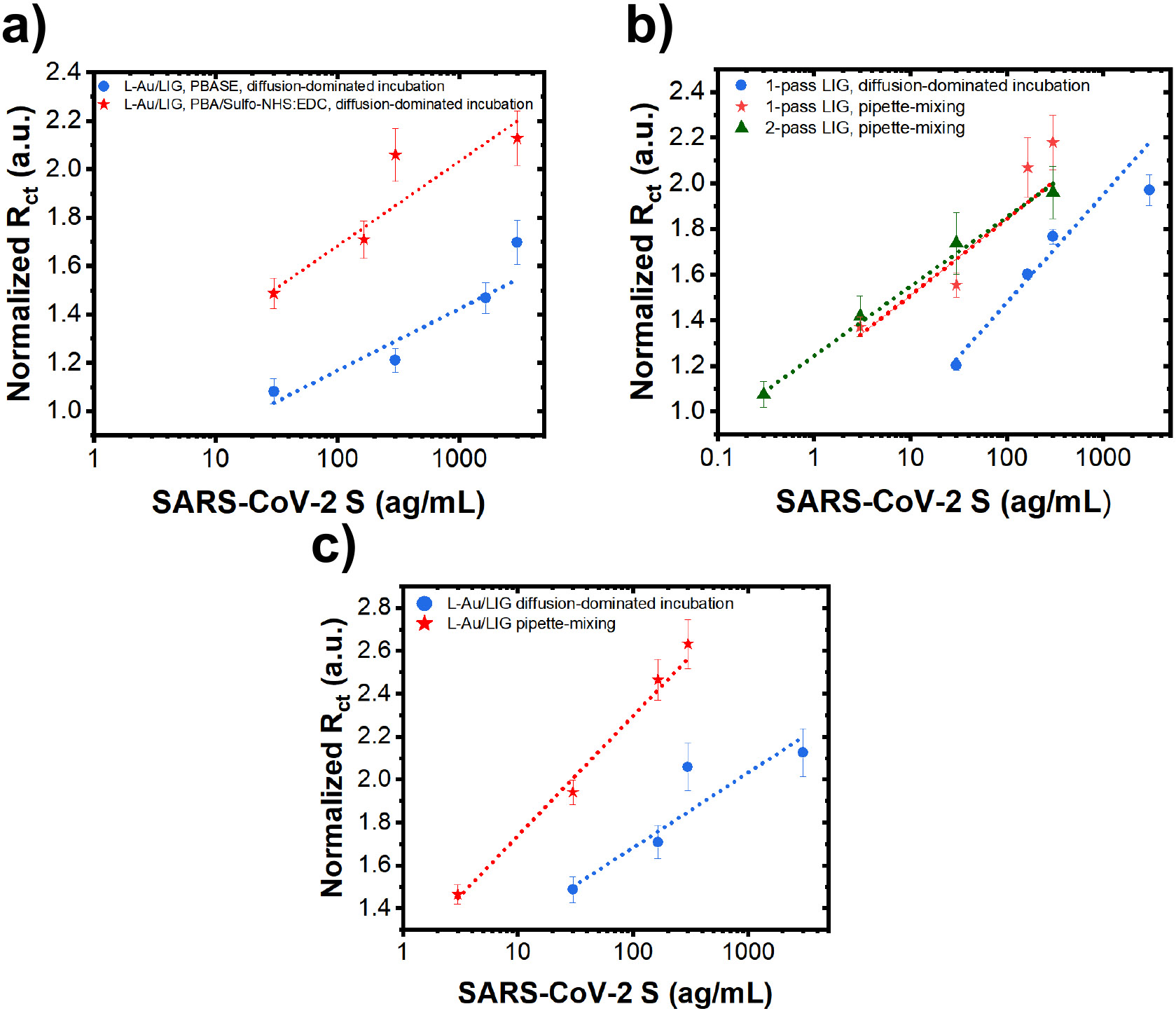
The 2019 coronavirus (COVID-19) pandemic impaired global health, disrupted society, and slowed the economy. Early detection of the infection using highly sensitive diagnostics is crucial in preventing the disease's spread. In this paper, we demonstrate electrochemical sensors based on laser induced graphene (LIG) functionalized directly with gold (Au) nanostructures for the detection of SARS-CoV-2 with an outstanding limit of detection (LOD) of ∼1.2 ag·mL. To achieve the optimum performance, we explored various functionalization parameters to elucidate their impact on the LOD, sensitivity, and linearity. Specifically, we investigated the effect of (i) gold precursor concentration, (ii) cross-linker chemistry, (iii) cross-linker and antibody incubation conditions, and (iv) antigen-sensor interaction (diffusion-dominated incubation vs pipette-mixing), as there is a lack of a systematic study of these parameters. Our benchmarking analysis highlights the critical role of the antigen-sensor interaction and cross-linker chemistry. We showed that pipette-mixing enhances sensitivity and LOD by more than 1.6- and 5.5-fold, respectively, and also enables multimodal readout compared to diffusion-dominated incubation. Moreover, the PBA/Sulfo-NHS: EDC cross-linker improves the sensitivity and LOD compared to PBASE. The sensors demonstrate excellent selectivity against other viruses, including HCoV-229E, HCoV-OC43, HCoV-NL63, and influenza H5N1. Beyond the ability to detect antigen fragments, our sensors enable the detection of antigen-coated virion mimics (which are a better representative of the real infection) down to an ultralow concentration of ∼5 particles·mL.
2019 年冠状病毒(COVID-19)大流行损害了全球健康,扰乱了社会秩序,减缓了经济发展。使用高度敏感的诊断方法尽早发现感染对于阻止疾病传播至关重要。在本文中,我们展示了基于激光诱导石墨烯(LIG)的电化学传感器,该传感器直接用金(Au)纳米结构功能化,用于检测 SARS-CoV-2,其检测限(LOD)低至约 1.2 ag·mL。为了获得最佳性能,我们探索了各种功能化参数,以阐明它们对 LOD、灵敏度和线性度的影响。具体来说,我们研究了以下四个方面的影响:(i)金前体浓度,(ii)交联剂化学,(iii)交联剂和抗体孵育条件,以及(iv)抗原-传感器相互作用(扩散控制孵育与移液混合)。我们的基准分析强调了抗原-传感器相互作用和交联剂化学的关键作用。我们表明,与扩散控制孵育相比,移液混合可将灵敏度和 LOD 分别提高 1.6 倍和 5.5 倍以上,并且还可以实现多模态读出。此外,PBA/Sulfo-NHS:EDC 交联剂比 PBASE 提高了灵敏度和 LOD。与其他病毒(包括 HCoV-229E、HCoV-OC43、HCoV-NL63 和流感 H5N1)相比,该传感器具有出色的选择性。除了能够检测抗原片段外,我们的传感器还能够检测抗原包被的病毒样颗粒模拟物(更能代表真实感染),其浓度低至约 5 个颗粒·mL。