Department of Electrical and Communication Engineering, College of Engineering, United Arab Emirates University, P. O. Box 15551, Al Ain, United Arab Emirates.
Zayed Center for Health Sciences, United Arab Emirates University, Al Ain, United Arab Emirates.
Sci Rep. 2022 Oct 28;12(1):18155. doi: 10.1038/s41598-022-22249-2.
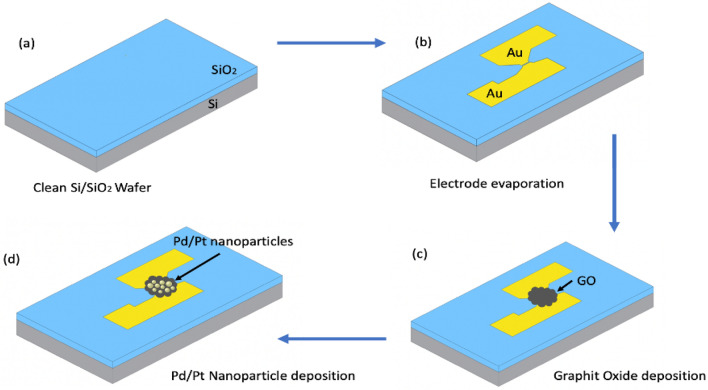
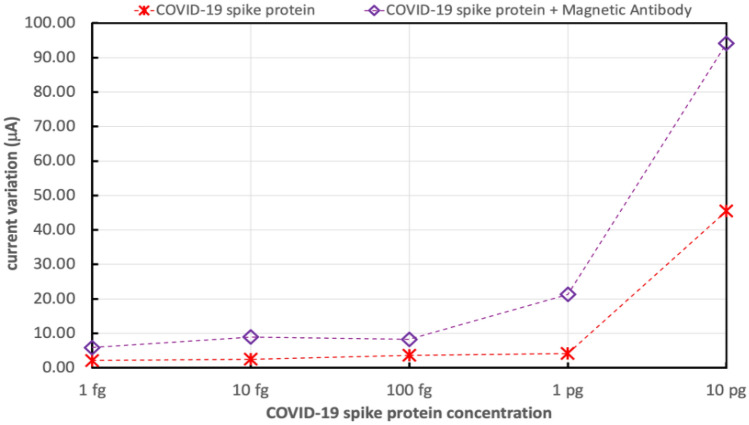
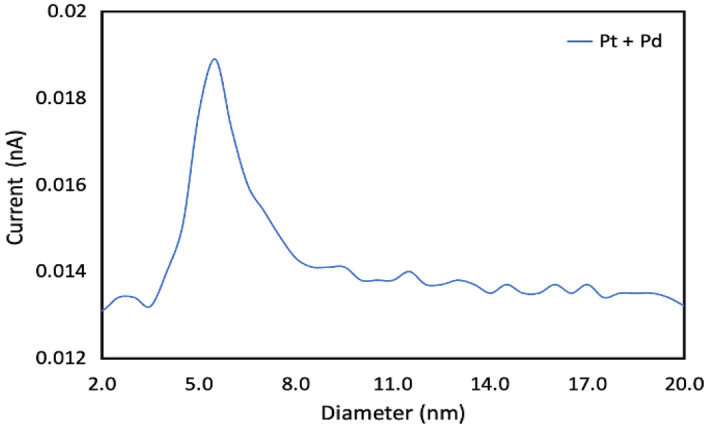
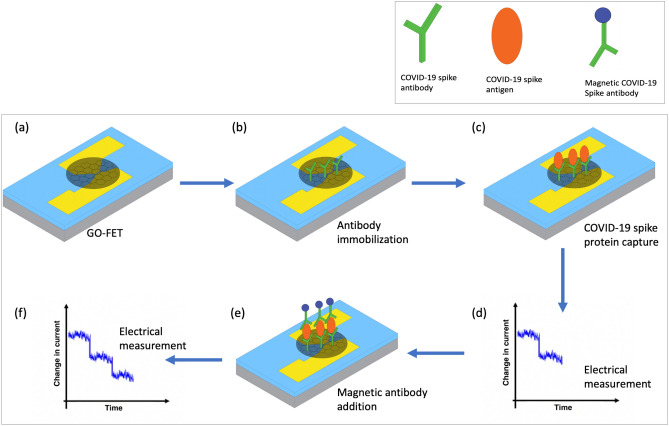
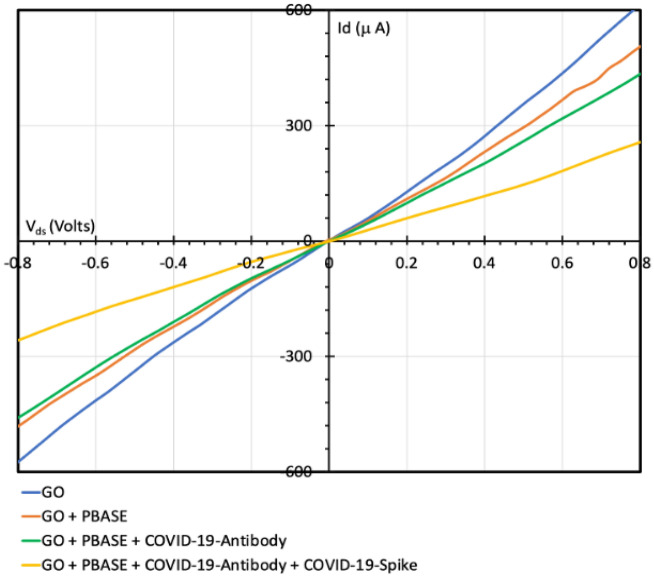
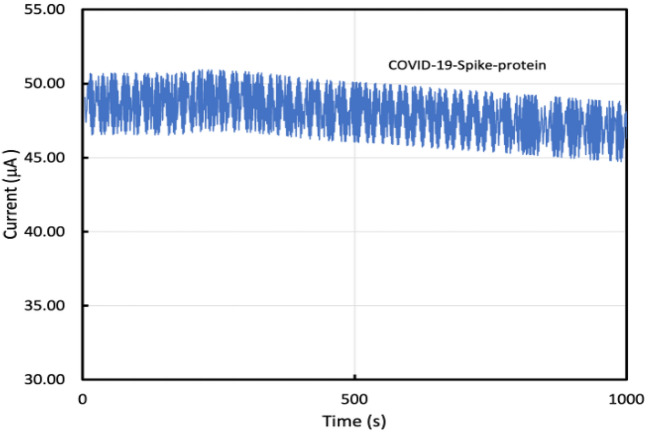
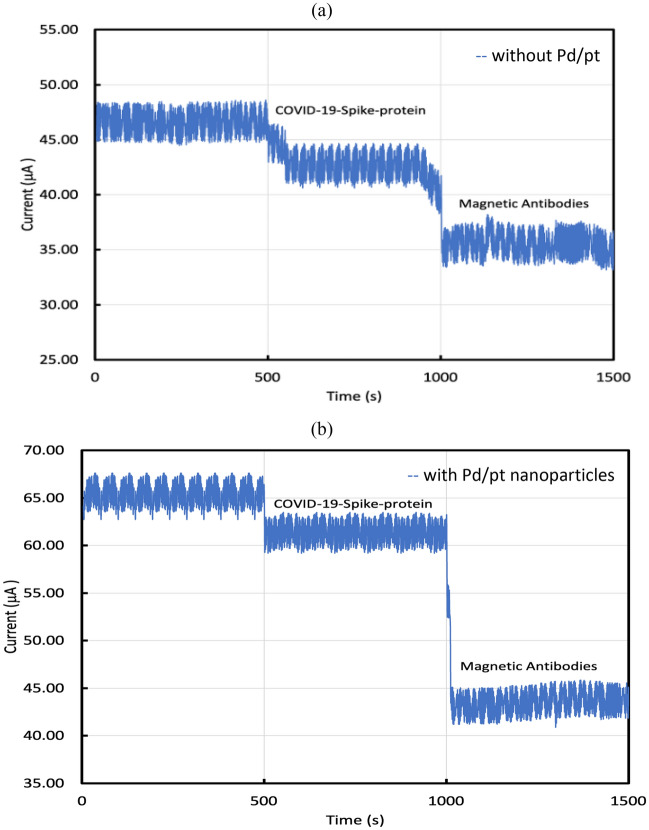
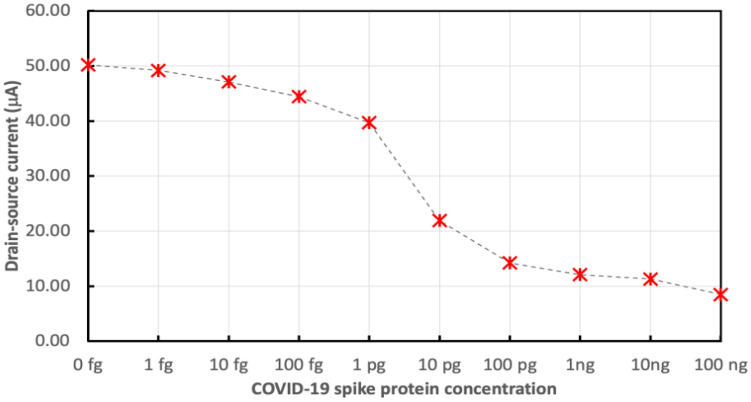
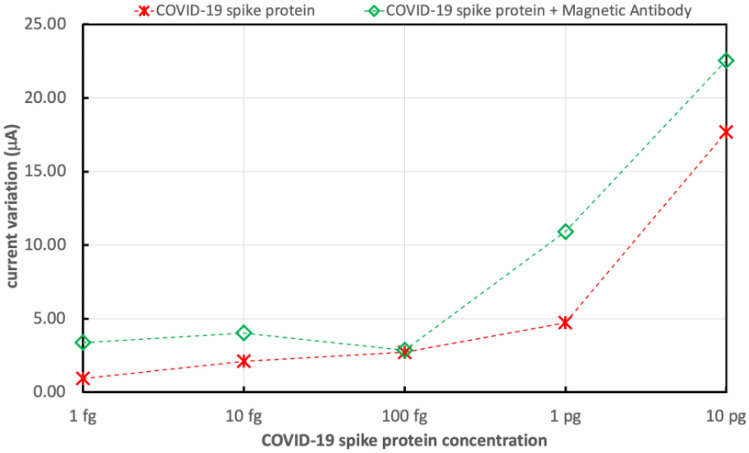
Coronavirus 2019 (COVID-19) spreads an extremely infectious disease where there is no specific treatment. COVID-19 virus had a rapid and unexpected spread rate which resulted in critical difficulties for public health and unprecedented daily life disruption. Thus, accurate, rapid, and early diagnosis of COVID-19 virus is critical to maintain public health safety. A graphite oxide-based field-effect transistor (GO-FET) was fabricated and functionalized with COVID-19 antibody for the purpose of real-time detection of COVID-19 spike protein antigen. Thermal evaporation process was used to deposit the gold electrodes on the surface of the sensor substrate. Graphite oxide channel was placed between the gold electrodes. Bimetallic nanoparticles of platinum and palladium were generated via an ultra-high vacuum (UHV) compatible system by sputtering and inert-gas condensation technique. The biosensor graphite oxide channel was immobilized with specific antibodies against the COVID-19 spike protein to achieve selectivity and specificity. This technique uses the attractive semiconductor characteristics of the graphite oxide-based materials resulting in highly specific and sensitive detection of COVID-19 spike protein. The GO-FET biosensor was decorated with bimetallic nanoparticles of platinum and palladium to investigate the improvement in the sensor sensitivity. The in-house developed biosensor limit of detection (LOD) is 1 fg/mL of COVID-19 spike antigen in phosphate-buffered saline (PBS). Moreover, magnetic labelled SARS-CoV-2 spike antibody were studied to investigate any enhancement in the sensor performance. The results indicate the successful fabrication of a promising field effect transistor biosensor for COVID-19 diagnosis.
新型冠状病毒(COVID-19)传播一种极其传染性的疾病,目前尚无特效治疗方法。COVID-19 病毒的传播速度非常快且出人意料,这给公共卫生带来了极大的困难,也前所未有地扰乱了人们的日常生活。因此,准确、快速、早期诊断 COVID-19 病毒对于维护公共卫生安全至关重要。本研究制备了一种基于氧化石墨的场效应晶体管(GO-FET),并用 COVID-19 抗体进行功能化,用于实时检测 COVID-19 刺突蛋白抗原。采用热蒸发工艺在传感器衬底表面沉积金电极。氧化石墨通道置于金电极之间。通过溅射和惰性气体冷凝技术,在超高真空(UHV)兼容系统中生成了铂和钯的双金属纳米颗粒。生物传感器的氧化石墨通道用针对 COVID-19 刺突蛋白的特异性抗体固定化,以实现选择性和特异性。该技术利用基于氧化石墨材料的半导体特性,实现了对 COVID-19 刺突蛋白的高特异性和高灵敏度检测。GO-FET 生物传感器用铂和钯的双金属纳米颗粒进行修饰,以研究传感器灵敏度的提高。该研究自主开发的生物传感器检测限(LOD)为 1 fg/mL 的磷酸盐缓冲盐水(PBS)中的 COVID-19 刺突抗原。此外,还研究了磁性标记的 SARS-CoV-2 刺突抗体,以研究其对传感器性能的任何增强作用。结果表明,成功制备了一种用于 COVID-19 诊断的有前途的场效应晶体管生物传感器。