Wang Yan, Wang Kai-Ming, Zhang Xin, Wang Wenzhao, Qian Wei, Wang Fang-Fang
State Key Laboratory of Plant Genomics, Institute of Microbiology, Chinese Academy of Sciences, Beijing, China.
School of Life Science, Yunnan University, Kunming, Yunnan, China.
PLoS Pathog. 2024 Sep 4;20(9):e1012533. doi: 10.1371/journal.ppat.1012533. eCollection 2024 Sep.
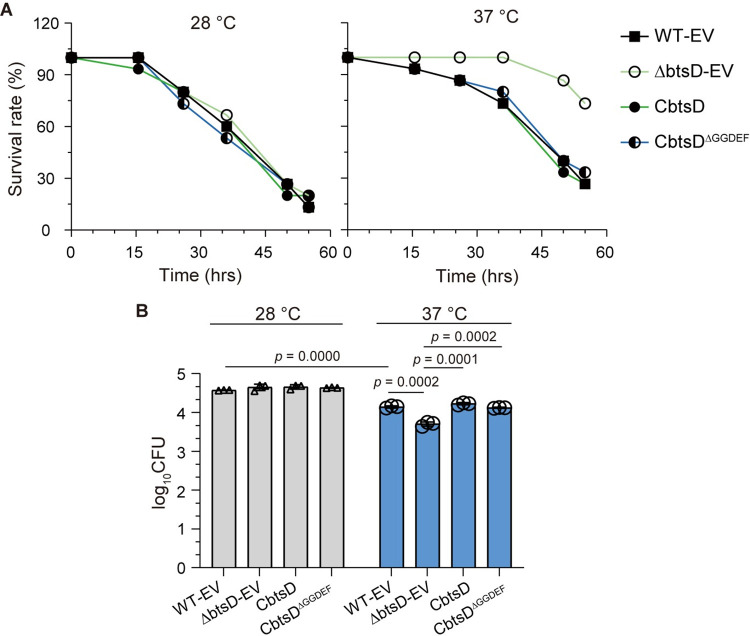
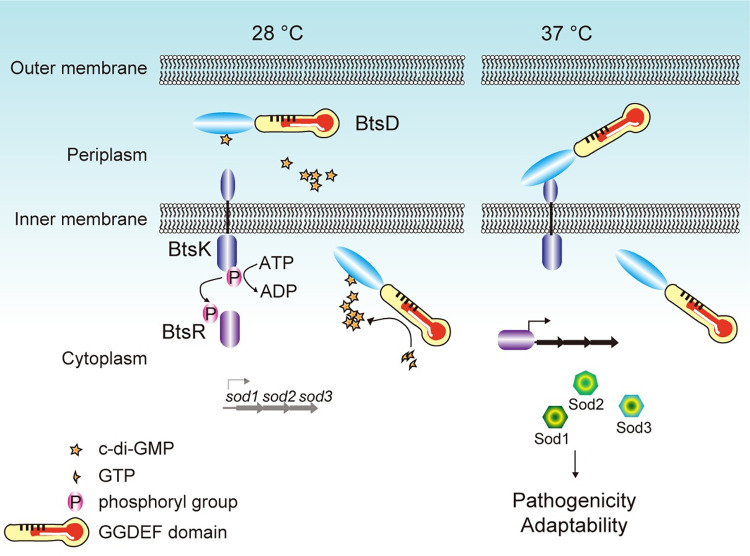
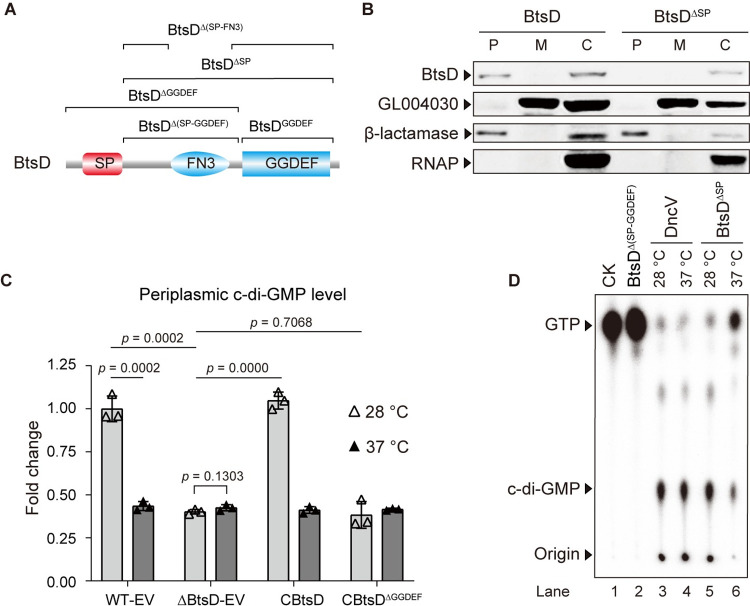
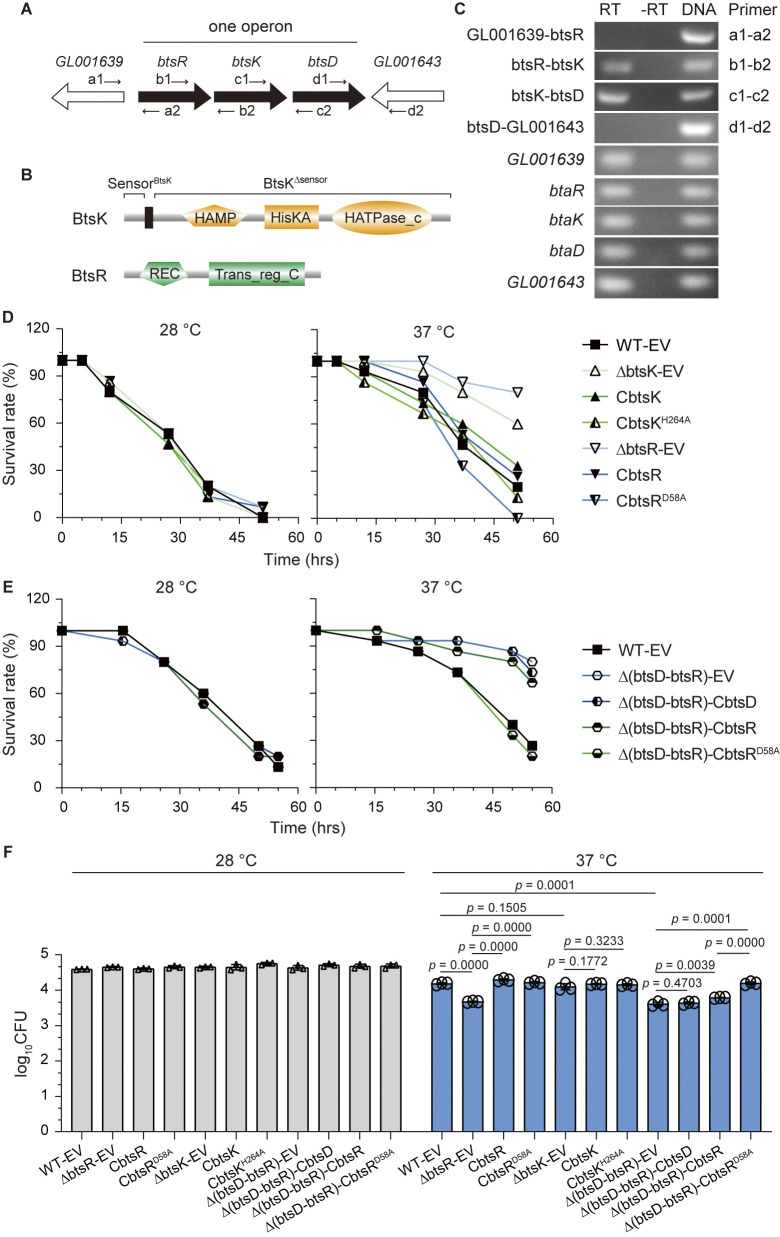
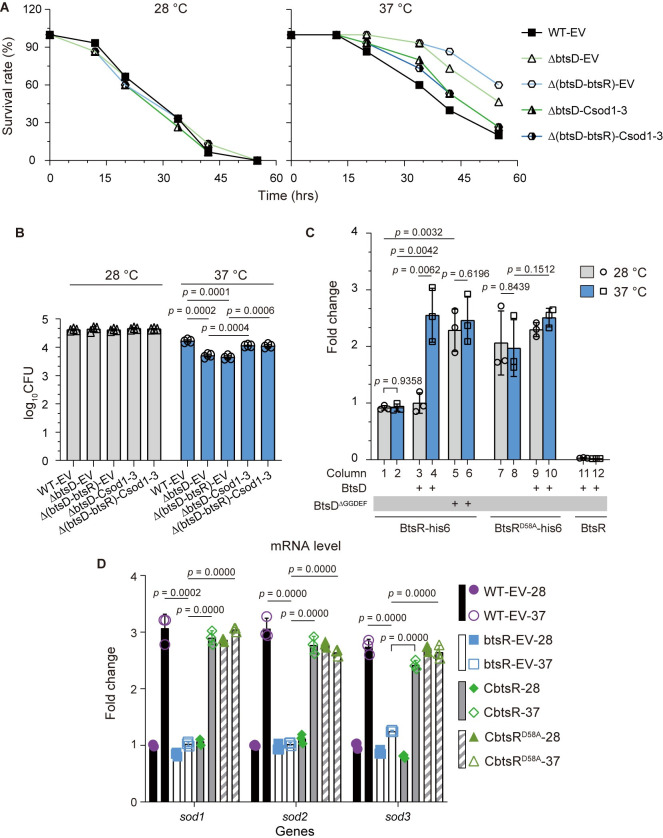
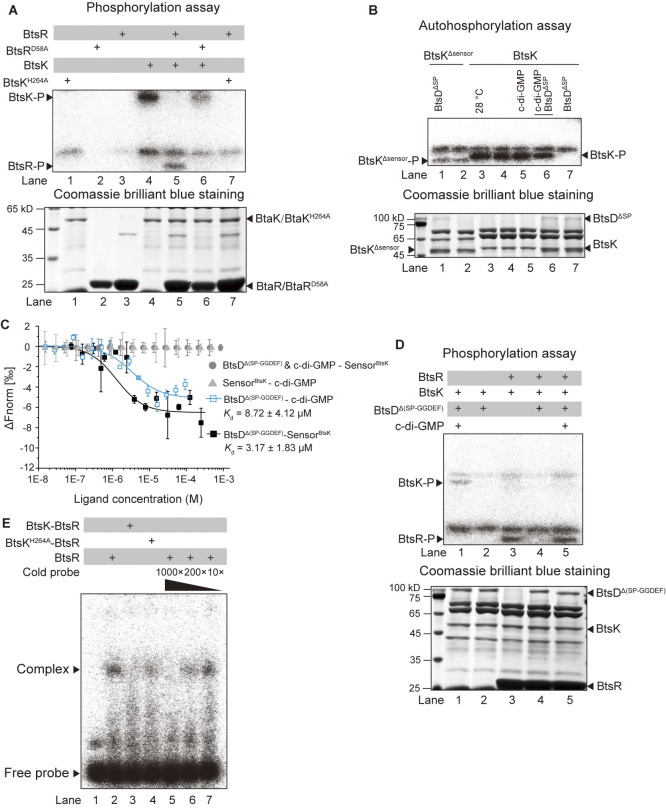
The body temperature of Warm-blooded hosts impedes and informs responses of bacteria accustomed to cooler environments. The second messenger c-di-GMP modulates bacterial behavior in response to diverse, yet largely undiscovered, stimuli. A long-standing debate persists regarding whether a local or a global c-di-GMP pool plays a critical role. Our research on a Stenotrophomonas maltophilia strain thriving at around 28°C, showcases BtsD as a thermosensor, diguanylate cyclase, and effector. It detects 37°C and diminishes c-di-GMP synthesis, resulting in a responsive sequence: the periplasmic c-di-GMP level is decreased, the N-terminal region of BtsD disengages from c-di-GMP, activates the two-component signal transduction system BtsKR, and amplifies sod1-3 transcription, thereby strengthening the bacterium's pathogenicity and adaptation during infections in 37°C warm Galleria mellonella larvae. This revelation of a single-protein c-di-GMP module introduces unrecognized dimensions to the functional and structural paradigms of c-di-GMP modules and reshapes our understanding of bacterial adaptation and pathogenicity in hosts with a body temperature around 37°C. Furthermore, the discovery of a periplasmic c-di-GMP pool governing BtsD-BtsK interactions supports the critical role of a local c-di-GMP pool.
温血宿主的体温会影响习惯较凉爽环境的细菌的反应,并为其提供信息。第二信使环二鸟苷酸(c-di-GMP)会根据各种(但大多尚未被发现的)刺激来调节细菌行为。关于局部或全局的c-di-GMP库是否起关键作用,长期以来一直存在争论。我们对嗜麦芽窄食单胞菌在约28°C环境中生长的菌株的研究表明,BtsD是一种热传感器、二鸟苷酸环化酶和效应器。它能检测到37°C并减少c-di-GMP的合成,从而引发一系列反应:周质中的c-di-GMP水平降低,BtsD的N端区域与c-di-GMP分离,激活双组分信号转导系统BtsKR,并增强sod1-3的转录,从而增强细菌在37°C的温暖大蜡螟幼虫感染过程中的致病性和适应性。这一单一蛋白c-di-GMP模块的发现为c-di-GMP模块的功能和结构范式引入了未被认识的维度,并重塑了我们对体温约为37°C的宿主中细菌适应性和致病性的理解。此外,对控制BtsD - BtsK相互作用的周质c-di-GMP库的发现支持了局部c-di-GMP库的关键作用。