Langaas Harald Christian, Salvesen Øyvind, Dyrkorn Roar, Blix Hege Salvesen, Spigset Olav
The Hospital Pharmacy in Trondheim, Edvard Griegs Gt. 10, 7030, Trondheim, Norway.
KUPP - The Norwegian Academic Detailing Program, Department of Clinical Pharmacology, St. Olav University Hospital, Trondheim, Norway.
J Gen Intern Med. 2024 Dec;39(16):3243-3252. doi: 10.1007/s11606-024-09014-z. Epub 2024 Sep 4.
Academic detailing (AD) is a one-on-one educational outreach with the goal to improve prescribing. There is insufficient evidence on the difference in impact between AD and group visits to facilitate behavior change among general practitioners (GPs).
To compare the impact of individual AD visits and group visits conveying the same content on treatment of type 2 diabetes (T2D).
Randomized controlled trial.
GPs in Central Norway, visited September - November 2018.
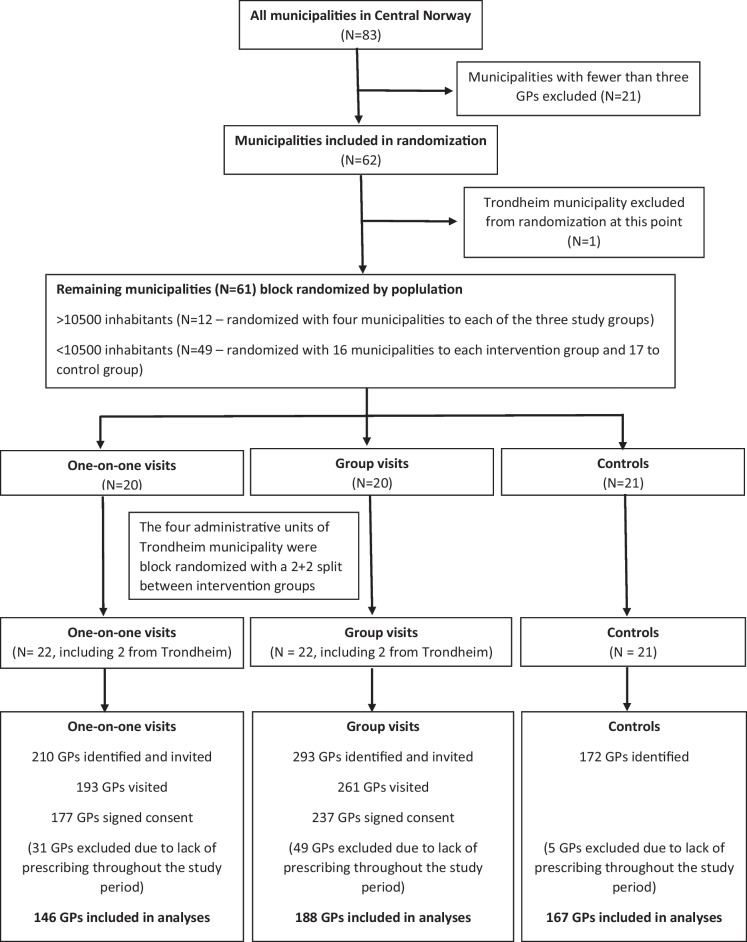
A total of 210 GPs were randomized and invited to an individual AD visit lasting 20 min; 193 were visited, of whom 146 were included in the analyses. In addition, 293 GPs were randomized and invited to a group meeting lasting 30-45 min; 261 were visited, of whom 188 were included in the analyses. Finally, 167 GPs were randomized and included in a control group. Visits were conducted by trained pharmacists and physicians.
Changes in prescribing of metformin and other T2D drugs after the intervention.
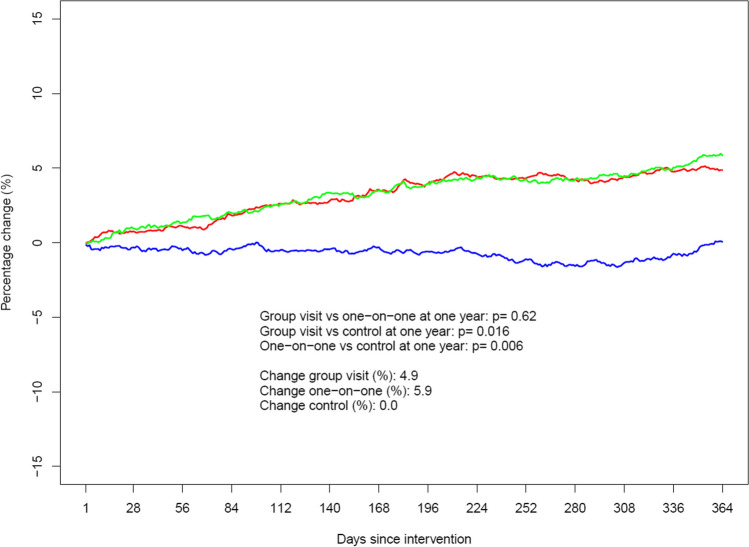
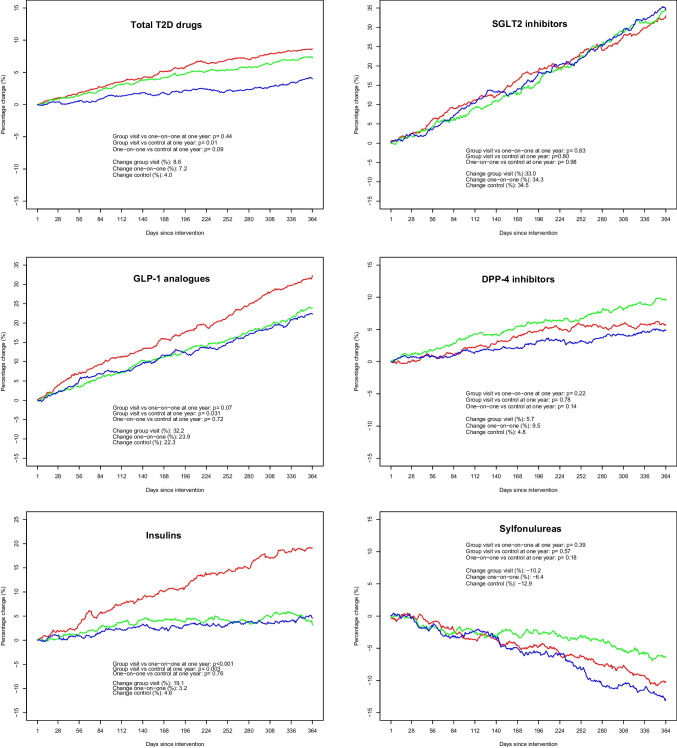
The use of metformin increased with 5.9% the year after AD and with 4.9% the year after group meetings, compared to no change (0.0%) in the control group (p = 0.006 and p = 0.016, respectively). There was no significant difference between the two intervention groups. The only drug group with a statistically significant difference between interventions was insulins, with an increase of 3.2% after AD compared to 19.1% after group visits (p < 0.001). For GLP-1 analogues (p = 0.031) and T2D drugs in total (p = 0.010), we found a significant difference between group intervention and control. Other differences between study groups did not reach statistical significance.
Short educational visits of 20-45 min impact the prescribing of drugs for T2D, either the education is given one-on-one as AD or in a group setting.
学术推广(AD)是一种一对一的教育拓展活动,旨在改善处方开具情况。关于学术推广与小组访视在促进全科医生(GP)行为改变方面的影响差异,证据不足。
比较传达相同内容的个体学术推广访视和小组访视对2型糖尿病(T2D)治疗的影响。
随机对照试验。
挪威中部的全科医生,于2018年9月至11月进行访视。
总共210名全科医生被随机分组并受邀参加一次持续20分钟的个体学术推广访视;193人接受了访视,其中146人纳入分析。此外,293名全科医生被随机分组并受邀参加一次持续30 - 45分钟的小组会议;261人接受了访视,其中188人纳入分析。最后,167名全科医生被随机分组并纳入对照组。访视由经过培训的药剂师和医生进行。
干预后二甲双胍及其他T2D药物处方的变化。
与对照组无变化(0.0%)相比,学术推广访视后一年二甲双胍的使用增加了5.9%,小组会议后一年增加了4.9%(分别为p = 0.006和p = 0.016)。两个干预组之间无显著差异。干预之间存在统计学显著差异的唯一药物类别是胰岛素,学术推广访视后增加了3.2%,而小组访视后增加了19.1%(p < 0.001)。对于胰高血糖素样肽 - 1类似物(p = 0.031)和总体T2D药物(p = 0.010),我们发现小组干预与对照组之间存在显著差异。研究组之间的其他差异未达到统计学显著性。
20 - 45分钟的简短教育访视会影响T2D药物的处方开具,无论教育是以个体学术推广访视的形式还是在小组环境中进行。