Department of Biosciences, Durham University, Durham, UK.
Laboratoire de Microbiologie et Génétique Moléculaires (LMGM), Centre de Biologie Intégrative (CBI), Université de Toulouse, CNRS, Université Toulouse III - Paul Sabatier (UT3), Toulouse, France.
Nat Commun. 2024 Sep 4;15(1):7719. doi: 10.1038/s41467-024-51934-1.
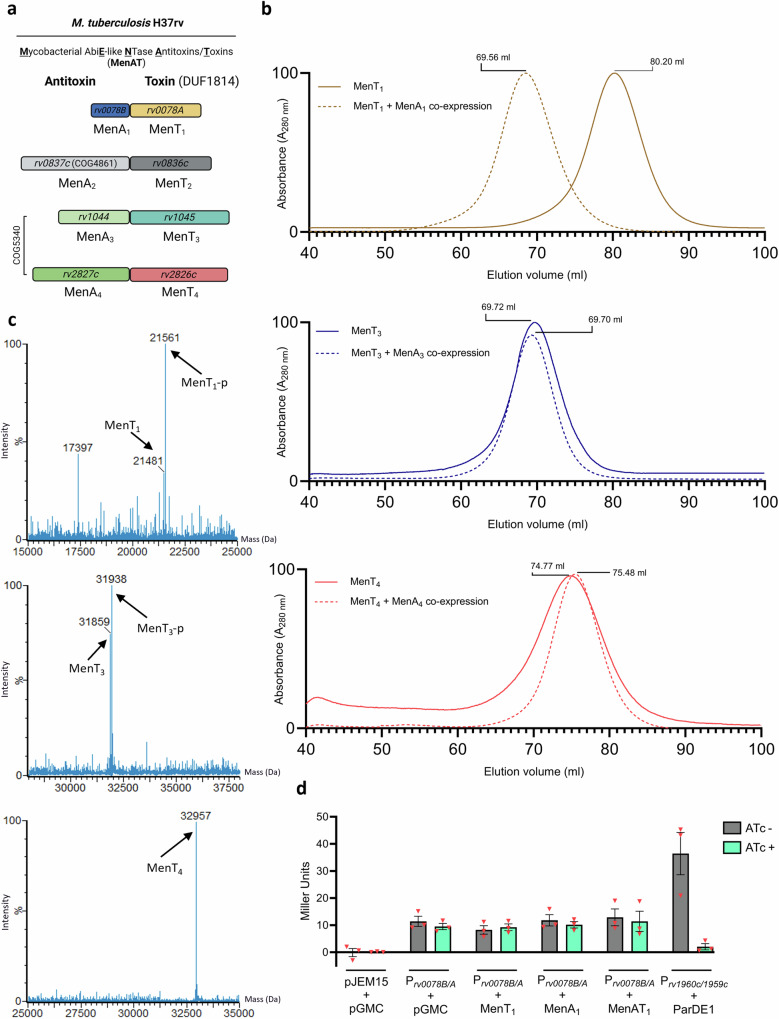
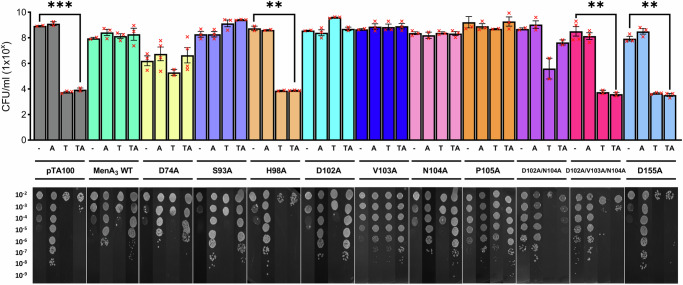
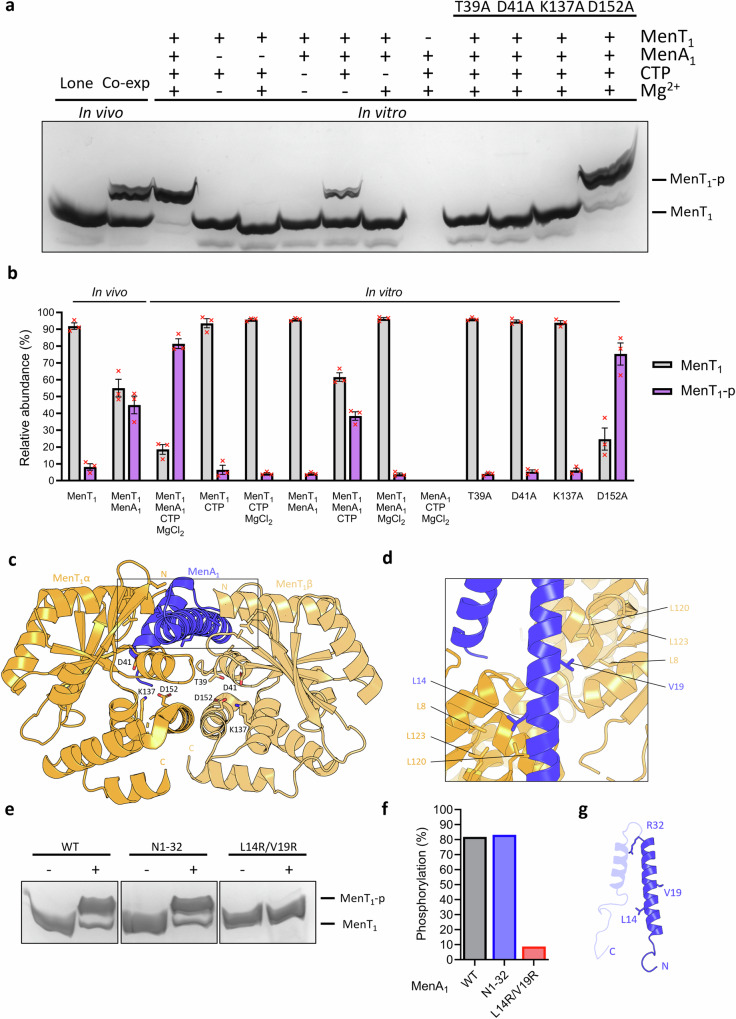
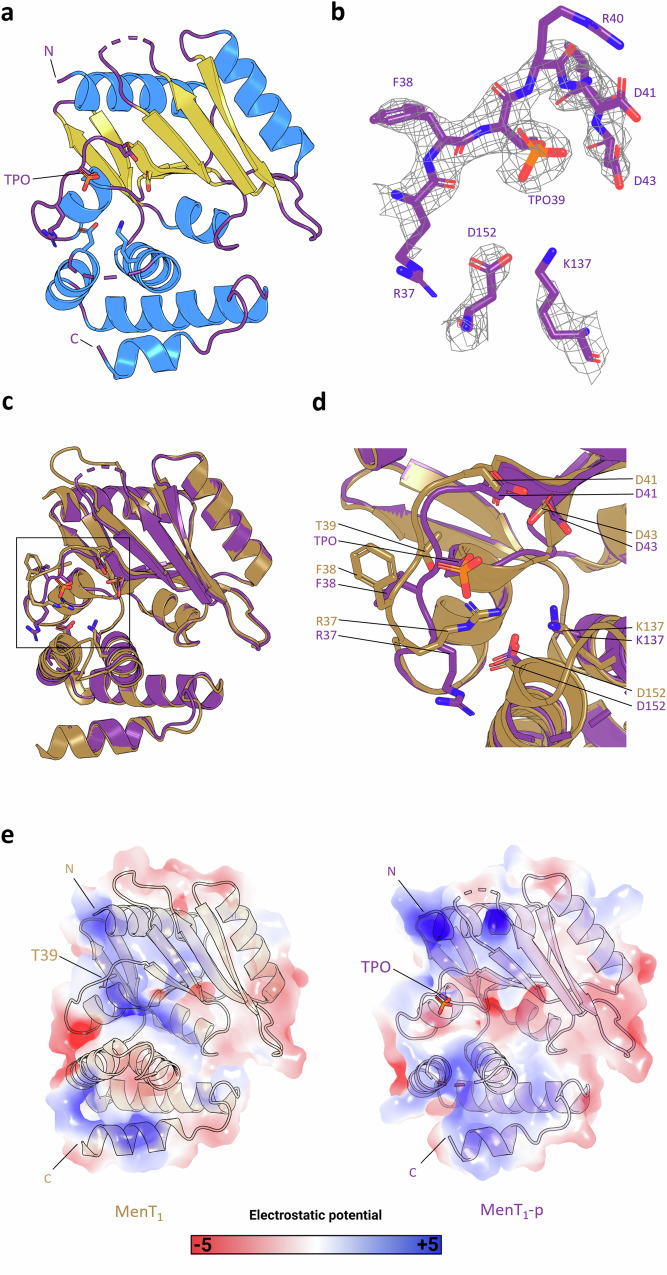
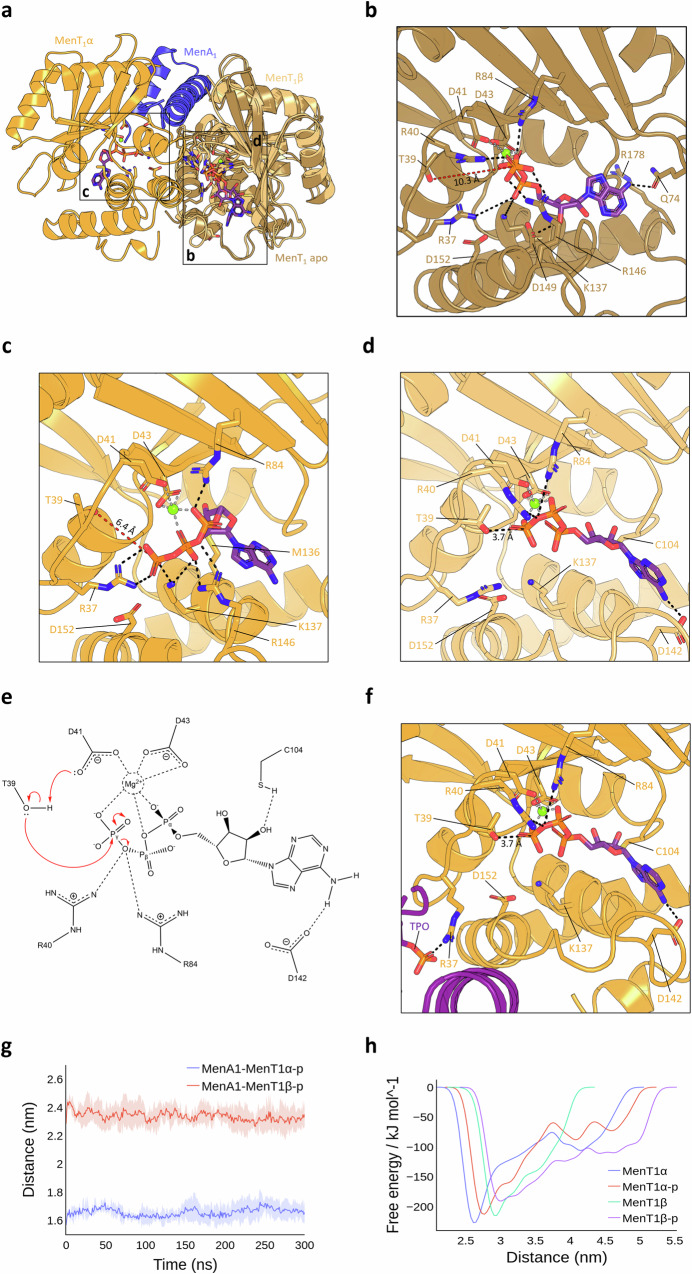
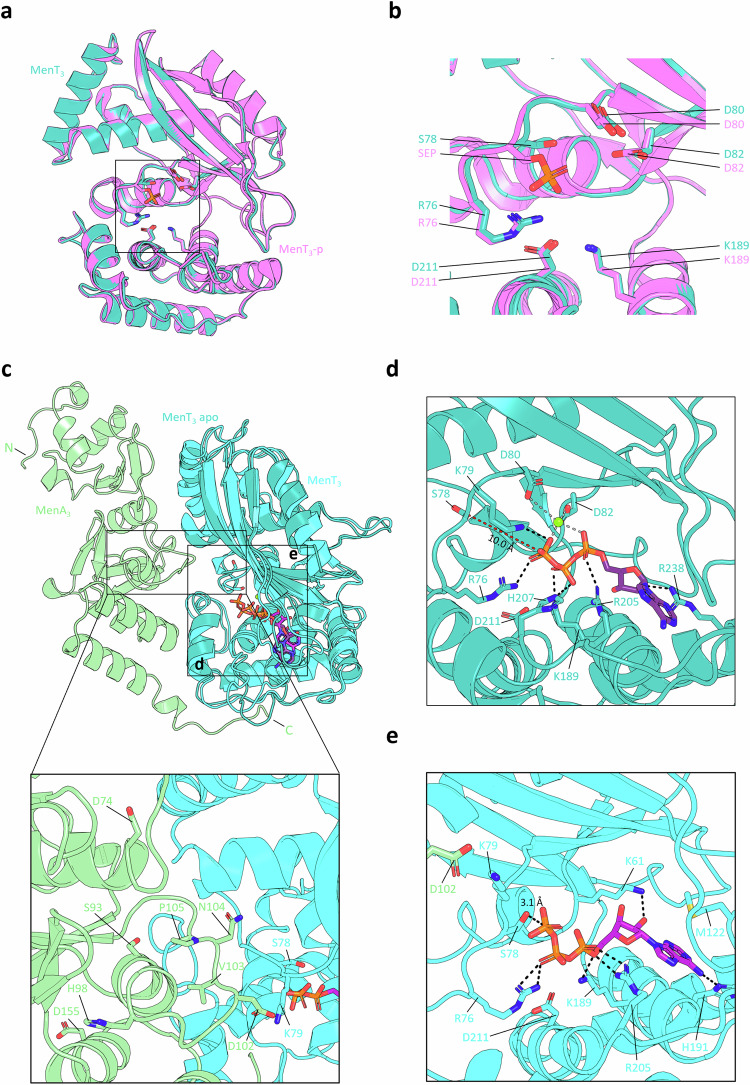
Nucleotidyltransferases (NTases) control diverse physiological processes, including RNA modification, DNA replication and repair, and antibiotic resistance. The Mycobacterium tuberculosis NTase toxin family, MenT, modifies tRNAs to block translation. MenT toxin activity can be stringently regulated by diverse MenA antitoxins. There has been no unifying mechanism linking antitoxicity across MenT homologues. Here we demonstrate through structural, biochemical, biophysical and computational studies that despite lacking kinase motifs, antitoxin MenA induces auto-phosphorylation of MenT by repositioning the MenT phosphoacceptor T39 active site residue towards bound nucleotide. Finally, we expand this predictive model to explain how unrelated antitoxin MenA is similarly able to induce auto-phosphorylation of cognate toxin MenT. Our study reveals a conserved mechanism for the control of tuberculosis toxins, and demonstrates how active site auto-phosphorylation can regulate the activity of widespread NTases.
核苷酸转移酶(NTases)控制着多种生理过程,包括 RNA 修饰、DNA 复制和修复以及抗生素耐药性。结核分枝杆菌 NTase 毒素家族 MenT 修饰 tRNA 以阻止翻译。MenT 毒素的活性可以通过多种 MenA 解毒素来严格调节。目前还没有一个统一的机制可以将不同 MenT 同源物的解毒作用联系起来。在这里,我们通过结构、生化、生物物理和计算研究表明,尽管缺乏激酶基序,但解毒素 MenA 通过将 MenT 的磷酸受体 T39 活性位点残基重新定位到结合的核苷酸上,诱导 MenT 的自动磷酸化。最后,我们扩展了这个预测模型,以解释为什么不相关的解毒素 MenA 也能够同样诱导同源毒素 MenT 的自动磷酸化。我们的研究揭示了一种控制结核分枝杆菌毒素的保守机制,并展示了活性位点自动磷酸化如何调节广泛存在的 NTases 的活性。