Sydney Institute for Infectious Diseases, School of Medical Sciences, The University of Sydney, Sydney, New South Wales, Australia.
MRC-University of Glasgow Centre for Virus Research, Glasgow, UK.
Nature. 2024 Sep;633(8030):695-703. doi: 10.1038/s41586-024-07899-8. Epub 2024 Sep 4.
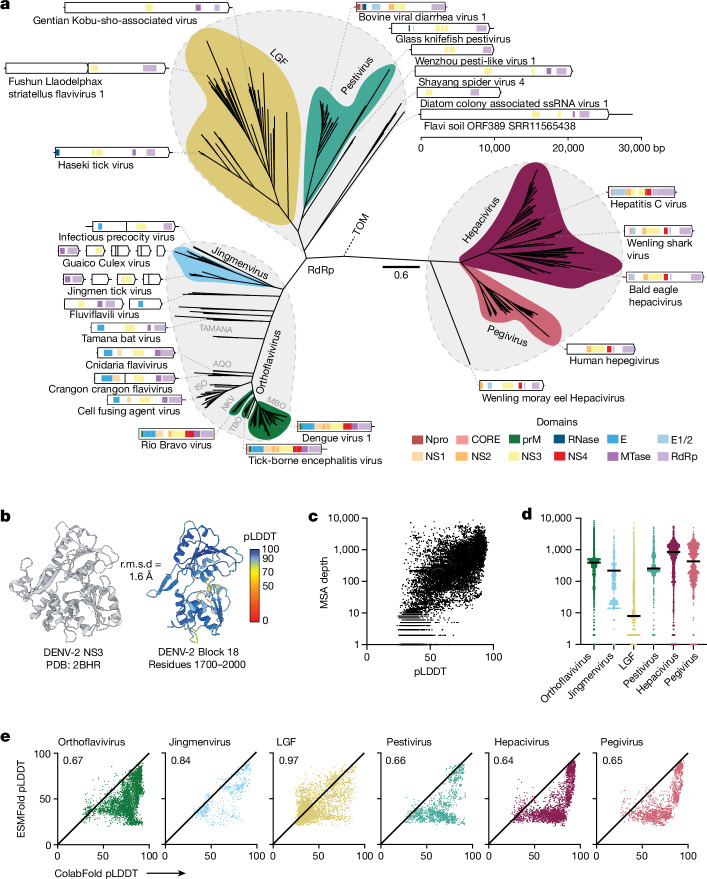
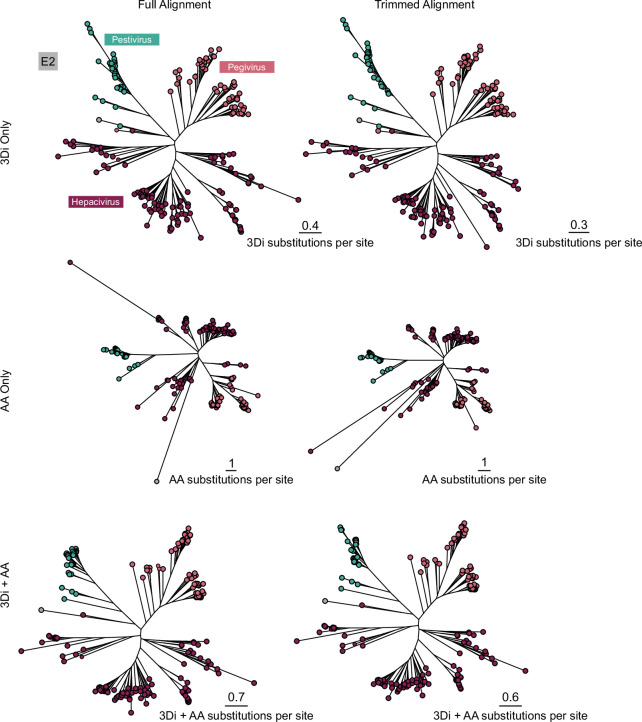
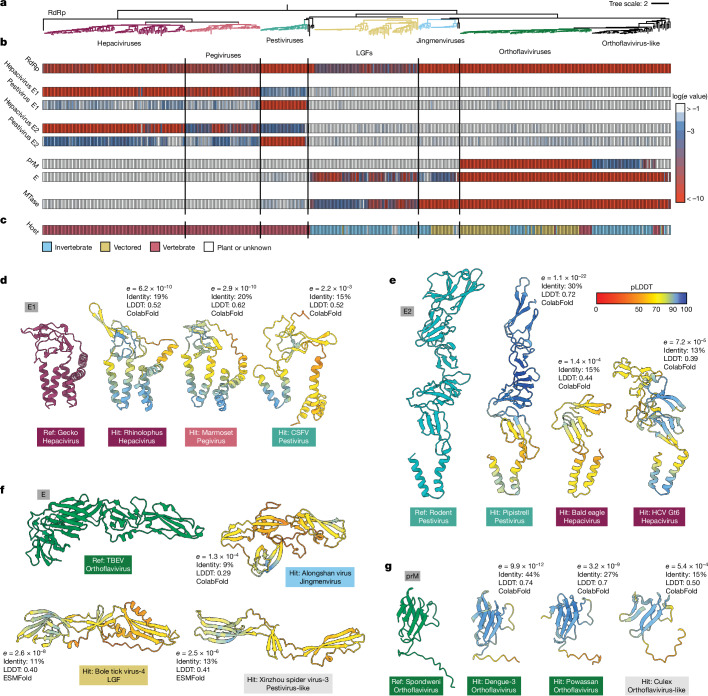
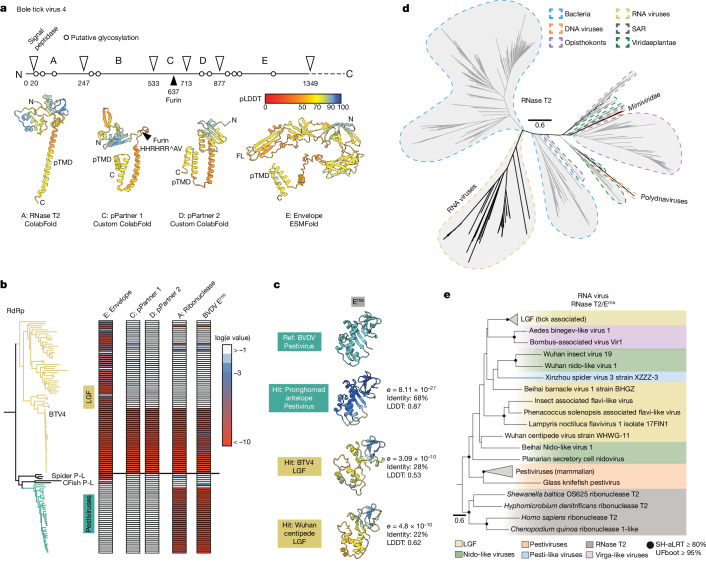
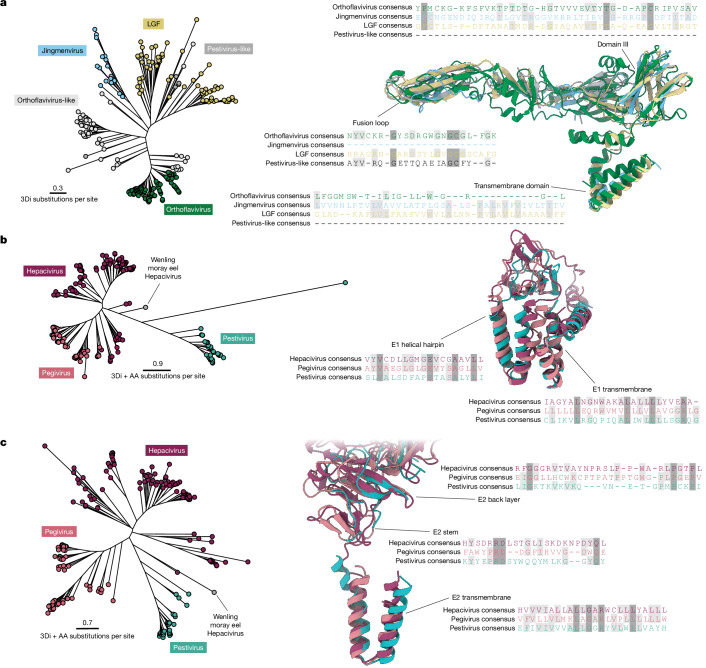
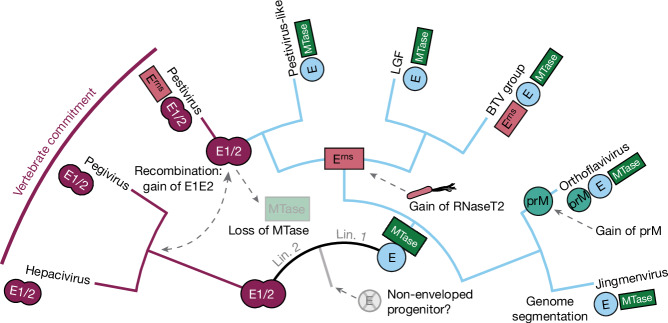
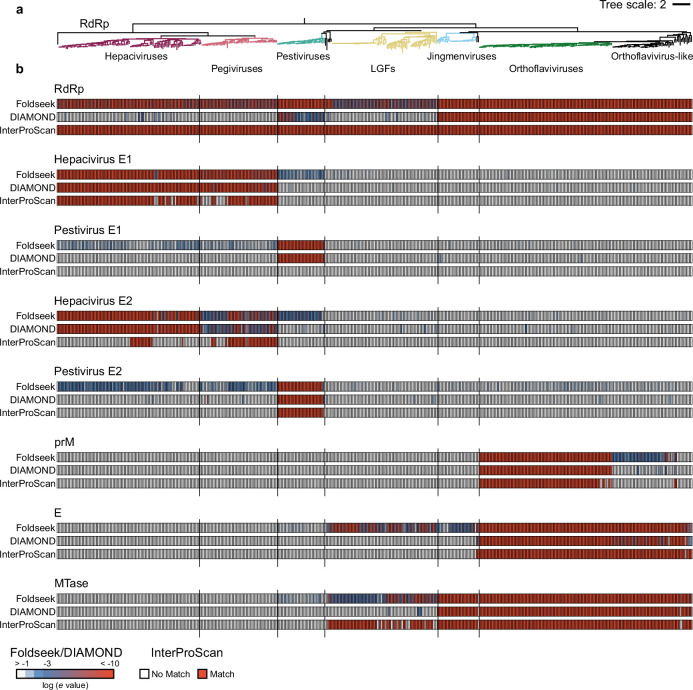
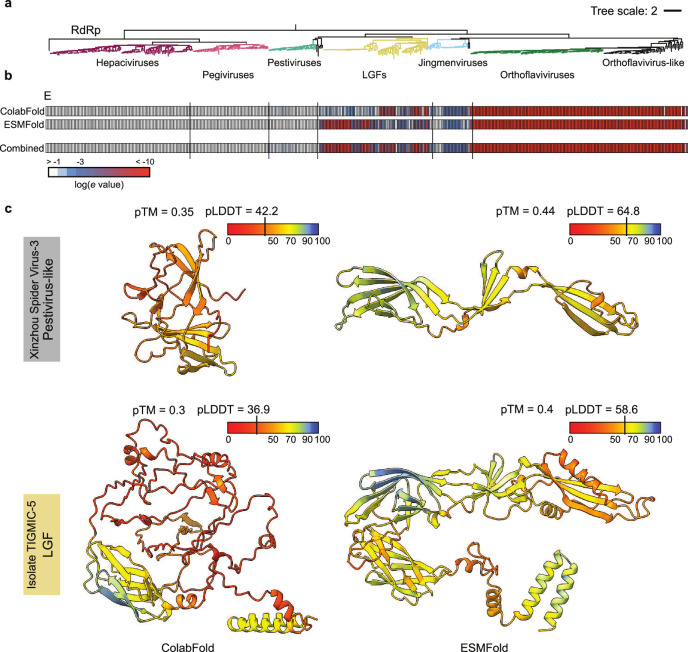
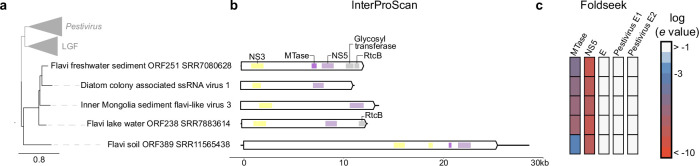
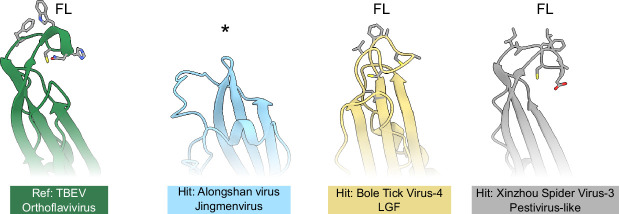
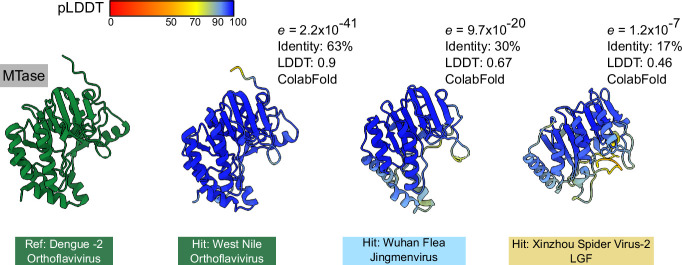
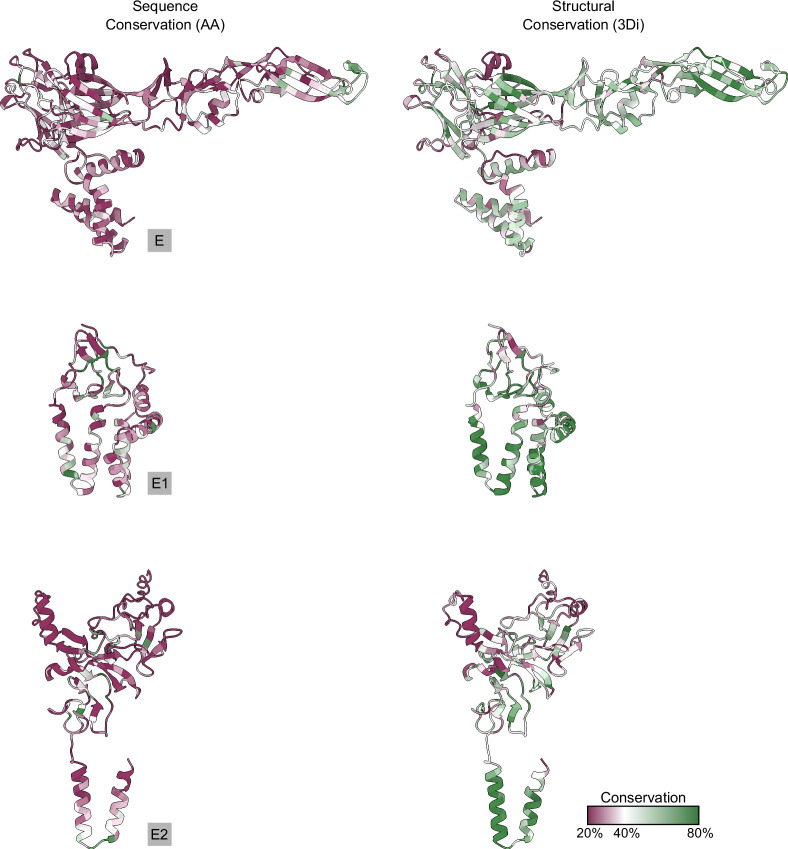
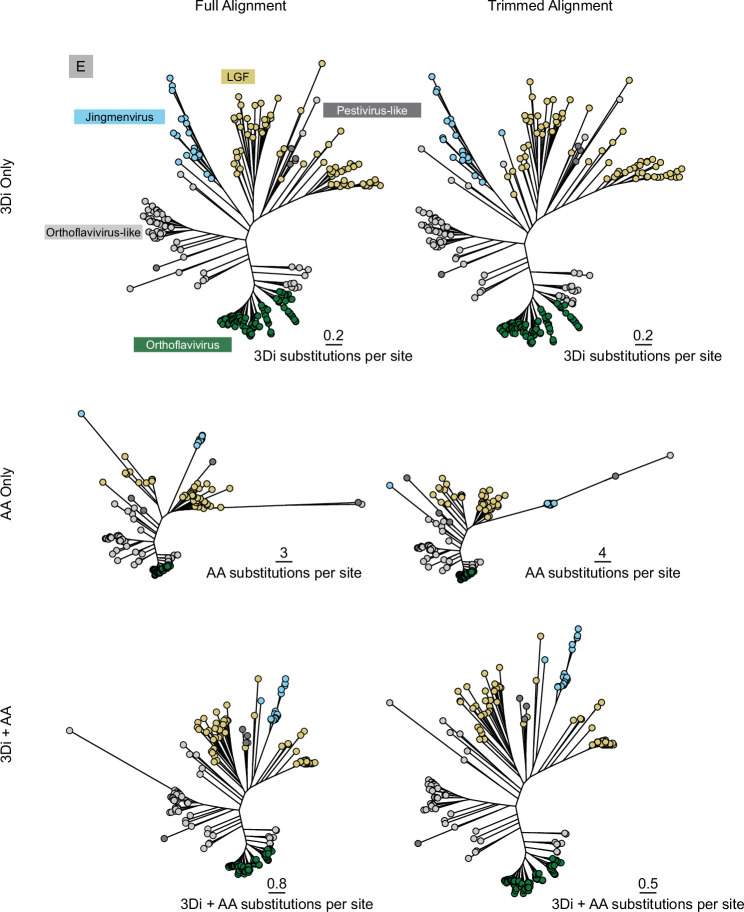
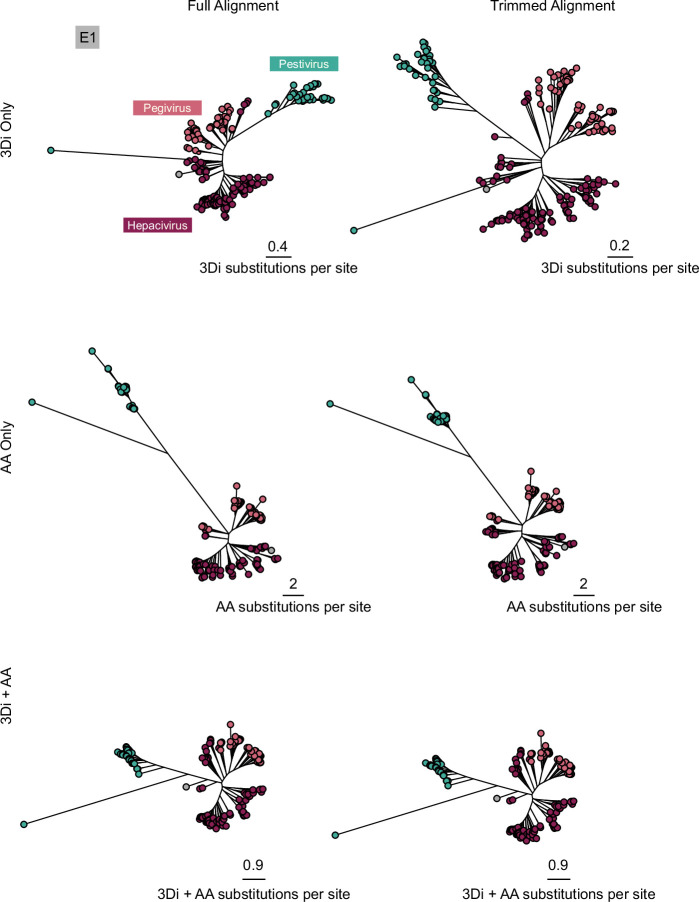
Viral glycoproteins drive membrane fusion in enveloped viruses and determine host range, tissue tropism and pathogenesis. Despite their importance, there is a fragmentary understanding of glycoproteins within the Flaviviridae, a large virus family that include pathogens such as hepatitis C, dengue and Zika viruses, and numerous other human, animal and emergent viruses. For many flaviviruses the glycoproteins have not yet been identified, for others, such as the hepaciviruses, the molecular mechanisms of membrane fusion remain uncharacterized. Here we combine phylogenetic analyses with protein structure prediction to survey glycoproteins across the entire Flaviviridae. We find class II fusion systems, homologous to the Orthoflavivirus E glycoprotein in most species, including highly divergent jingmenviruses and large genome flaviviruses. However, the E1E2 glycoproteins of the hepaciviruses, pegiviruses and pestiviruses are structurally distinct, may represent a novel class of fusion mechanism, and are strictly associated with infection of vertebrate hosts. By mapping glycoprotein distribution onto the underlying phylogeny, we reveal a complex evolutionary history marked by the capture of bacterial genes and potentially inter-genus recombination. These insights, made possible through protein structure prediction, refine our understanding of viral fusion mechanisms and reveal the events that have shaped the diverse virology and ecology of the Flaviviridae.
病毒糖蛋白驱动包膜病毒的膜融合,并决定宿主范围、组织嗜性和发病机制。尽管它们很重要,但在黄病毒科(一个包含丙型肝炎、登革热和寨卡病毒等病原体以及许多其他人类、动物和新兴病毒的大型病毒科)中,对糖蛋白的了解仍然很零碎。对于许多黄病毒来说,糖蛋白尚未被鉴定,对于其他病毒如肝病毒来说,膜融合的分子机制仍未被阐明。在这里,我们结合系统发育分析和蛋白质结构预测,对整个黄病毒科的糖蛋白进行了调查。我们发现了与乙型肝炎病毒 E 糖蛋白同源的 II 类融合系统,在大多数物种中都存在,包括高度分化的景门病毒和大基因组黄病毒。然而,肝病毒、戊型肝炎病毒和瘟病毒的 E1E2 糖蛋白在结构上是不同的,可能代表了一种新的融合机制,并且与脊椎动物宿主的感染严格相关。通过将糖蛋白的分布映射到基础系统发育上,我们揭示了一个复杂的进化历史,其特征是细菌基因的捕获和潜在的属间重组。这些通过蛋白质结构预测获得的见解,完善了我们对病毒融合机制的理解,并揭示了塑造黄病毒科多样化病毒学和生态学的事件。