Schaller Research Group, Department of Infectious Diseases, Virology, Heidelberg University, Medical Faculty Heidelberg, Heidelberg, Germany.
German Centre for Infection Research (DZIF), Partner Site Heidelberg, Heidelberg, Germany.
EMBO Rep. 2024 Oct;25(10):4311-4336. doi: 10.1038/s44319-024-00236-0. Epub 2024 Sep 4.
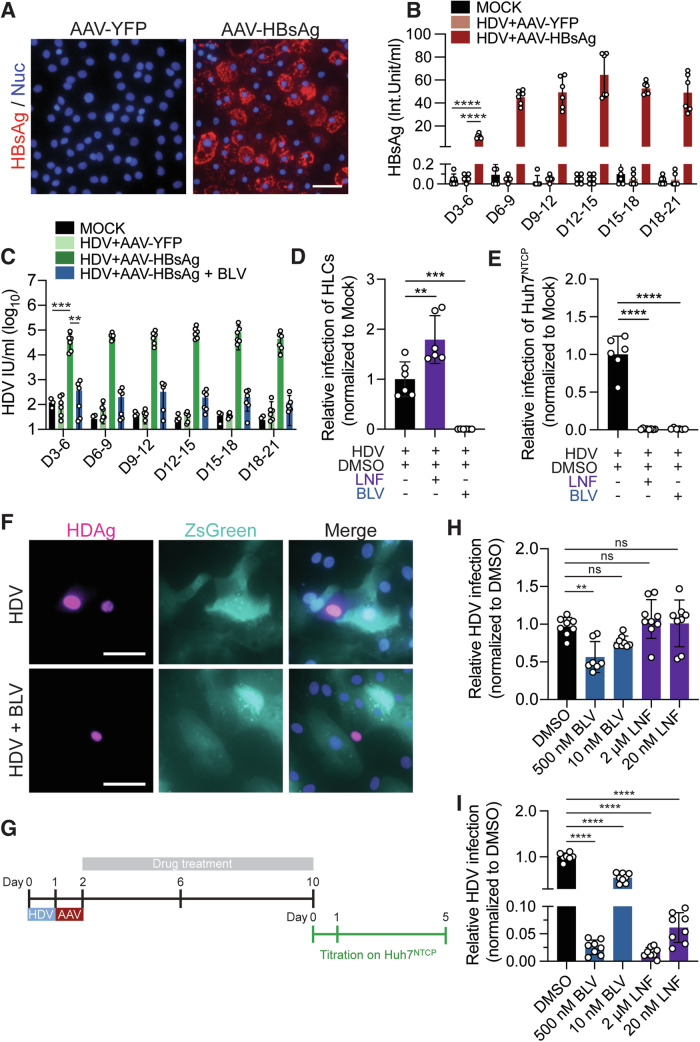
Current culture systems available for studying hepatitis D virus (HDV) are suboptimal. In this study, we demonstrate that hepatocyte-like cells (HLCs) derived from human pluripotent stem cells (hPSCs) are fully permissive to HDV infection across various tested genotypes. When co-infected with the helper hepatitis B virus (HBV) or transduced to express the HBV envelope protein HBsAg, HLCs effectively release infectious progeny virions. We also show that HBsAg-expressing HLCs support the extracellular spread of HDV, thus providing a valuable platform for testing available anti-HDV regimens. By challenging the cells along the differentiation with HDV infection, we have identified CD63 as a potential HDV co-entry factor that was rate-limiting for HDV infection in immature hepatocytes. Given their renewable source and the potential to derive hPSCs from individual patients, we propose HLCs as a promising model for investigating HDV biology. Our findings offer new insights into HDV infection and expand the repertoire of research tools available for the development of therapeutic interventions.
目前用于研究丁型肝炎病毒(HDV)的培养体系并不理想。在这项研究中,我们证明了源自人类多能干细胞(hPSC)的肝样细胞(HLC)可被各种测试基因型的 HDV 完全感染。当与辅助性乙型肝炎病毒(HBV)共感染或转导表达 HBV 包膜蛋白 HBsAg 时,HLC 可有效释放感染性的病毒粒子。我们还表明,表达 HBsAg 的 HLC 支持 HDV 的细胞外传播,从而为测试现有抗 HDV 方案提供了有价值的平台。通过用 HDV 感染对细胞沿分化路径进行挑战,我们发现 CD63 是一种潜在的 HDV 共同进入因子,它对未成熟肝细胞中的 HDV 感染起限速作用。鉴于其可再生来源以及能够从个体患者中获得 hPSC,我们提出 HLC 是研究 HDV 生物学的有前途的模型。我们的研究结果为 HDV 感染提供了新的见解,并扩展了用于开发治疗干预措施的研究工具库。