Ninomiya Masashi, Inoue Jun, Krueger Eugene W, Chen Jing, Cao Hong, Masamune Atsushi, McNiven Mark A
Center for Basic Research in Digestive DiseasesMayo ClinicRochesterMNUSA.
Division of GastroenterologyTohoku University Graduate School of MedicineSendaiJapan.
Hepatol Commun. 2021 Mar 31;5(7):1238-1251. doi: 10.1002/hep4.1709. eCollection 2021 Jul.
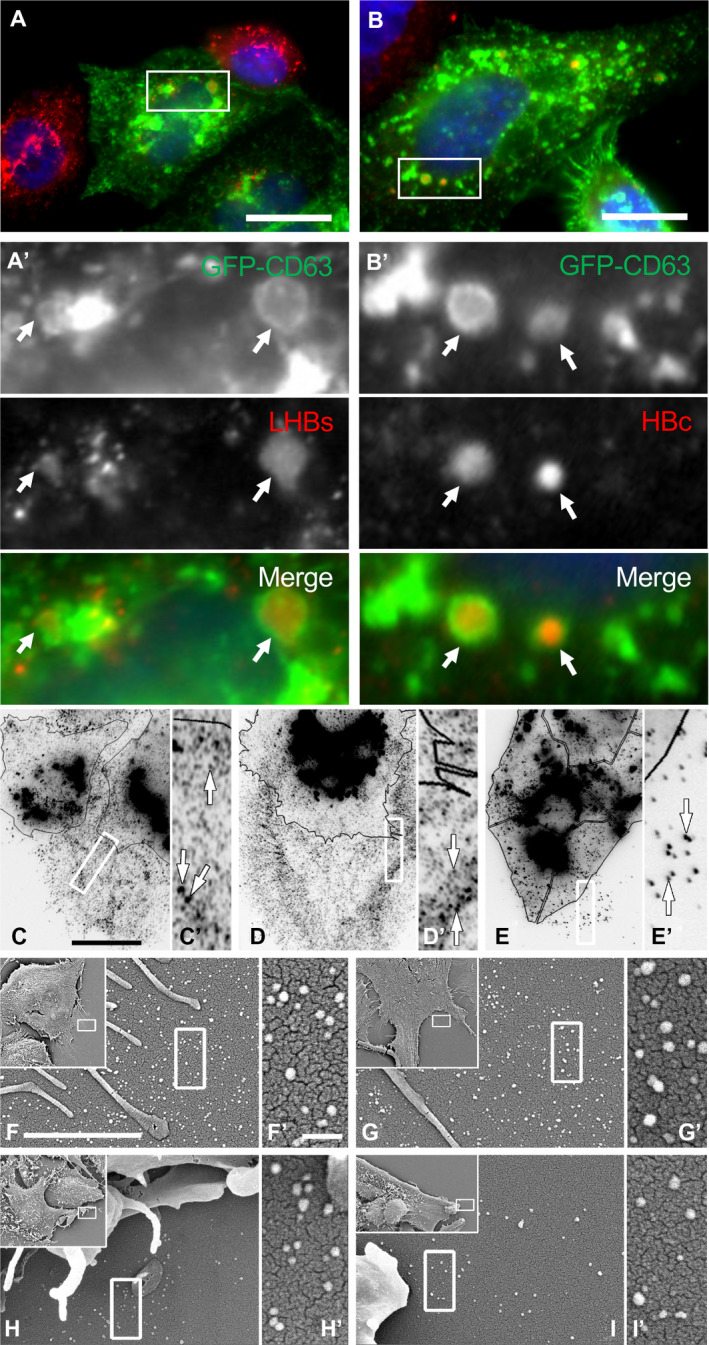
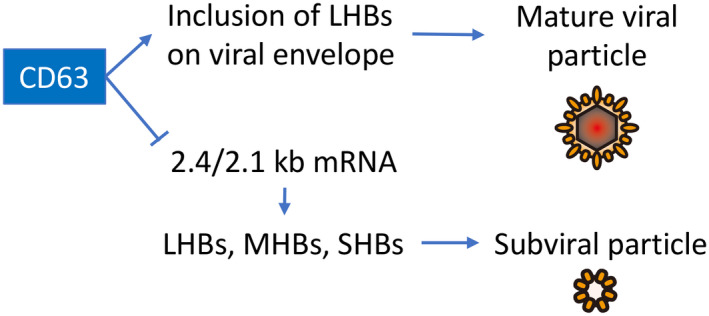
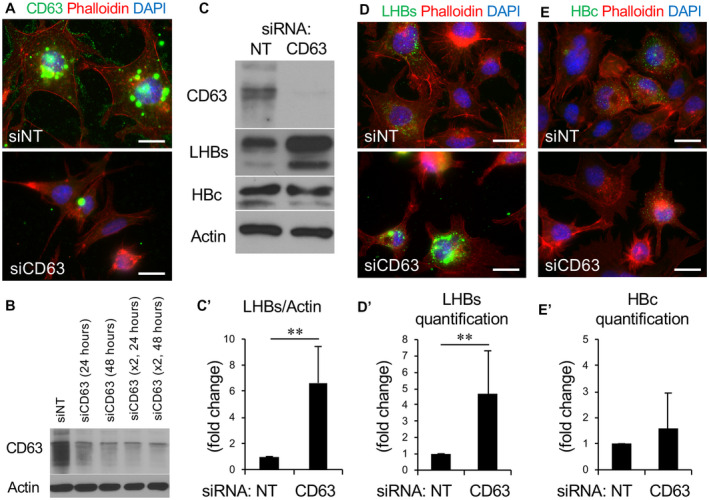
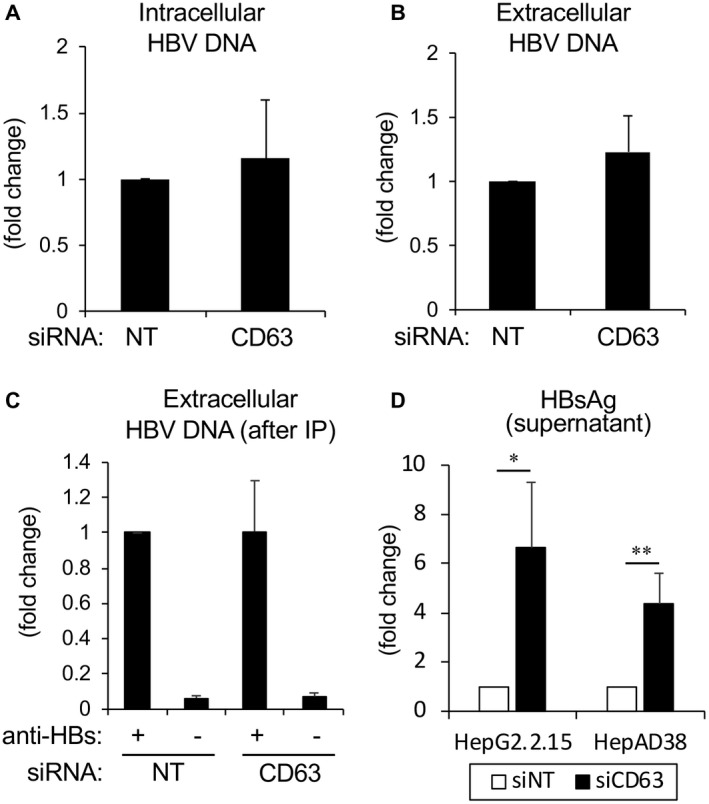
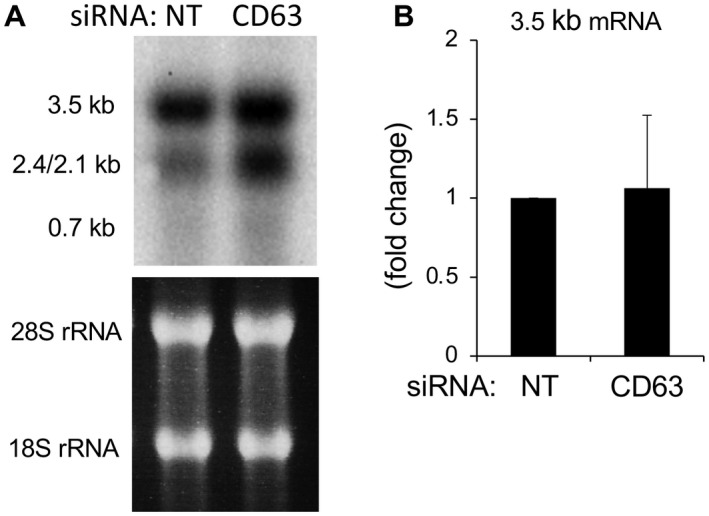
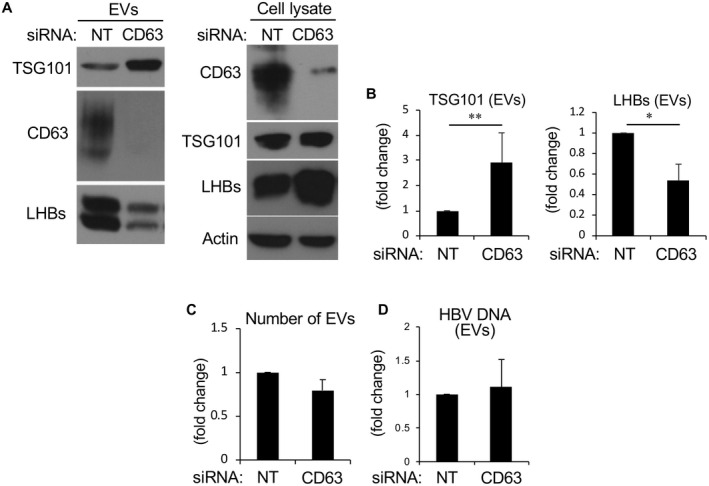
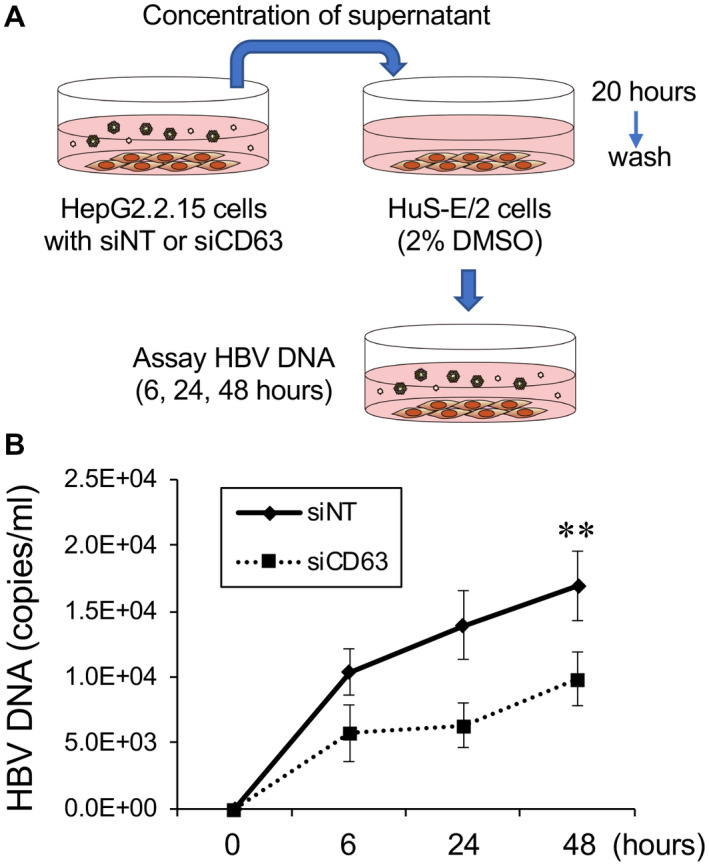
Currently, the hepatocellular trafficking pathways that are used by the hepatitis B virus (HBV) during viral infection and shedding are poorly defined. It is known that the HBV uses late endosomal and multivesicular body (MVB) compartments for assembly and release. The intraluminal vesicles (ILVs) generated within MVBs have also been implicated in the late synthesis stages of a variety of pathogenic viruses. We recently observed that the HBV within infected hepatocytes appears to associate with the tetraspanin protein CD63, known to be a prominent and essential component of ILVs. Immunofluorescence microscopy of HBV-expressing cells showed that CD63 colocalized with HBV proteins (large hepatitis B surface antigens [LHBs] and hepatitis B core) and labeled an exceptionally large number of secreted extracellular vesicles of uniform size. Small interfering RNA (siRNA)-mediated depletion of CD63 induced a substantial accumulation of intracellular LHBs protein but did not alter the levels of either intracellular or extracellular HBV DNA, nor pregenomic RNA. Consistent with these findings, we found that markedly less LHBs protein was associated with the released HBV particles from CD63 siRNA-treated cells. Importantly, the HBV viral particles that were shed from CD63-depleted cells were substantially less infective than those collected from control cells with normal CD63 levels. These findings implicate the tetraspanin protein CD63 as a marker and an important component in the formation and release of infectious HBV particles.
目前,乙型肝炎病毒(HBV)在病毒感染和释放过程中所采用的肝细胞内运输途径尚不清楚。已知HBV利用晚期内体和多囊泡体(MVB)区室进行组装和释放。MVB内产生的腔内小泡(ILV)也与多种致病病毒的晚期合成阶段有关。我们最近观察到,受感染肝细胞内的HBV似乎与四跨膜蛋白CD63相关,已知CD63是ILV的一个重要且关键的组成部分。对表达HBV的细胞进行免疫荧光显微镜检查显示,CD63与HBV蛋白(大乙肝表面抗原[LHBs]和乙肝核心抗原)共定位,并标记了大量大小均匀的分泌性细胞外小泡。小干扰RNA(siRNA)介导的CD63缺失导致细胞内LHBs蛋白大量积累,但未改变细胞内或细胞外HBV DNA以及前基因组RNA的水平。与这些发现一致,我们发现来自CD63 siRNA处理细胞的释放HBV颗粒中LHBs蛋白明显减少。重要的是,从CD63缺失细胞中释放的HBV病毒颗粒的感染性明显低于从CD63水平正常的对照细胞中收集的病毒颗粒。这些发现表明四跨膜蛋白CD63是感染性HBV颗粒形成和释放的一个标志物及重要组成部分。