Cecere Annagrazia, Perazzolo Marra Martina, Zanatta Elisabetta, Civieri Giovanni, Iliceto Sabino, Tona Francesco
Department of Cardiac, Thoracic, and Vascular Sciences and Public Health, University of Padova, Padova, Italy.
Department of Medicine, University of Padova, Padova, Italy.
Front Cardiovasc Med. 2024 Aug 21;11:1372703. doi: 10.3389/fcvm.2024.1372703. eCollection 2024.
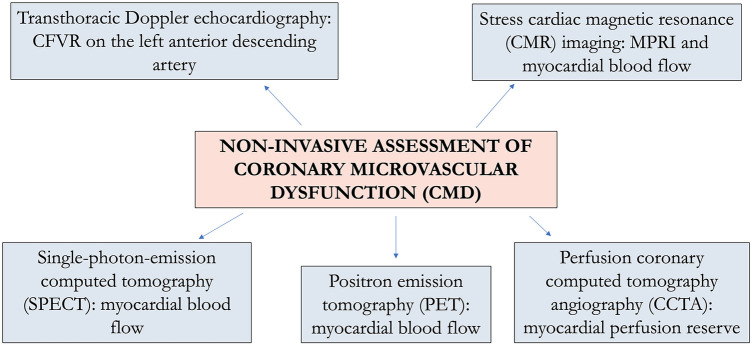
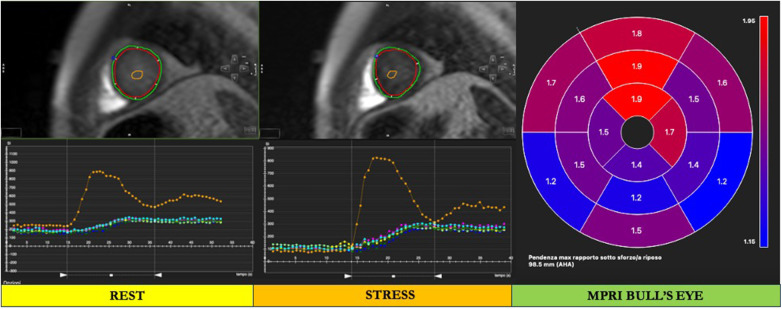
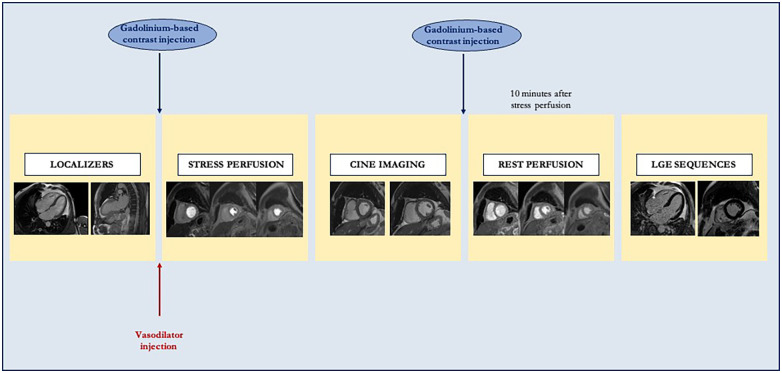
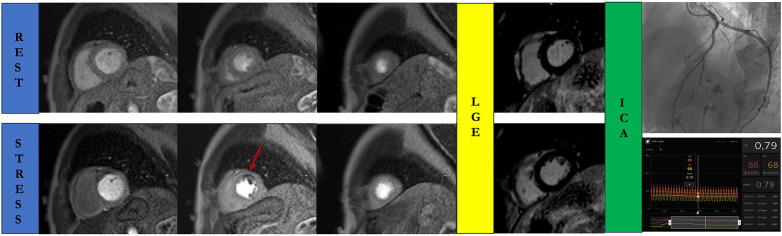
Autoimmune rheumatic diseases (ARDs) are a heterogeneous group of disorders characterized by an inappropriate immune reactivity against different body tissues. Patients affected by ARDs present increased cardiovascular morbidity and mortality, which significantly impacts long-term prognosis. Endothelial dysfunction, inflammation, oxidative stress, and autoimmunity are strictly involved in atherosclerosis progression and coronary microvascular dysfunction (CMD), both of which contribute to increased cardiovascular risk. CMD represents the inability of the coronary microvasculature to respond with vasodilation to increased cardiac metabolic demands and can be assessed by non-invasive and invasive imaging tests. Coronary flow velocity reserve assessed by echocardiography has been demonstrated to accurately identify ARDs patients with CMD. However, stress cardiac magnetic resonance (CMR) accurately assesses myocardial ischemia, perfusion, and viability in ARDs patients. The myocardial perfusion reserve index (MPRI) is a robust semiquantitative imaging marker that represents the vasodilatory capacity of the coronary microcirculation in response to a vasodilator stress. In the absence of significant coronary stenosis, ARDs patients revealed a reduced MPRI in comparison with the general population, regardless of the presence of myocardial fibrosis. Identification of CMD in asymptomatic patients could be crucial to precociously start targeted medical therapy, avoiding major adverse cardiac events in this clinical setting. This review aims to summarize the current evidence regarding CMD in ARDs patients, focusing on the role of stress CMR and the promising myocardial perfusion analysis.
自身免疫性风湿性疾病(ARDs)是一组异质性疾病,其特征是对不同身体组织产生不适当的免疫反应。患有ARDs的患者心血管发病率和死亡率增加,这对长期预后有显著影响。内皮功能障碍、炎症、氧化应激和自身免疫与动脉粥样硬化进展和冠状动脉微血管功能障碍(CMD)密切相关,这两者都会增加心血管风险。CMD表现为冠状动脉微血管无法通过血管舒张来应对增加的心脏代谢需求,可通过非侵入性和侵入性成像检查进行评估。经超声心动图评估的冠状动脉血流速度储备已被证明可准确识别患有CMD的ARDs患者。然而,应激心脏磁共振成像(CMR)可准确评估ARDs患者的心肌缺血、灌注和存活情况。心肌灌注储备指数(MPRI)是一种可靠的半定量成像标志物,代表冠状动脉微循环对血管扩张应激的血管舒张能力。在无明显冠状动脉狭窄的情况下,无论是否存在心肌纤维化,ARDs患者的MPRI均低于一般人群。在无症状患者中识别CMD对于尽早开始有针对性的药物治疗至关重要,可避免在此临床环境中发生重大不良心脏事件。本综述旨在总结目前关于ARDs患者CMD的证据,重点关注应激CMR的作用以及有前景的心肌灌注分析。