Carías Domínguez Ailim Margarita, de Jesús Rosa Salazar Dimas, Stefanolo Juan Pablo, Cruz Serrano Maria Claudia, Casas Isabel Cristina, Zuluaga Peña Julio Ricardo
Fundación Santa Fe de Bogotá (Santa Fe de Bogotá Foundation), Bogotá, Colombia.
Universidad de los Andes (University of the Andes), Bogotá, Colombia.
Probiotics Antimicrob Proteins. 2025 Feb;17(1):440-449. doi: 10.1007/s12602-024-10353-w. Epub 2024 Sep 5.
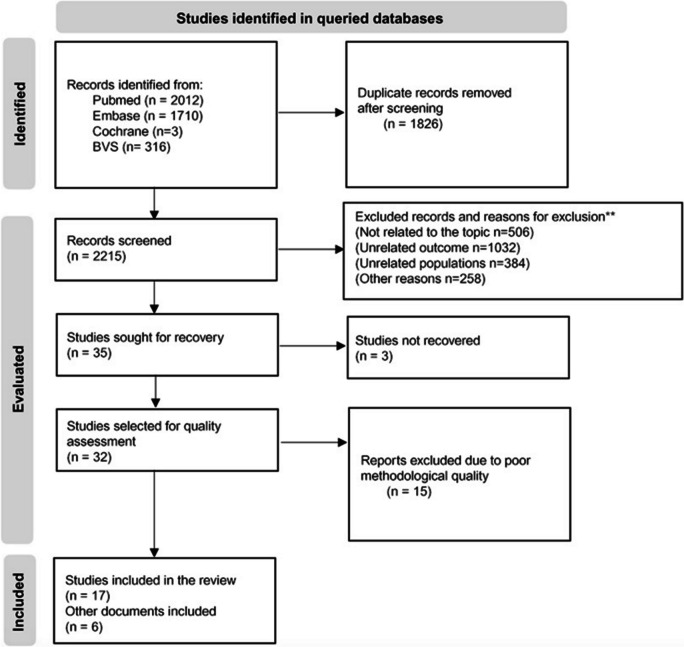
Dysbiosis is a clinical condition marked by altered gut microbiota resulting from external and internal host factors. It is strongly associated with gastrointestinal and extraintestinal alterations, so its symptomatology is broad and nonspecific. To date, gaps remain that limit professionals from making a timely diagnosis and prescribing the appropriate treatment. We aim to synthesize existing literature regarding clinical parameters for the early detection of patients with intestinal dysbiosis and the clinical events in which the use of probiotics as adjuvant therapy is most frequently reported. A scoping review of the literature was conducted in PubMed, Embase, Cochrane, and BVS (Biblioteca Virtual en Salud in Spanish) databases for articles published in the last 5 years. Primary studies and literature reviews related to clinical presentation, dysbiosis screening, and probiotics as adjuvant therapy for adult and pediatric patients were included. Twenty-three articles were retrieved in which the most frequently reported symptoms were abdominal distension, abdominal pain, and diarrhea. Chronic and metabolic diseases where the conditions most strongly associated with dysbiosis. Depending on symptomatology and etiology, dysbiosis is often treated with probiotics. Dysbiosis, often linked to diarrhea, should be considered with other symptoms like abdominal distension and pain, along with predisposing conditions and patient risk factors. Probiotics are commonly used as co-adjuvant treatments for antibiotic-associated diarrhea, irritable bowel syndrome, and childhood allergic diseases. The most commonly used probiotics were Weizmannia coagulans (formerly B. coagulans), Alkalihalobacillus clausii (formerly Bacillus clausii), Lacticaseibacillus rhamnosus, Limosilactobacillus reuteri, and Saccharomyces boulardii.
肠道菌群失调是一种临床病症,其特征是由于宿主的外部和内部因素导致肠道微生物群发生改变。它与胃肠道和肠外改变密切相关,因此其症状广泛且不具特异性。迄今为止,仍存在一些差距,限制了专业人员及时做出诊断并开出适当的治疗方案。我们旨在综合现有文献,探讨肠道菌群失调患者早期检测的临床参数,以及最常报告使用益生菌作为辅助治疗的临床事件。我们在PubMed、Embase、Cochrane和BVS(西班牙语的虚拟健康图书馆)数据库中对过去5年发表的文章进行了文献综述。纳入了与成人和儿童患者的临床表现、菌群失调筛查以及益生菌作为辅助治疗相关的原始研究和文献综述。共检索到23篇文章,其中最常报告的症状是腹胀、腹痛和腹泻。慢性和代谢性疾病是与菌群失调关联最密切的病症。根据症状和病因,菌群失调通常用益生菌治疗。菌群失调常与腹泻有关,应结合腹胀和疼痛等其他症状,以及诱发因素和患者风险因素进行考虑。益生菌通常用作抗生素相关性腹泻、肠易激综合征和儿童过敏性疾病的辅助治疗。最常用的益生菌是凝结魏斯氏菌(原凝结芽孢杆菌)、克劳氏碱杆菌(原克劳氏芽孢杆菌)、鼠李糖乳杆菌、罗伊氏乳杆菌和布拉酵母菌。