Department of Molecular Physiology and Biophysics, Carver College of Medicine, Iowa City, IA, United States of America.
Department of Otolaryngology Head-Neck Surgery, Carver College of Medicine, Iowa City, IA, United States of America.
PLoS One. 2024 Sep 5;19(9):e0308389. doi: 10.1371/journal.pone.0308389. eCollection 2024.
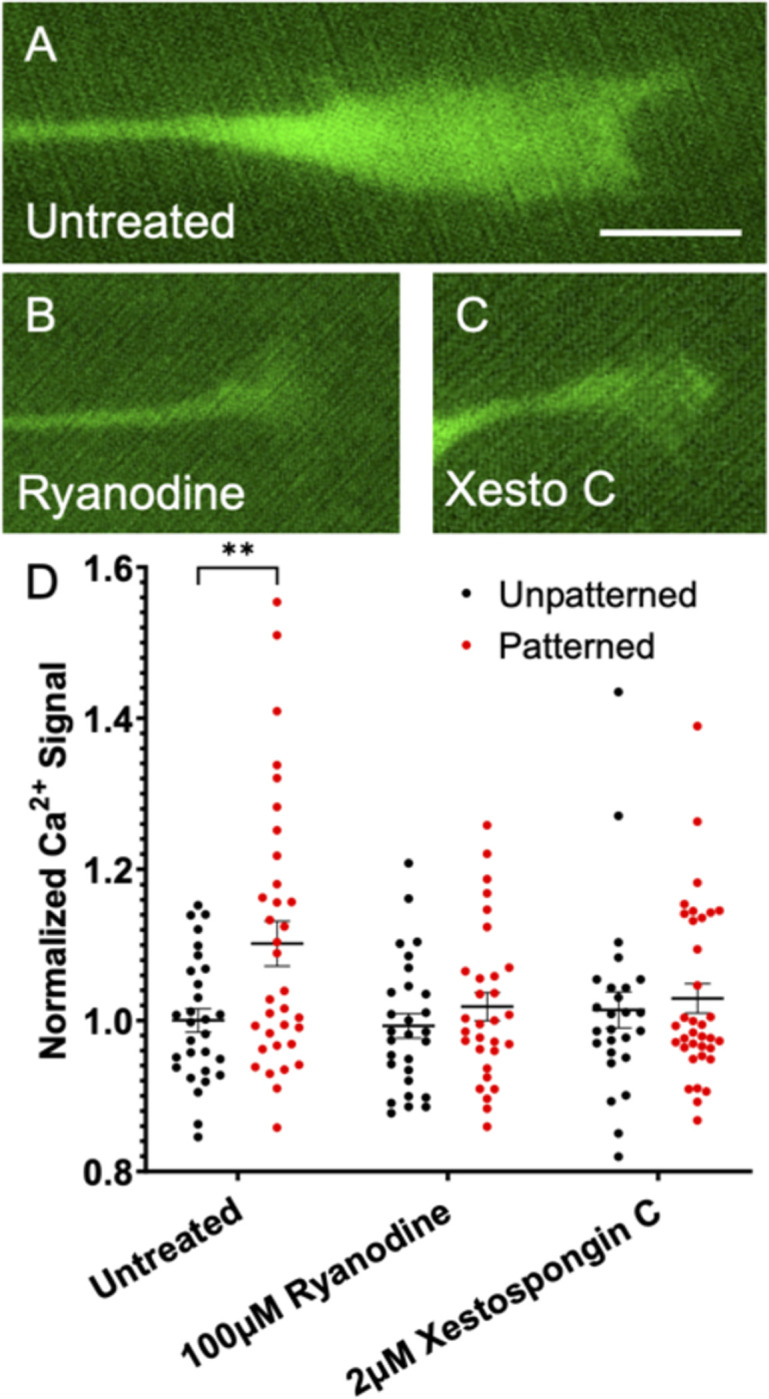
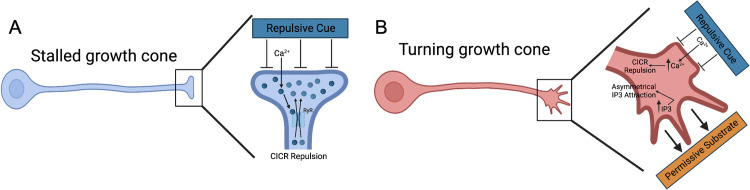
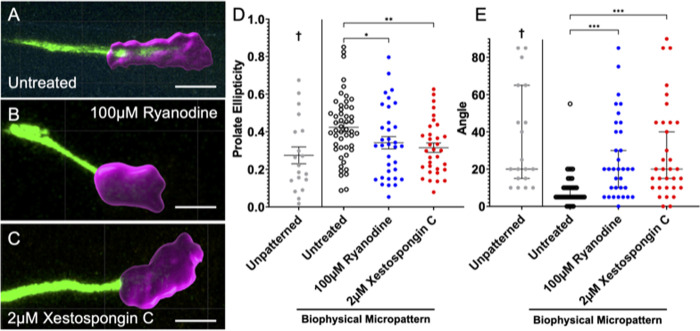
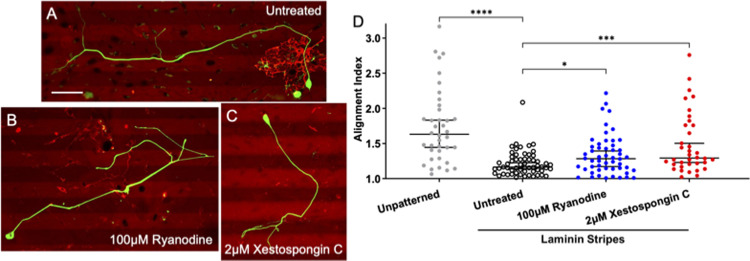
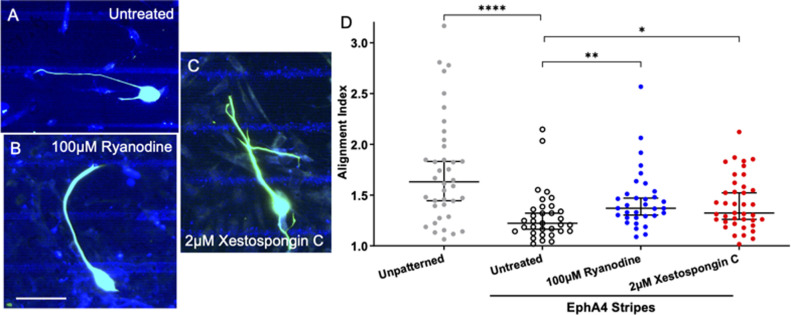
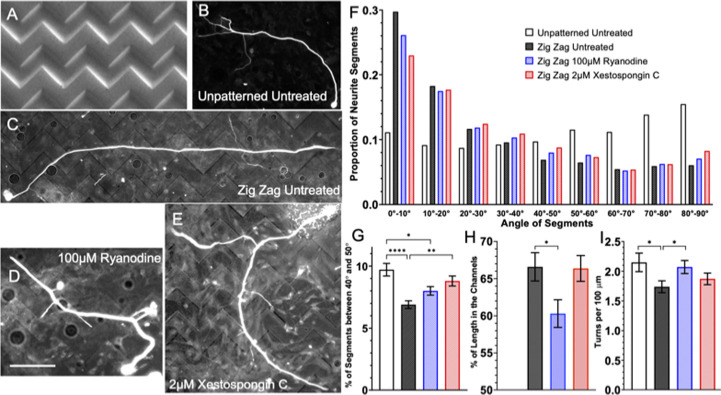
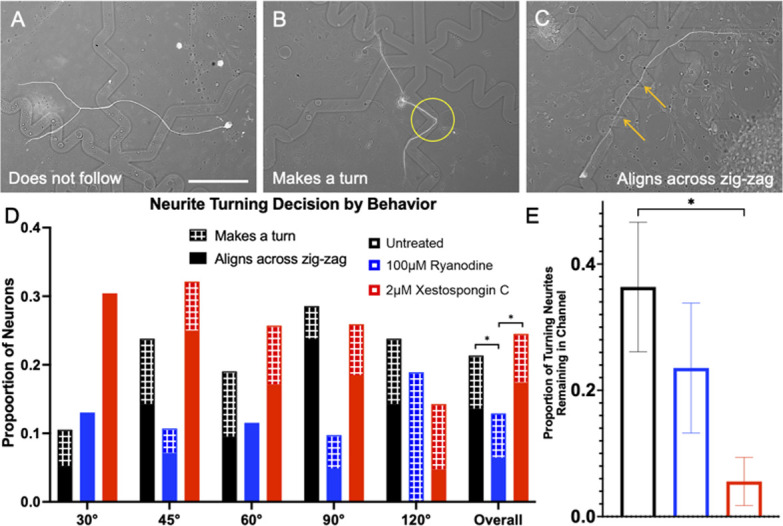
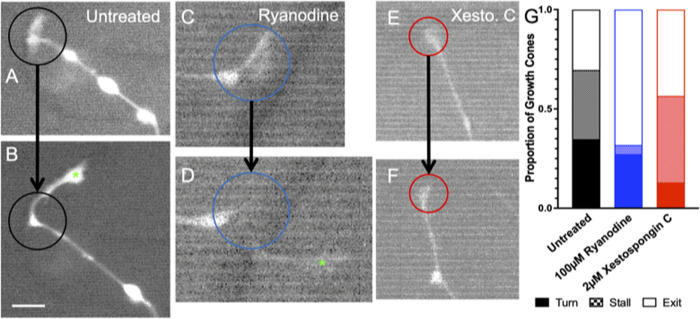
Micro and nanoscale patterning of surface features and biochemical cues have emerged as tools to precisely direct neurite growth into close proximity with next generation neural prosthesis electrodes. Biophysical cues can exert greater influence on neurite pathfinding compared to the more well studied biochemical cues; yet the signaling events underlying the ability of growth cones to respond to these microfeatures remain obscure. Intracellular Ca2+ signaling plays a critical role in how a growth cone senses and grows in response to various cues (biophysical features, repulsive peptides, chemo-attractive gradients). Here, we investigate the role of inositol triphosphate (IP3) and ryanodine-sensitive receptor (RyR) signaling as sensory neurons (spiral ganglion neurons, SGNs, and dorsal root ganglion neurons, DRGNs) pathfind in response to micropatterned substrates of varied geometries. We find that IP3 and RyR signaling act in the growth cone as they navigate biophysical cues and enable proper guidance to biophysical, chemo-permissive, and chemo-repulsive micropatterns. In response to complex micropatterned geometries, RyR signaling appears to halt growth in response to both topographical features and chemo-repulsive cues. IP3 signaling appears to play a more complex role, as growth cones appear to sense the microfeatures in the presence of xestospongin C but are unable to coordinate turning in response to them. Overall, key Ca2+ signaling elements, IP3 and RyR, are found to be essential for SGNs to pathfind in response to engineered biophysical and biochemical cues. These findings inform efforts to precisely guide neurite regeneration for improved neural prosthesis function, including cochlear implants.
表面特征和生物化学线索的微纳尺度图案化已成为精确引导神经突生长与下一代神经假体电极接近的工具。与更广泛研究的生物化学线索相比,生物物理线索可以对神经突寻迹产生更大的影响;然而,生长锥响应这些微观特征的信号事件仍然不清楚。细胞内 Ca2+信号在生长锥如何感知和响应各种线索(生物物理特征、排斥肽、化学趋性梯度)方面起着关键作用。在这里,我们研究了三磷酸肌醇 (IP3) 和 Ryanodine 敏感受体 (RyR) 信号作为感觉神经元(螺旋神经节神经元 (SGN) 和背根神经节神经元 (DRGN))在响应各种几何形状的微图案化基底时的导航作用。我们发现,IP3 和 RyR 信号在生长锥中起作用,因为它们可以导航生物物理线索,并使生长锥能够正确地响应生物物理、化学许可和化学排斥的微图案化。对复杂的微图案化几何形状,RyR 信号似乎会停止生长,以响应地形特征和化学排斥线索。IP3 信号似乎起着更复杂的作用,因为生长锥似乎在存在 Xenestospongin C 的情况下感知微特征,但无法协调响应它们的转弯。总的来说,关键的 Ca2+信号元件 IP3 和 RyR 被发现对于 SGN 响应工程生物物理和生物化学线索进行寻迹是必不可少的。这些发现为精确引导神经突再生以改善神经假体功能提供了信息,包括耳蜗植入物。