Christoff-Tempesta Ty, Cho Yukio, Kaser Samuel J, Uliassi Linnaea D, Zuo Xiaobing, Hilburg Shayna L, Pozzo Lilo D, Ortony Julia H
Department of Materials Science and Engineering, Massachusetts Institute of Technology, Cambridge, MA, USA.
Department of Chemical and Biomolecular Engineering, University of Delaware, Newark, DE, USA.
Nat Commun. 2024 Sep 5;15(1):7749. doi: 10.1038/s41467-024-51494-4.
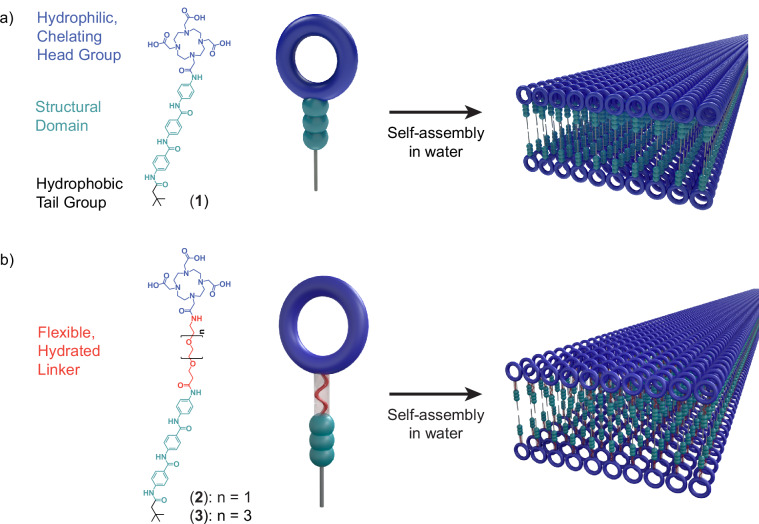
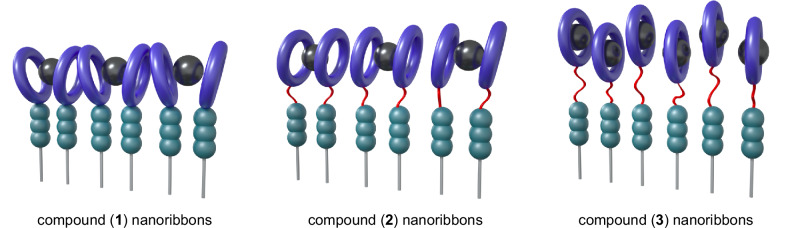
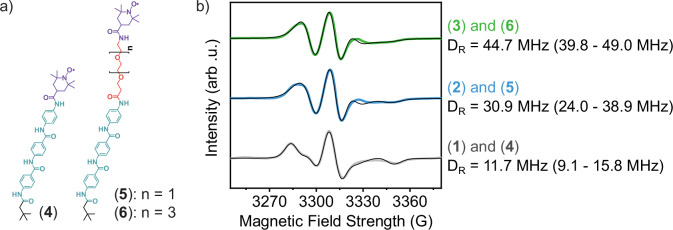
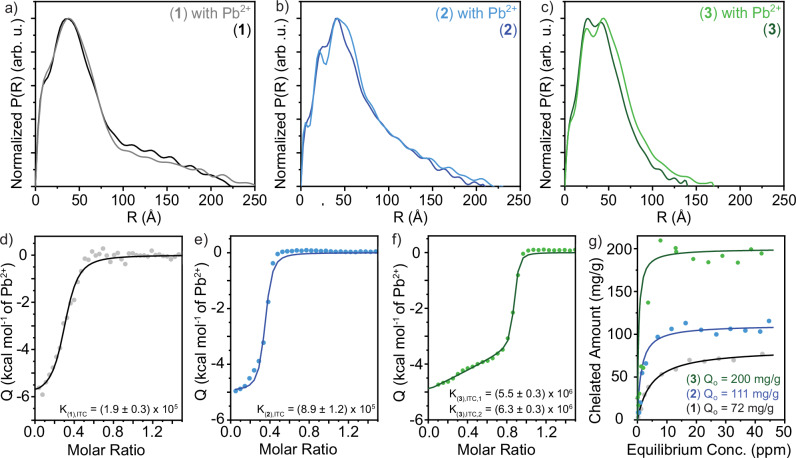
The dynamic behavior of biological materials is central to their functionality, suggesting that interfacial dynamics could also mediate the activity of chemical events at the surfaces of synthetic materials. Here, we investigate the influence of surface flexibility and hydration on heavy metal remediation by nanostructures self-assembled from small molecules that are decorated with surface-bound chelators in water. We find that incorporating short oligo(ethylene glycol) spacers between the surface and interior domain of self-assembled nanostructures can drastically increase the conformational mobility of surface-bound lead-chelating moieties and promote interaction with surrounding water. In turn, we find the binding affinities of chelators tethered to the most flexible surfaces are more than ten times greater than the least flexible surfaces. Accordingly, nanostructures composed of amphiphiles that give rise to the most dynamic surfaces are capable of remediating thousands of liters of 50 ppb Pb-contaminated water with single grams of material. These findings establish interfacial dynamics as a critical design parameter for functional self-assembled nanostructures.
生物材料的动态行为是其功能的核心,这表明界面动力学也可能介导合成材料表面化学事件的活性。在此,我们研究了表面柔性和水合作用对由在水中装饰有表面结合螯合剂的小分子自组装而成的纳米结构进行重金属修复的影响。我们发现,在自组装纳米结构的表面和内部区域之间引入短的聚乙二醇间隔物,可以显著提高表面结合的铅螯合部分的构象流动性,并促进与周围水的相互作用。反过来,我们发现连接到最柔性表面的螯合剂的结合亲和力比最不柔性表面的结合亲和力大十多倍。因此,由产生最具动态表面的两亲物组成的纳米结构能够用单克材料修复数千升50 ppb铅污染的水。这些发现确立了界面动力学作为功能性自组装纳米结构的关键设计参数。