Meiling James B, Barndt Brandon S, Ha Christopher T, Eubanks James E, Schappell Justin B, Raum George M, Khan Samir A, Prokop Larry, Conger Aaron, McCormick Zachary L, Hunt Christine L
Department of Physical Medicine and Rehabilitation, Mayo Clinic, 200 First St SW, Rochester, MN, 55905, USA.
Department of Physical Medicine and Rehabilitation, Temple University Lewis Katz School of Medicine, Boyer Ste 226A, 3509 N Broad St, Philadelphia, PA, 19410, USA.
Interv Pain Med. 2022 Feb 17;1(1):100072. doi: 10.1016/j.inpm.2022.100072. eCollection 2022 Mar.
Summarize the therapeutic pain-reducing effects of GnRF for refractory post-TKA knee pain. A secondary objective was to summarize improvements in physical function after GnRF.
A protocol was registered, and a database search conducted by an experienced librarian of all available studies in the English language up until November 3, 2021. Study inclusion criteria were randomized controlled trials (RCTs), prospective and retrospective longitudinal studies, cross-sectional studies, case series, case reports, studies involving adults ≥18 years of age, and studies written about the use of GnRF for the alleviation of chronic knee pain after receiving a TKA. The study quality and risk of bias was assessed using NHLBI Study Quality of Assessment Tools and Murad et al.'s Quality Assessment of Case Reports. Certainty in the evidence was assessed using the Grading of Recommendations, Assessment, Development, and Evaluation approach.
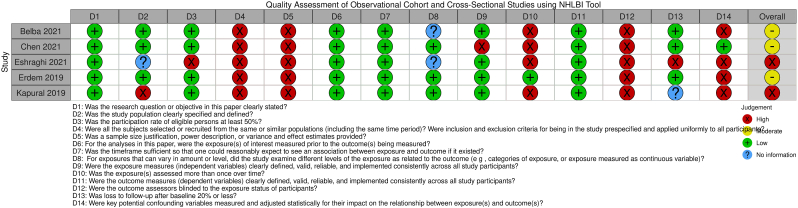
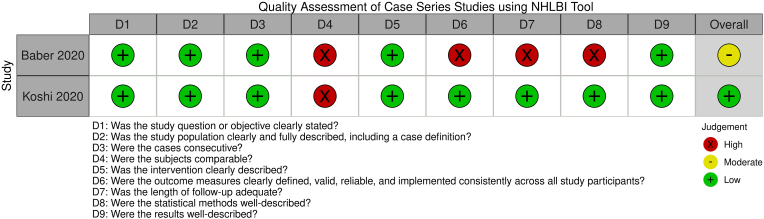
A total of 229 studies were screened, 11 met the inclusion criteria, and 265 patients underwent GnRF. Study designs included 1 double-blind pragmatic RCT, 5 retrospective cohort studies, 2 retrospective case series, and 3 case reports. The overall study quality assessment demonstrated three studies had "good", six "fair", and two "poor" quality. There have been positive responses to GnRF for post-TKA chronic knee pain in a range of 30-100% of patients.
According to GRADE, there is limited evidence, associated with low certainty to support the use of GnRF to ameliorate chronic knee pain after TKA, largely due to inconsistency and risk of bias. The studies included in this review reported positive results in pain and disability, and relatively few adverse events.
总结促性腺激素释放因子(GnRF)治疗全膝关节置换术(TKA)后难治性膝关节疼痛的止痛效果。次要目的是总结GnRF治疗后身体功能的改善情况。
制定了一项方案,并由一位经验丰富的图书馆员对截至2021年11月3日的所有英文现有研究进行数据库检索。研究纳入标准为随机对照试验(RCT)、前瞻性和回顾性纵向研究、横断面研究、病例系列、病例报告、涉及≥18岁成年人的研究,以及关于使用GnRF缓解TKA后慢性膝关节疼痛的研究。使用美国国立心肺血液研究所(NHLBI)研究质量评估工具和穆拉德等人的病例报告质量评估来评估研究质量和偏倚风险。使用推荐分级、评估、制定和评价方法评估证据的确定性。
共筛选了229项研究,11项符合纳入标准,265例患者接受了GnRF治疗。研究设计包括1项双盲实用性RCT、5项回顾性队列研究、2项回顾性病例系列和3项病例报告。总体研究质量评估显示,3项研究质量“良好”,6项“中等”,2项“较差”。对于TKA后慢性膝关节疼痛,30%-100%的患者对GnRF有积极反应。
根据GRADE标准,证据有限,确定性较低,无法支持使用GnRF改善TKA后慢性膝关节疼痛,这主要是由于研究结果不一致和存在偏倚风险。本综述纳入的研究报告了在疼痛和功能障碍方面的积极结果,且不良事件相对较少。