Facultad de Ciencias de la Salud, Carrera de Medicina Veterinaria, Universidad de Las Américas, Quito, Ecuador.
Grupo de Bioquimioinformática, Universidad de Las Américas, Quito, Ecuador.
BMC Pregnancy Childbirth. 2024 Sep 7;24(1):585. doi: 10.1186/s12884-024-06778-4.
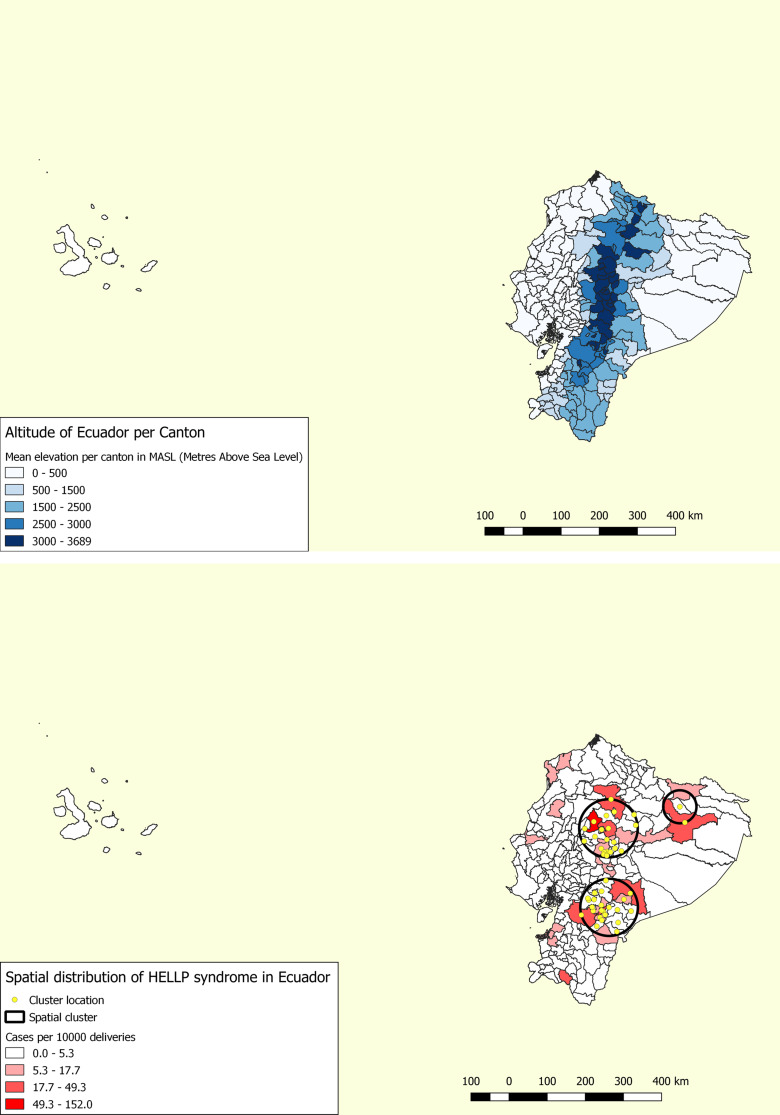
Eclampsia and pre-eclampsia rank as the third leading causes of maternal death in Ecuador, following pre-existing chronic diseases and postpartum haemorrhage, as reported by the Ecuadorian National Institute of Statistics and Census (INEC). In contrast, HELLP (Haemolysis, Elevated Liver enzymes, Low Platelet count) syndrome remains underexplored epidemiologically, not only in Latin America but globally. This study marks the first population-based investigation into HELLP syndrome incidence and mortality in Ecuador, examining geographical variations, altitude influences and ethnic backgrounds.
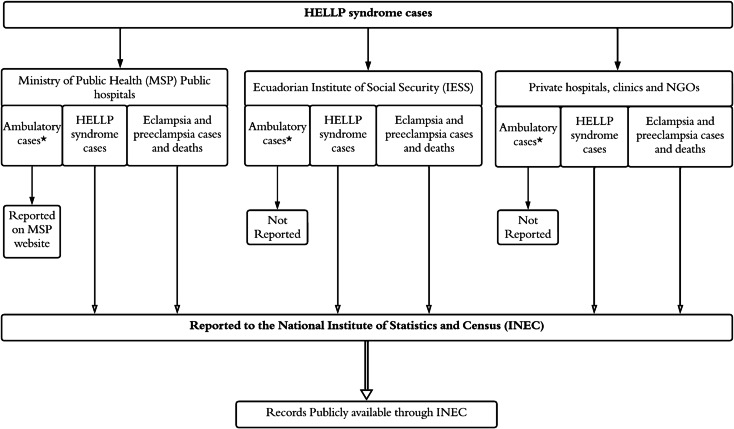
Conducted as a retrospective population-based cohort study from 2015 to 2017, this research delves into the incidence, risk factors and maternal mortality associated with HELLP syndrome in Ecuador. Utilising data from INEC and the Ecuadorian Ministry of Health, we identified HELLP syndrome cases through ICD-10 (International Classification of Diseases, tenth revision) coding in hospitalised individuals. Logistic regression analysis was employed to explore association, whilst geospatial statistical analysis focused on cantons to identify significant spatial clusters. Primary outcome measures include HELLP syndrome incidence and maternal mortality, supplying crucial insights into the syndrome's impact on maternal health in Ecuador.
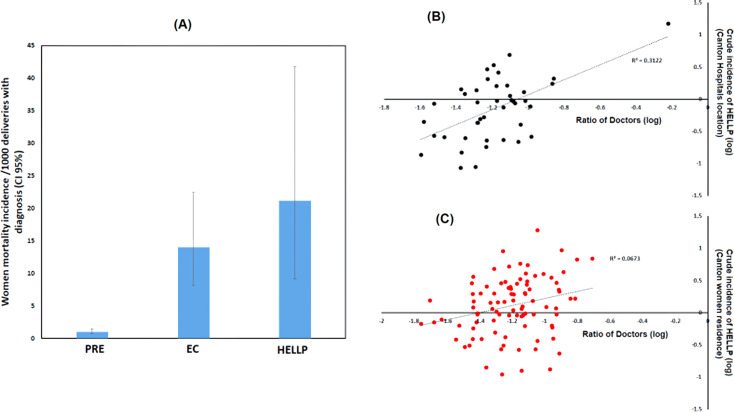
The incidence of HELLP syndrome is 0.76 (0.69-0.84)/ 1000 deliveries. Afro-Ecuadorian communities have a higher risk (Odds Ratio (OR) = 2.18 (1.03-4.63)) compared to Indigenous Ecuadorian communities. Living at mid-level or high altitude is a significant risk factor OR of 2.79 (2.19-3.55) and an OR 3.61 (2.58-5.03), respectively. Being an older mother was also identified as a risk factor. Women living more than 20 km from the obstetric unit have an OR of 2.55 (2.05-3.18). Moreover, we found that cantons with higher crude HELLP syndrome incidence also have lower numbers of physicians (R = 0.503, p-value < 0.001). The mortality incidence of women with HELLP syndrome is 21.22 (12.05-20.59)/1000 deliveries with HELLP syndrome diagnoses.
High altitude, advanced maternal age and geographical distance between residence and health centres are risk factors for HELLP syndrome. Maternal mortality in women with HELLP syndrome is higher than pre-eclampsia and eclampsia but comparable with previous reports in other countries.
厄瓜多尔国家统计和人口普查研究所(INEC)报告称,子痫前期和子痫是厄瓜多尔产妇死亡的第三大主要原因,排在先前存在的慢性疾病和产后出血之后。相比之下,HELLP(溶血、肝酶升高、血小板计数低)综合征在拉丁美洲乃至全球的流行病学研究中仍然没有得到充分的探索。本研究首次对厄瓜多尔 HELLP 综合征的发病率和死亡率进行了基于人群的调查,研究了地理差异、海拔影响和种族背景。
本研究为 2015 年至 2017 年进行的回顾性基于人群的队列研究,深入研究了厄瓜多尔 HELLP 综合征的发病率、危险因素和产妇死亡率。我们利用 INEC 和厄瓜多尔卫生部的数据,通过住院患者的 ICD-10(国际疾病分类,第十版)编码来确定 HELLP 综合征病例。采用逻辑回归分析来探索相关性,而地理空间统计分析则侧重于省会,以确定显著的空间聚类。主要结局指标包括 HELLP 综合征的发病率和产妇死亡率,为厄瓜多尔该综合征对产妇健康的影响提供了重要的见解。
HELLP 综合征的发病率为 0.76(0.69-0.84)/1000 例分娩。与土著厄瓜多尔社区相比,非裔厄瓜多尔社区的风险更高(比值比(OR)=2.18(1.03-4.63))。居住在中海拔或高海拔地区是一个显著的危险因素,OR 分别为 2.79(2.19-3.55)和 3.61(2.58-5.03)。年长的母亲也是一个危险因素。距离产科单位超过 20 公里的妇女的 OR 为 2.55(2.05-3.18)。此外,我们发现,发病率较高的省会的医生人数较少(R=0.503,p 值<0.001)。患有 HELLP 综合征的妇女的死亡率为 21.22(12.05-20.59)/1000 例有 HELLP 综合征诊断的分娩。
高海拔、产妇年龄较大以及居住地与卫生中心之间的地理距离是 HELLP 综合征的危险因素。患有 HELLP 综合征的妇女的产妇死亡率高于子痫前期和子痫,但与其他国家的报告相似。