Kang Anna, Kwak Min-Jin, Choi Hye Jin, Son Seon-Hui, Lim Sei-Hyun, Eor Ju Young, Song Minho, Kim Min Kyu, Kim Jong Nam, Yang Jungwoo, Lee Minjee, Kang Minkyoung, Oh Sangnam, Kim Younghoon
Department of Agricultural Biotechnology and Research Institute of Agriculture and Life Science, Seoul National University, Seoul 08826, Korea.
Department of Animal Science and Biotechnology, Chungnam National University, Daejeon 34134, Korea.
Food Sci Anim Resour. 2024 Sep;44(5):1080-1095. doi: 10.5851/kosfa.2024.e41. Epub 2024 Sep 1.
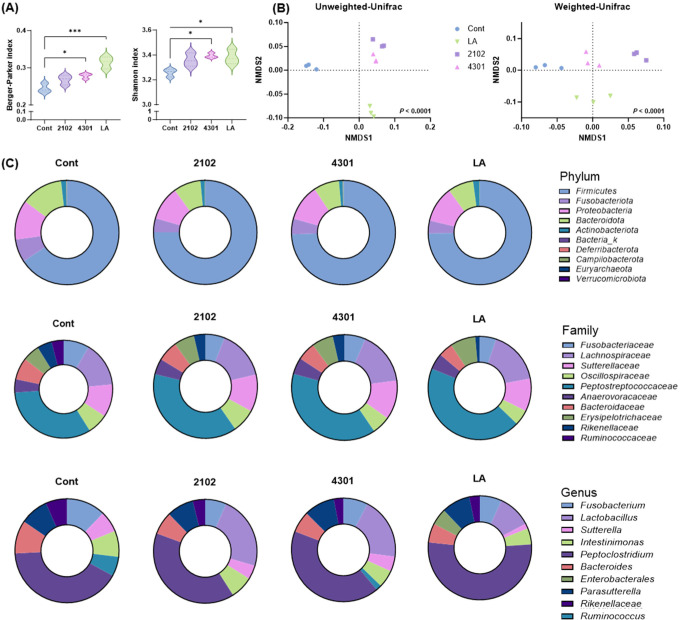
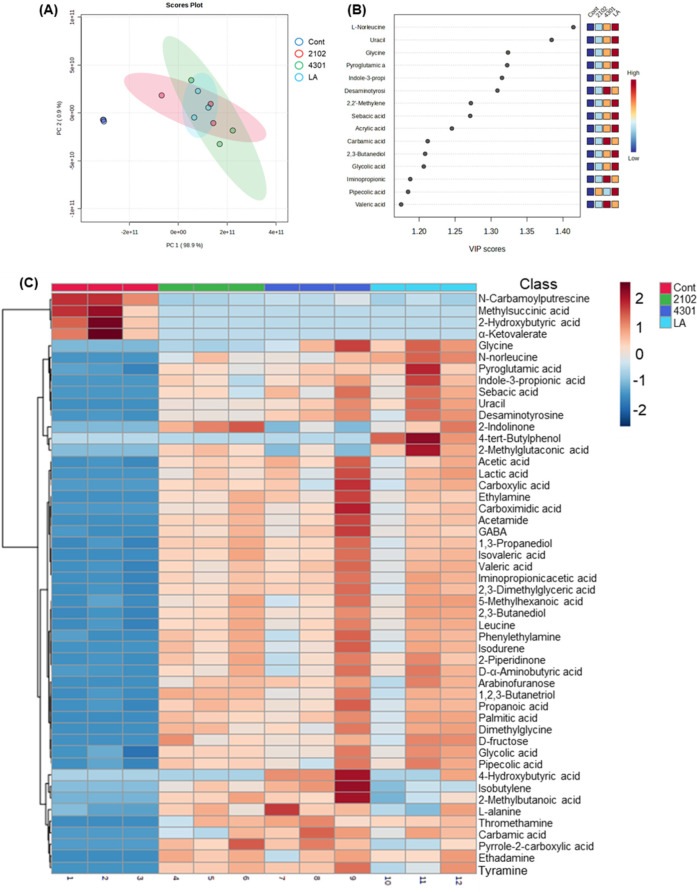
In contemporary society, the increasing number of pet-owning households has significantly heightened interest in companion animal health, expanding the probiotics market aimed at enhancing pet well-being. Consequently, research into the gut microbiota of companion animals has gained momentum, however, ethical and societal challenges associated with experiments on intelligent and pain-sensitive animals necessitate alternative research methodologies to reduce reliance on live animal testing. To address this need, the Fermenter for Intestinal Microbiota Model (FIMM) is being investigated as an tool designed to replicate gastrointestinal conditions of living animals, offering a means to study gut microbiota while minimizing animal experimentation. The FIMM system explored interactions between intestinal microbiota and probiotics within a simulated gut environment. Two strains of commercial probiotic bacteria, IDCC 2102 and IDCC 4301, along with a newly isolated strain from domestic dogs, SLAM AK001, were introduced into the FIMM system with gut microbiota from a beagle model. Findings highlight the system's capacity to mirror and modulate the gut environment, evidenced by an increase in beneficial bacteria like and and a decrease in the pathogen . The study also verified the system's ability to facilitate accurate interactions between probiotics and commensal bacteria, demonstrated by the production of short-chain fatty acids and bacterial metabolites, including amino acids and gamma-aminobutyric acid precursors. Thus, the results advocate for FIMM as an system that authentically simulates the intestinal environment, presenting a viable alternative for examining gut microbiota and metabolites in companion animals.
在当代社会,养宠物家庭数量的增加显著提高了人们对伴侣动物健康的关注度,推动了旨在提升宠物健康水平的益生菌市场的发展。因此,对伴侣动物肠道微生物群的研究势头渐起。然而,由于对智能且对疼痛敏感的动物进行实验存在伦理和社会挑战,需要采用替代研究方法来减少对活体动物试验的依赖。为满足这一需求,肠道微生物群模型发酵罐(FIMM)正在被研究,它是一种旨在复制活体动物胃肠道条件的工具,提供了一种在尽量减少动物实验的同时研究肠道微生物群的方法。FIMM系统探索了模拟肠道环境中肠道微生物群与益生菌之间的相互作用。将两种商业益生菌菌株IDCC 2102和IDCC 4301,以及一种从家犬新分离出的菌株SLAM AK001,与比格犬模型的肠道微生物群一起引入FIMM系统。研究结果突出了该系统反映和调节肠道环境的能力,表现为有益菌如[具体有益菌名称]和[具体有益菌名称]数量增加,病原菌[具体病原菌名称]数量减少。该研究还验证了该系统促进益生菌与共生细菌之间准确相互作用的能力,这通过短链脂肪酸以及包括氨基酸和γ-氨基丁酸前体在内的细菌代谢产物的产生得以证明。因此,研究结果支持将FIMM作为一种能真实模拟肠道环境的系统,为研究伴侣动物的肠道微生物群和代谢产物提供了一种可行的替代方法。