Cho Hyun-Woo, Choi Soyoung, Seo Kangmin, Kim Ki Hyun, Jeon Jung-Hwan, Kim Chan Ho, Lim Sejin, Jeong Sohee, Chun Ju Lan
National Institute of Animal Science, Rural Development Administration, Wanju 55365, Korea.
J Anim Sci Technol. 2022 Sep;64(5):937-949. doi: 10.5187/jast.2022.e66. Epub 2022 Sep 30.
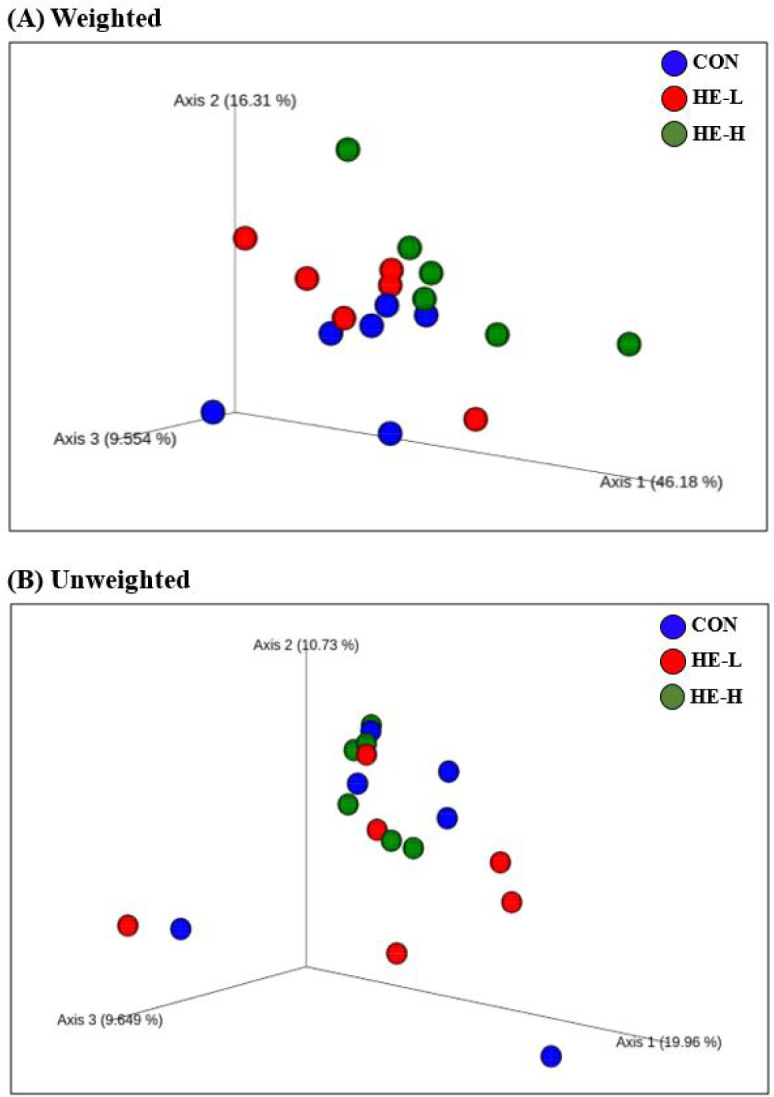
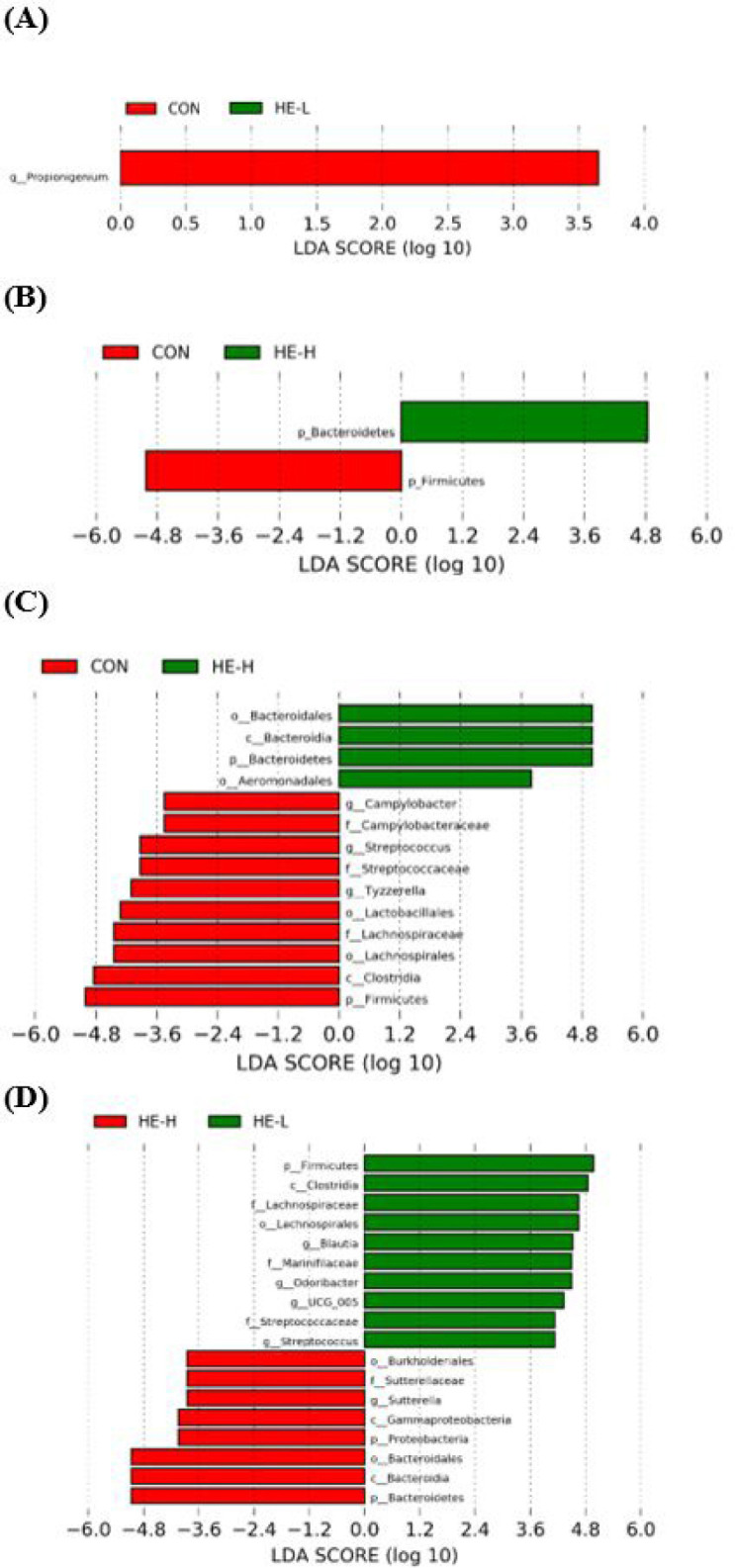
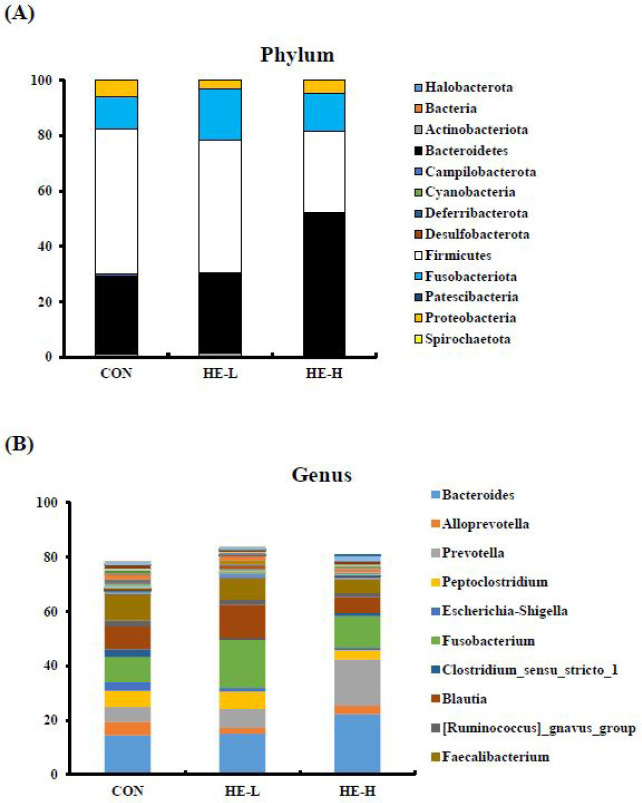
Health concern of dogs is the most important issue for pet owners. People who have companied the dogs long-term provide the utmost cares for their well-being and healthy life. Recently, it was revealed that the population and types of gut microbiota affect the metabolism and immunity of the host. However, there is little information on the gut microbiome of dogs. (; HE) is one of the well-known medicinal mushrooms and has multiple bioactive components including polyphenol, β-glucan, polysaccharides, ergothioneine, hericerin, erinacines, etc. Here we tested a pet food that contained for improvement in the gut microbiota environment of aged dogs. A total of 18 dogs, each 11 years old, were utilized. For sixteen weeks, the dogs were fed with 0.4 g of H. erinaceus (HE-L), or 0.8 g (HE-H), or without (CON) per body weight (kg) with daily diets (n = 6 per group). Taxonomic analysis was performed using metagenomics to investigate the difference in the gut microbiome. Resulting from principal coordinates analysis (PCoA) to confirm the distance difference between the groups, there was a significant difference between HE-H and CON due to weighted Unique fraction metric (Unifrac) distance ( = 0.047), but HE-L did not have a statistical difference compared to that of CON. Additionally, the result of Linear discriminate analysis of effect size (LEfSe) showed that phylum in HE-H and its order Bacteroidales increased, compared to that of CON, Additionally, phylum in HE-H, and its genera (, ) were reduced. Furthermore, at the family level, and its genus in HE-H was decreased compared to that of CON. Summarily, our data demonstrated that the intake of can regulate the gut microbial community in aged dogs, and an adequate supply of HE on pet diets would possibly improve immunity and anti-obesity on gut-microbiota in dogs.
犬类的健康问题是宠物主人最为关注的重要事项。长期陪伴狗狗的人们会给予它们无微不至的关怀,以确保其幸福安康的生活。最近有研究表明,肠道微生物群的数量和种类会影响宿主的新陈代谢和免疫力。然而,关于犬类肠道微生物组的信息却很少。猴头菇(HE)是一种著名的药用蘑菇,含有多种生物活性成分,包括多酚、β-葡聚糖、多糖、麦角硫因、猴头菌素、齿孔菌素等。在此,我们测试了一种含有猴头菇的宠物食品,以改善老年犬的肠道微生物群环境。总共使用了18只11岁的犬。在为期16周的时间里,按照每体重(千克)每日喂食0.4克猴头菇(HE-L组),或0.8克(HE-H组),或不喂食猴头菇(CON组)(每组n = 6只)。使用宏基因组学进行分类分析,以研究肠道微生物组的差异。通过主坐标分析(PCoA)来确认各组之间的距离差异,结果显示,由于加权UniFrac距离(P = 0.047),HE-H组与CON组之间存在显著差异,但HE-L组与CON组相比没有统计学差异。此外,效应大小线性判别分析(LEfSe)的结果表明,与CON组相比,HE-H组中的厚壁菌门及其拟杆菌目增加。此外,HE-H组中的变形菌门及其属(大肠杆菌、志贺氏菌)减少。此外,在科水平上,与CON组相比,HE-H组中的肠杆菌科及其属大肠杆菌减少。总之,我们的数据表明,摄入猴头菇可以调节老年犬的肠道微生物群落,在宠物饮食中适当供应猴头菇可能会改善犬类肠道微生物群的免疫力和抗肥胖能力。