Centre for Gene Therapy and Regenerative Medicine, King's College London, London SE1 9RT, UK.
Human Embryo and Stem Cell Laboratory, The Francis Crick Institute, 1 Midland Road, London NW1 1AT, UK.
Development. 2024 Sep 1;151(17). doi: 10.1242/dev.202778. Epub 2024 Sep 10.
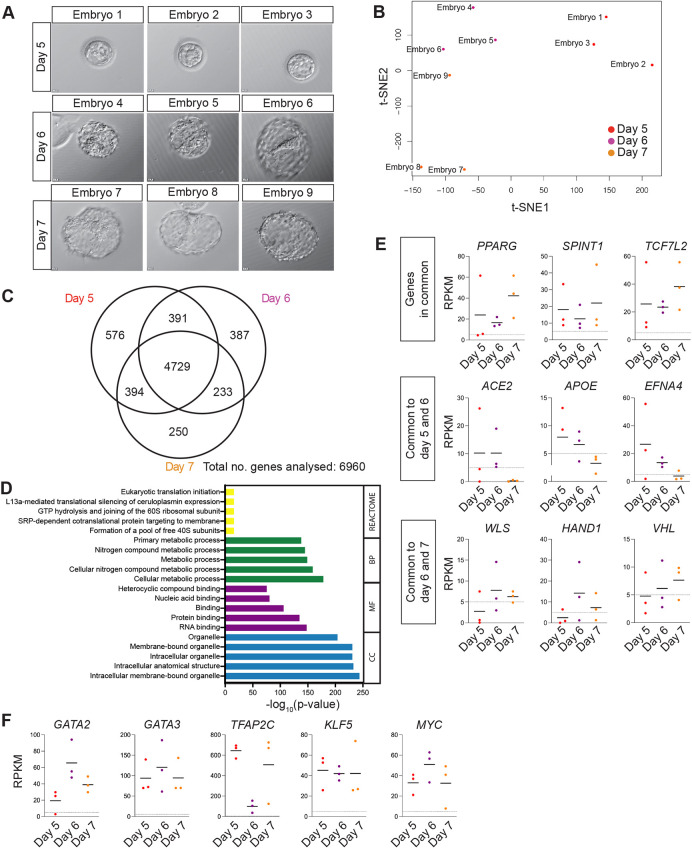
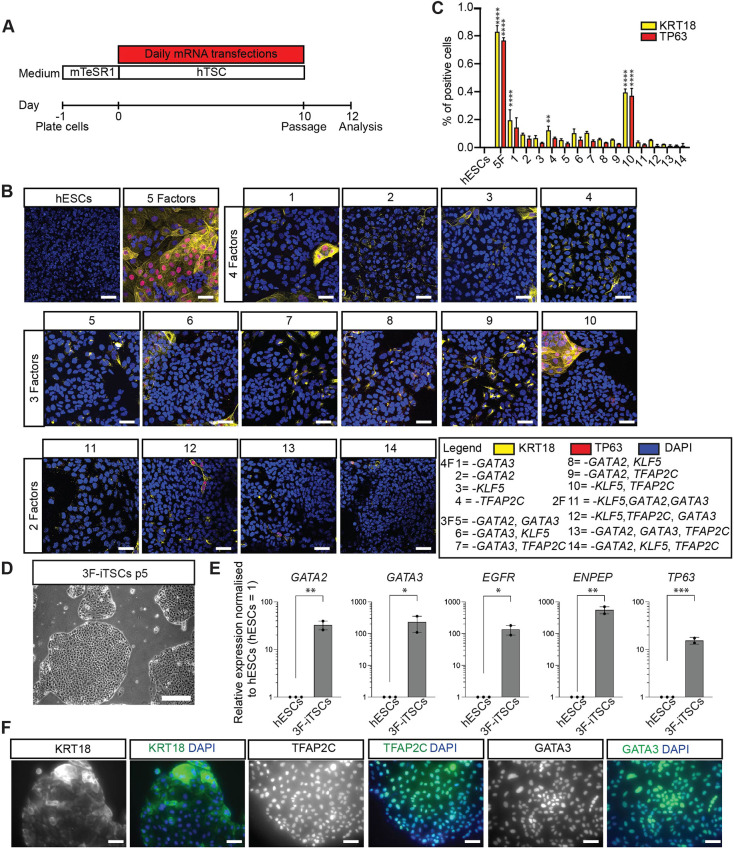
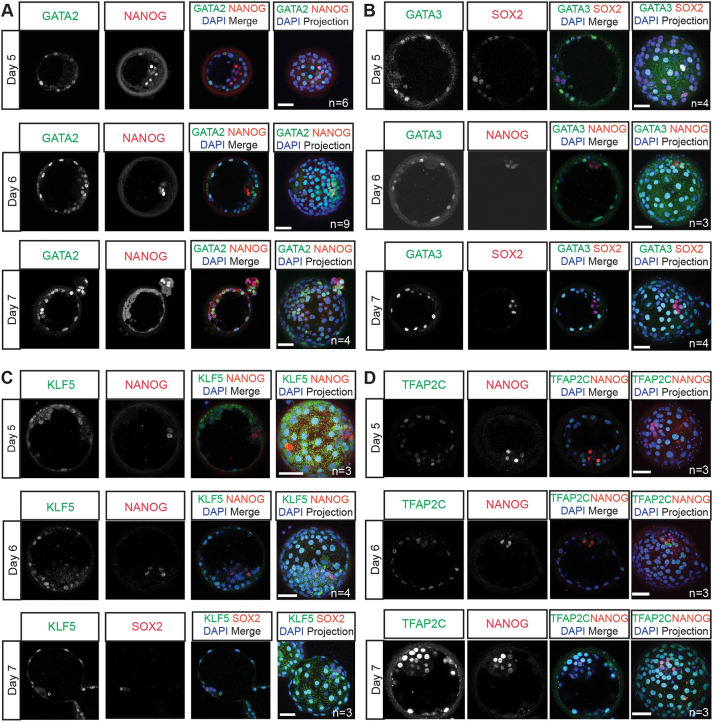
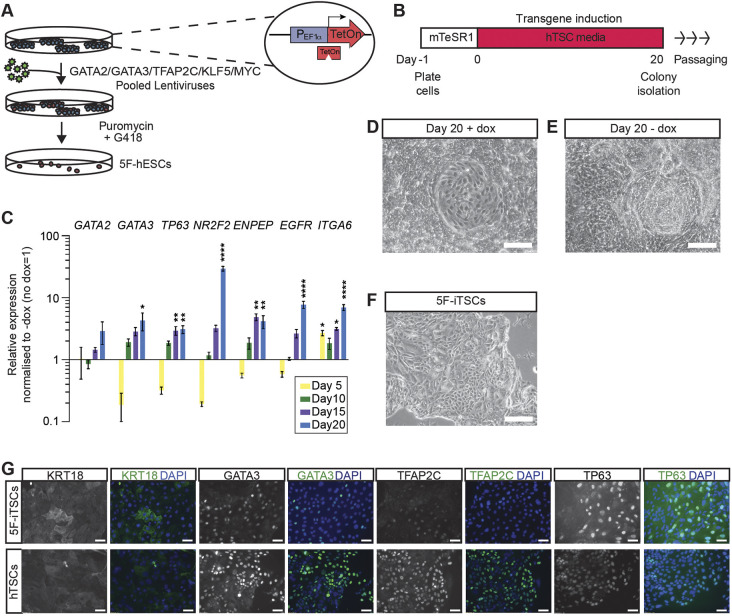
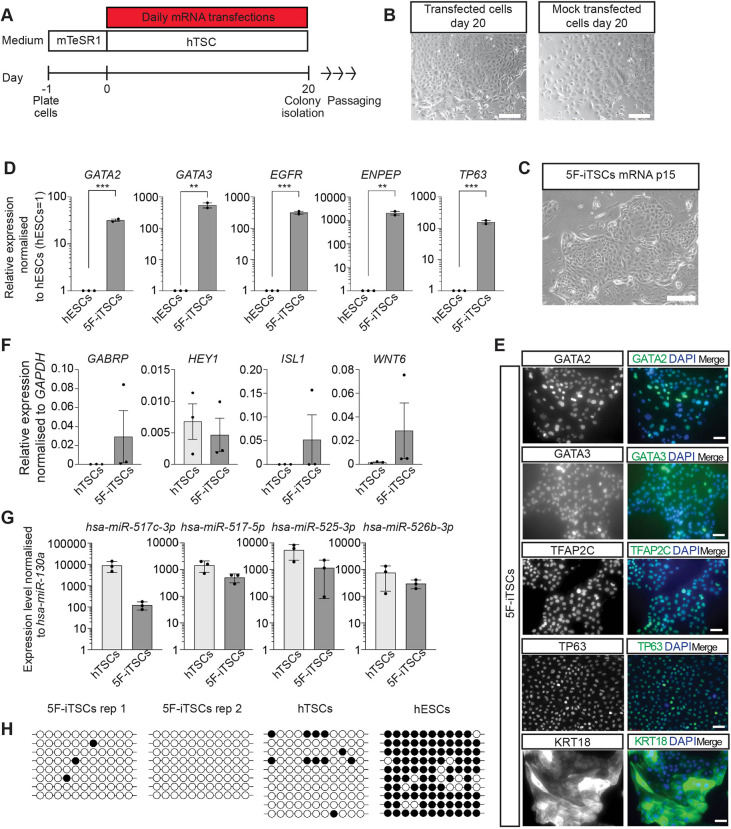
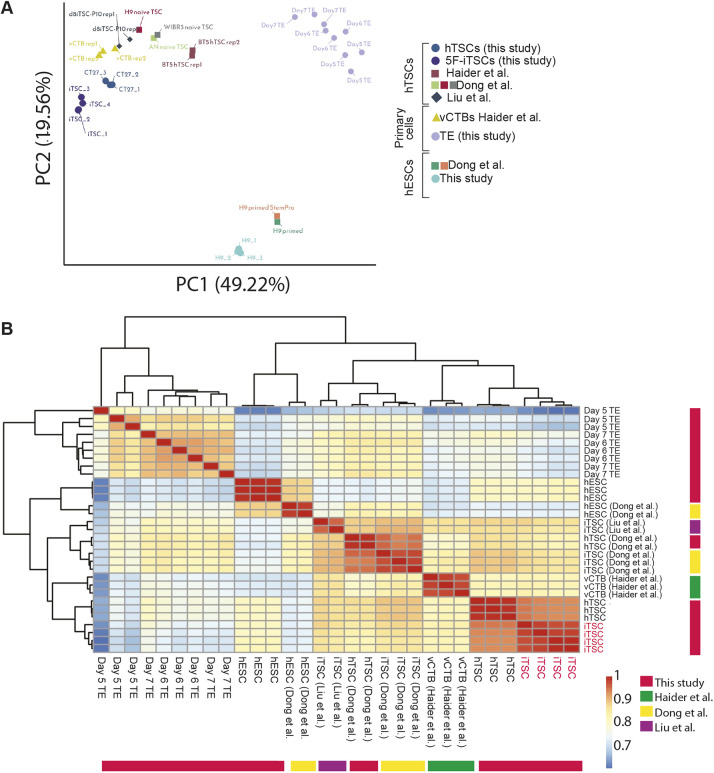
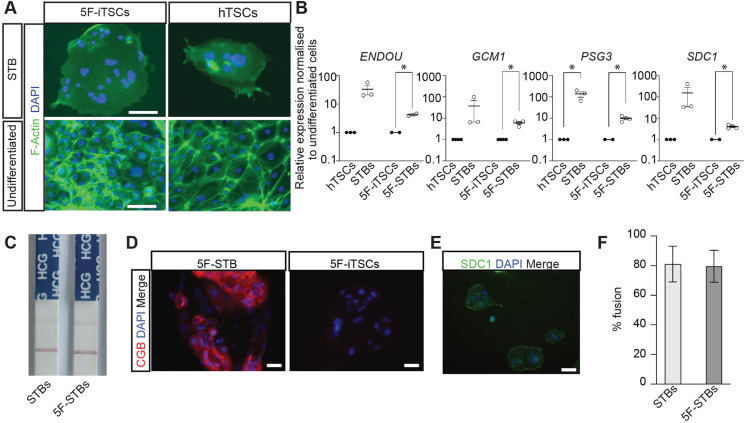
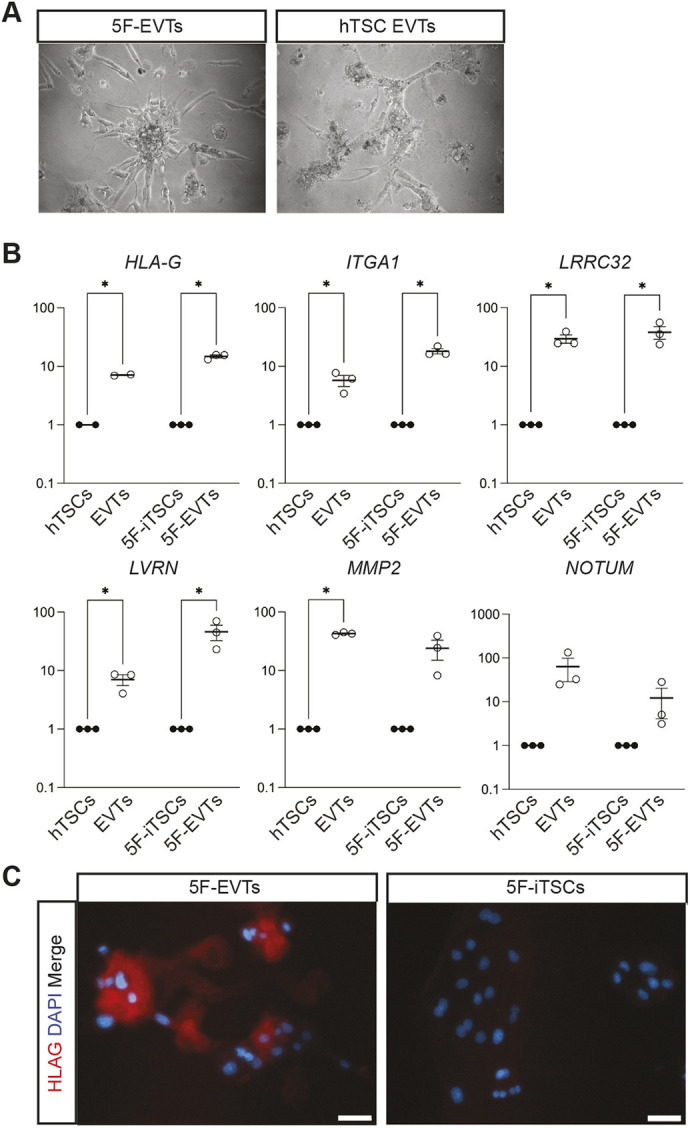
During the first week of development, human embryos form a blastocyst composed of an inner cell mass and trophectoderm (TE) cells, the latter of which are progenitors of placental trophoblast. Here, we investigated the expression of transcripts in the human TE from early to late blastocyst stages. We identified enrichment of the transcription factors GATA2, GATA3, TFAP2C and KLF5 and characterised their protein expression dynamics across TE development. By inducible overexpression and mRNA transfection, we determined that these factors, together with MYC, are sufficient to establish induced trophoblast stem cells (iTSCs) from primed human embryonic stem cells. These iTSCs self-renew and recapitulate morphological characteristics, gene expression profiles, and directed differentiation potential, similar to existing human TSCs. Systematic omission of each, or combinations of factors, revealed the crucial importance of GATA2 and GATA3 for iTSC transdifferentiation. Altogether, these findings provide insights into the transcription factor network that may be operational in the human TE and broaden the methods for establishing cellular models of early human placental progenitor cells, which may be useful in the future to model placental-associated diseases.
在发育的第一周,人类胚胎形成一个由内细胞团和滋养外胚层 (TE) 细胞组成的囊胚,后者是胎盘滋养层的祖细胞。在这里,我们研究了从早期到晚期囊胚阶段人类 TE 中转录本的表达。我们发现转录因子 GATA2、GATA3、TFAP2C 和 KLF5 的富集,并在 TE 发育过程中对其蛋白表达动态进行了特征描述。通过诱导过表达和 mRNA 转染,我们确定这些因子与 MYC 一起足以从原始人类胚胎干细胞中建立诱导滋养层干细胞 (iTSC)。这些 iTSC 自我更新并重现形态特征、基因表达谱和定向分化潜力,与现有的人类 TSC 相似。系统地省略每个因子或组合因子,揭示了 GATA2 和 GATA3 对于 iTSC 转分化的至关重要性。总之,这些发现为可能在人类 TE 中起作用的转录因子网络提供了深入了解,并拓宽了建立早期人类胎盘祖细胞细胞模型的方法,这些方法将来可能有助于模拟与胎盘相关的疾病。