Department of Informative Genetics, Environment and Genome Research Center, Tohoku University Graduate School of Medicine, Sendai, 980-8575, Japan.
Department of Bioscience, Faculty of Life Science, Tokyo University of Agriculture, Tokyo, 156-8502, Japan.
Nat Commun. 2022 Jun 2;13(1):3071. doi: 10.1038/s41467-022-30775-w.
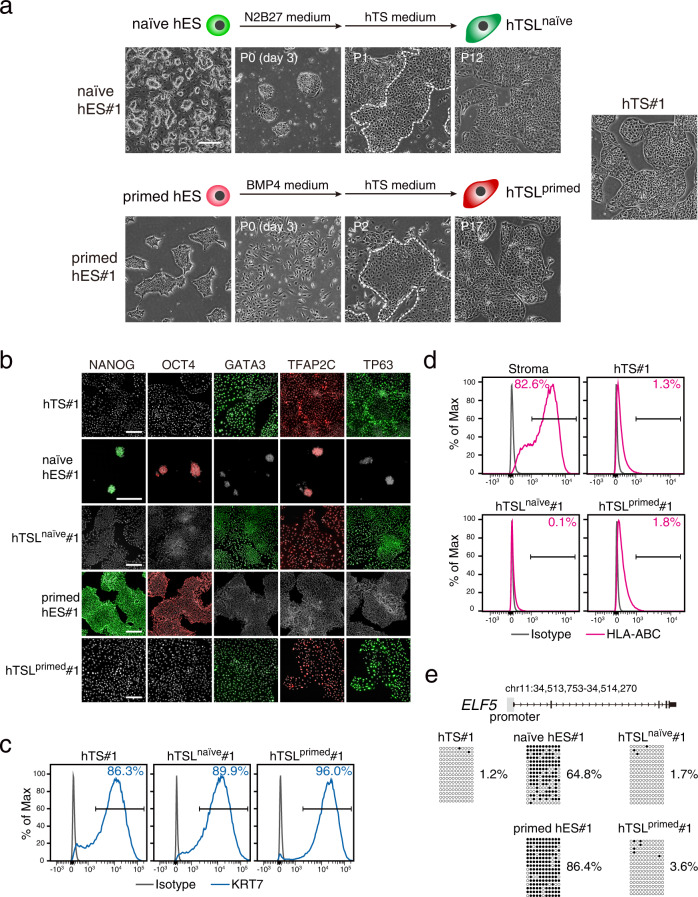
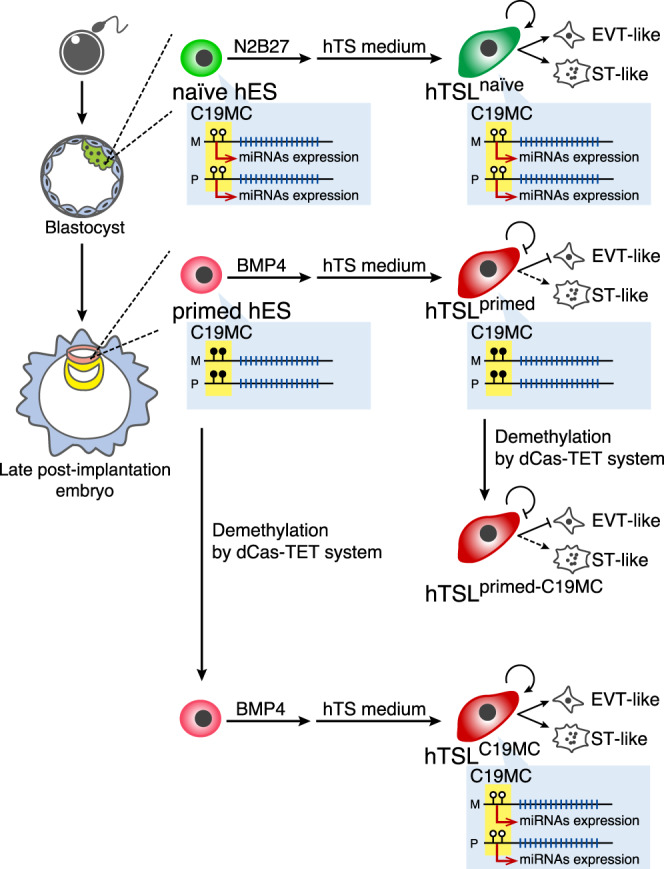
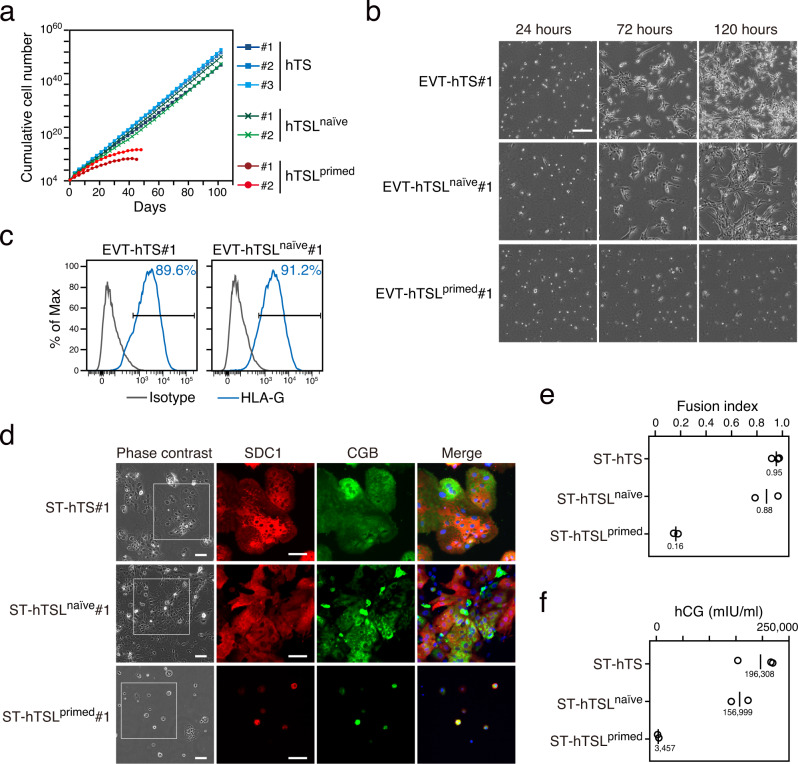
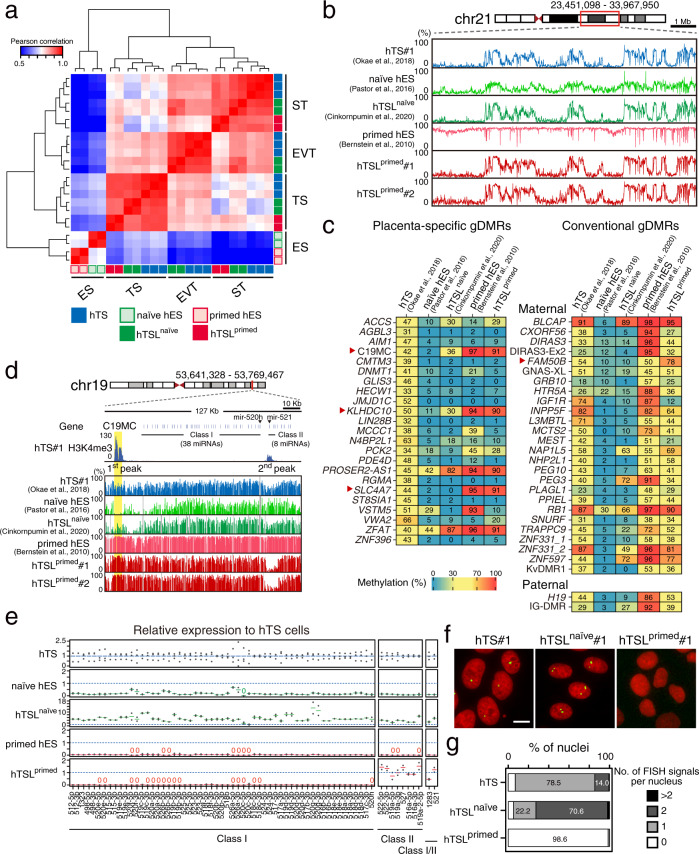
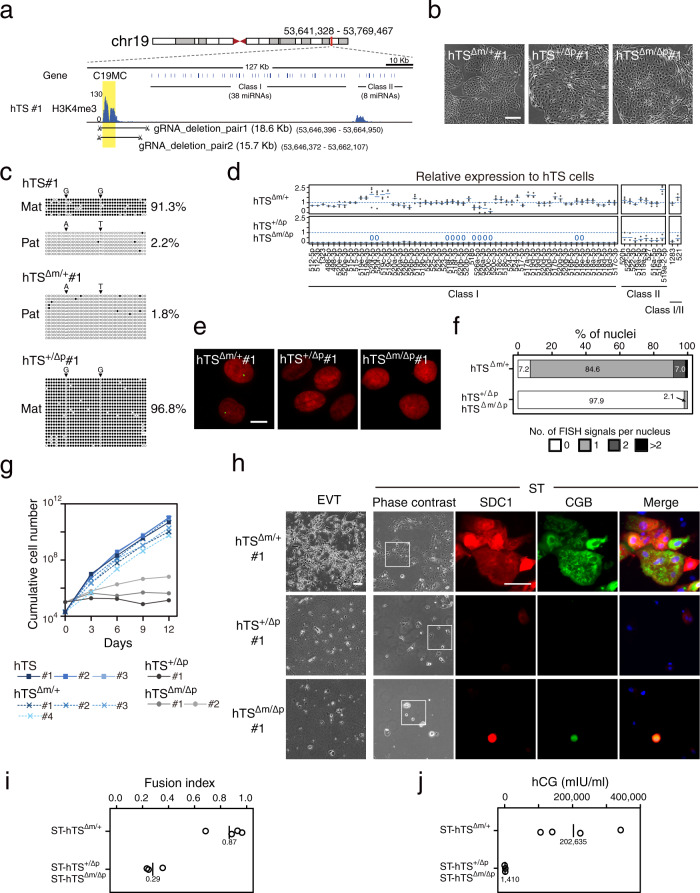
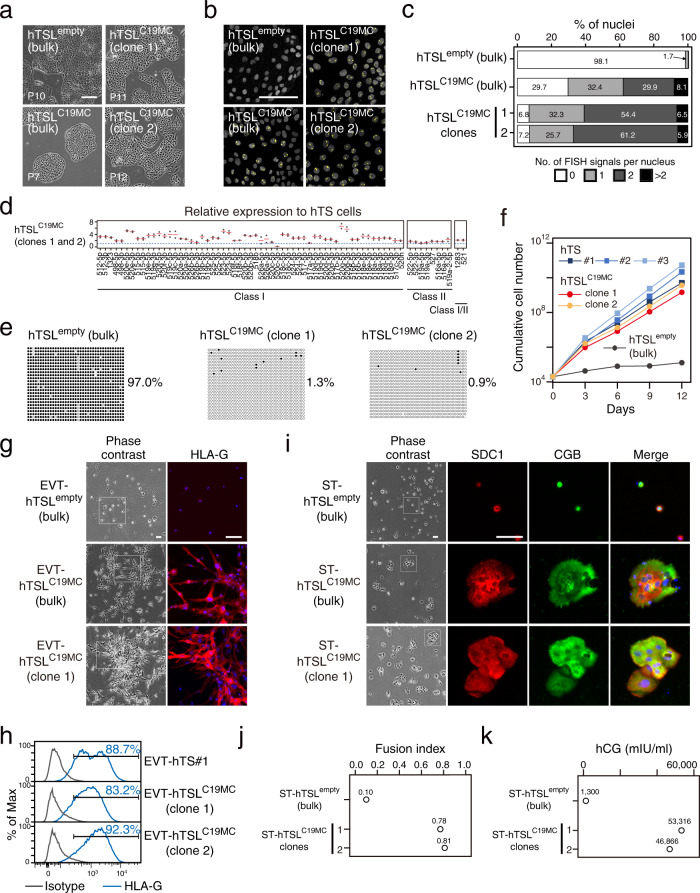
The first cell fate commitment during mammalian development is the specification of the inner cell mass and trophectoderm. This irreversible cell fate commitment should be epigenetically regulated, but the precise mechanism is largely unknown in humans. Here, we show that naïve human embryonic stem (hES) cells can transdifferentiate into trophoblast stem (hTS) cells, but primed hES cells cannot. Our transcriptome and methylome analyses reveal that a primate-specific miRNA cluster on chromosome 19 (C19MC) is active in naïve hES cells but epigenetically silenced in primed ones. Moreover, genome and epigenome editing using CRISPR/Cas systems demonstrate that C19MC is essential for hTS cell maintenance and C19MC-reactivated primed hES cells can give rise to hTS cells. Thus, we reveal that C19MC activation confers differentiation potential into trophoblast lineages on hES cells. Our findings are fundamental to understanding the epigenetic regulation of human early development and pluripotency.
哺乳动物发育过程中的第一个细胞命运决定是内细胞团和滋养外胚层的特化。这种不可逆的细胞命运决定应该受到表观遗传调控,但在人类中,其确切机制在很大程度上尚不清楚。在这里,我们表明,原始人类胚胎干细胞(hES)可以转分化为滋养层干细胞(hTS),但已分化的 hES 则不能。我们的转录组和甲基化组分析表明,19 号染色体上的一个原始人特异性 miRNA 簇(C19MC)在原始 hES 细胞中活跃,但在已分化的细胞中被表观遗传沉默。此外,使用 CRISPR/Cas 系统进行基因组和表观基因组编辑表明,C19MC 对于 hTS 细胞的维持是必需的,并且重新激活的 C19MC 可诱导已分化的 hES 细胞分化为 hTS 细胞。因此,我们揭示了 C19MC 的激活赋予 hES 细胞向滋养层谱系分化的潜能。我们的研究结果对于理解人类早期发育和多能性的表观遗传调控具有重要意义。