Hergesell Adrian H, Baarslag Renate J, Seitzinger Claire L, Meena Raghavendra, Schara Patrick, Tomović Željko, Li Guanna, Weckhuysen Bert M, Vollmer Ina
Inorganic Chemistry and Catalysis Group, Institute for Sustainable and Circular Chemistry, Utrecht University, Utrecht 3584 CG, The Netherlands.
Biobased Chemistry and Technology, Wageningen University, Wageningen 6708 WG, The Netherlands.
J Am Chem Soc. 2024 Sep 25;146(38):26139-26147. doi: 10.1021/jacs.4c07157. Epub 2024 Sep 9.
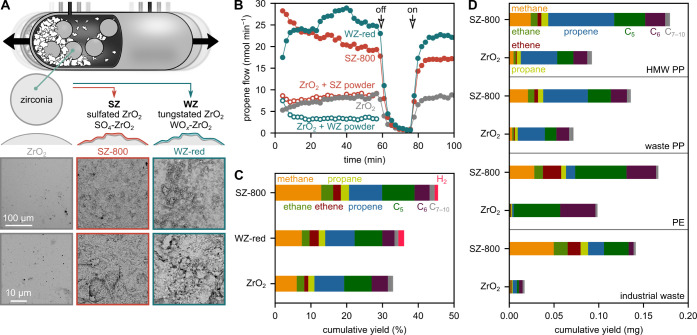
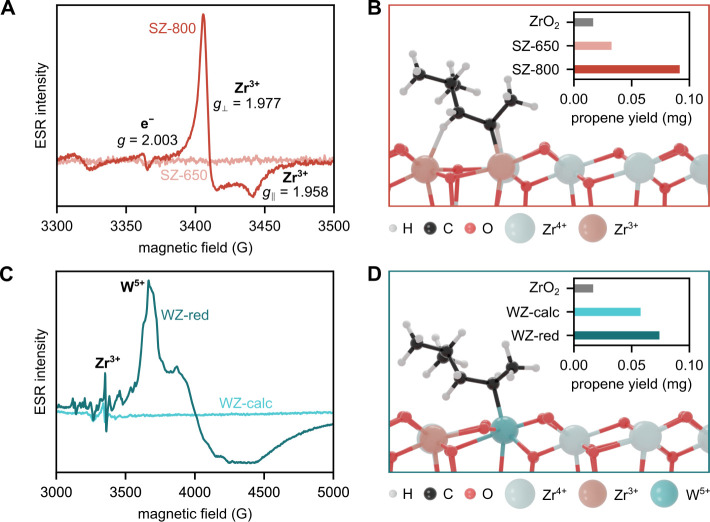
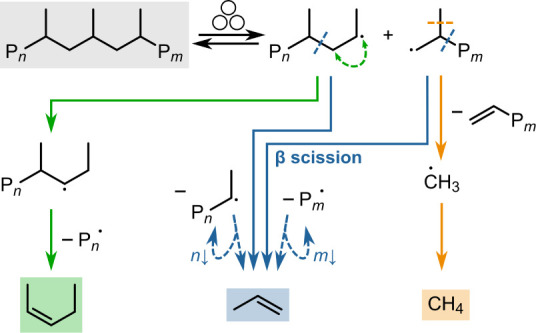
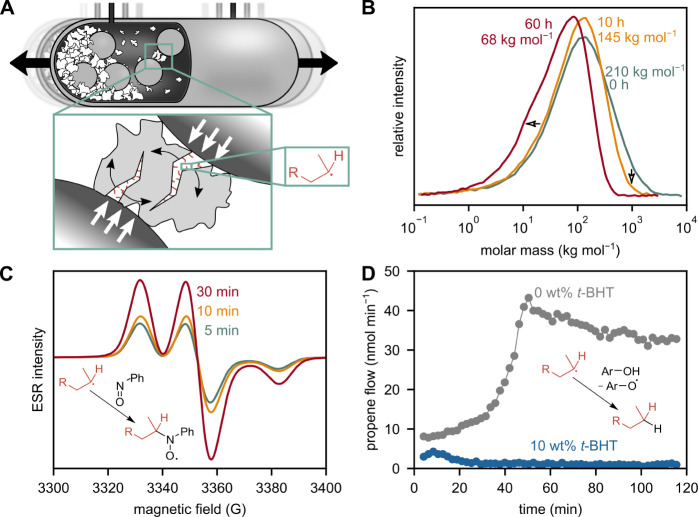
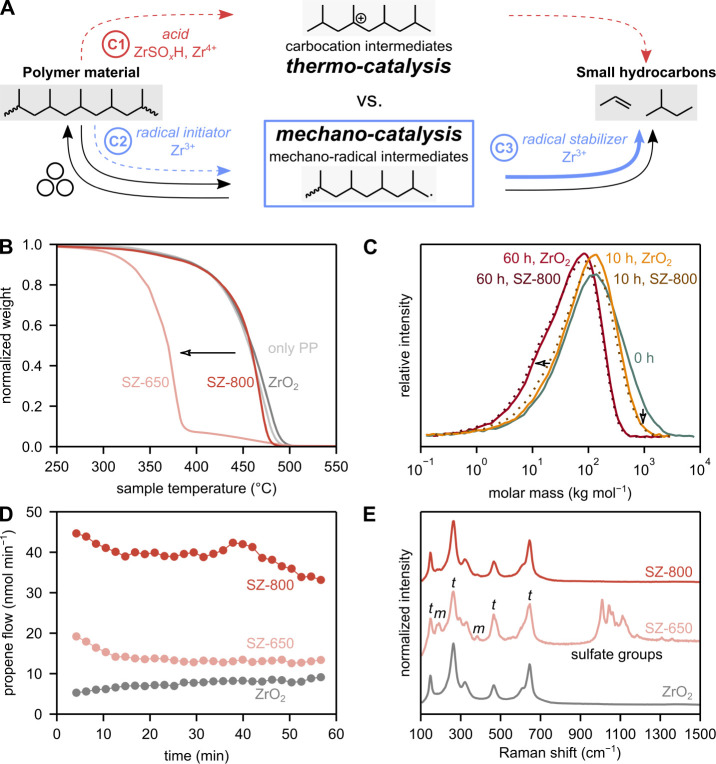
Improved recycling technologies can offer sustainable end-of-life options for plastic waste. While polyolefins can be converted into small hydrocarbons over acid catalysts at high temperatures, we demonstrate an alternative mechano-catalytic strategy at ambient conditions. The mechanism is fundamentally different from classical acidity-driven high-temperature approaches, exploiting mechanochemically generated radical intermediates. Surface activation of zirconia grinding spheres creates redox active surface sites directly at the point of mechanical energy input. This allows control over mechano-radical reactivity, while powder catalysts are not active. Optimized milling parameters enable the formation of 45% C hydrocarbons from polypropylene within 1 h at ambient temperature. While mechanochemical bond scission is undesired in plastic production, we show that it can also be exploited for chemical recycling.
改进的回收技术可为塑料废物提供可持续的生命周期末期处理方案。虽然聚烯烃在高温下可通过酸催化剂转化为小分子烃类,但我们展示了一种在环境条件下的机械催化替代策略。该机制与传统的酸度驱动高温方法有根本不同,它利用机械化学产生的自由基中间体。氧化锆研磨球的表面活化直接在机械能输入点产生氧化还原活性表面位点。这使得能够控制机械自由基的反应性,而粉末催化剂则无活性。优化的研磨参数能够在环境温度下1小时内由聚丙烯形成45%的C烃。虽然机械化学断键在塑料生产中是不可取的,但我们表明它也可用于化学回收。