Sutton Nicholas M, Suski Cory, Payne Keegan, O'Dwyer James P
Department of Biology, Grinnell College, 1116 8th Avenue, Grinnell, IA, 50112, USA.
Program in Ecology, Evolution, and Conservation Biology, School of Integrative Biology, University of Illinois at Urbana-Champaign, 505 S. Goodwin Avenue, Urbana, IL, 61801, USA.
Conserv Physiol. 2024 Sep 7;12(1):coae062. doi: 10.1093/conphys/coae062. eCollection 2024.
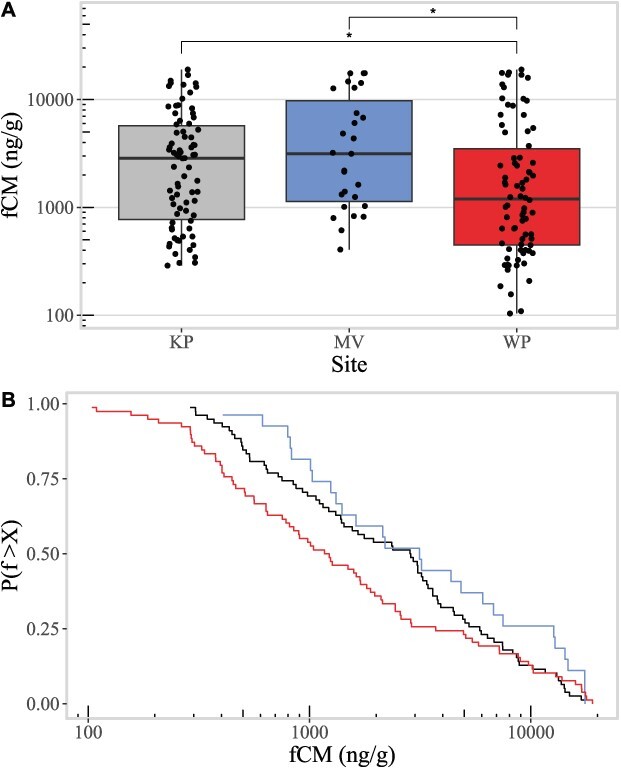
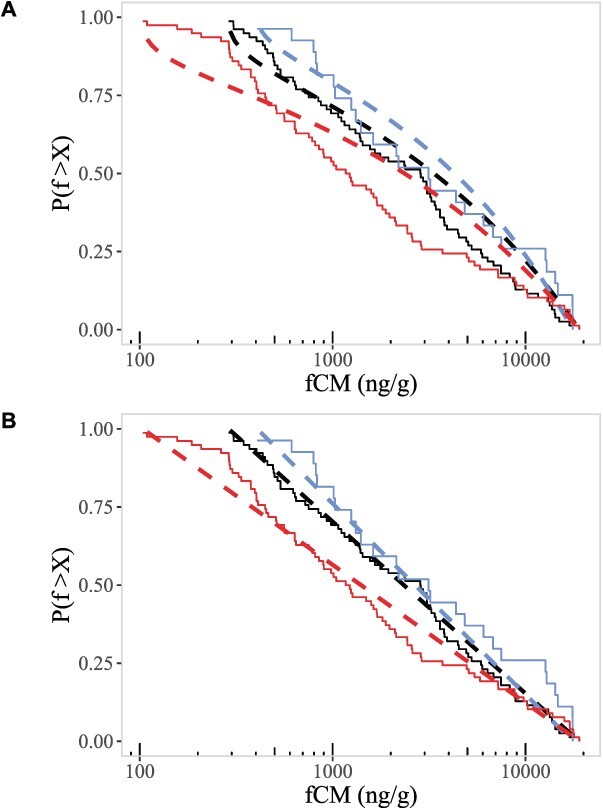
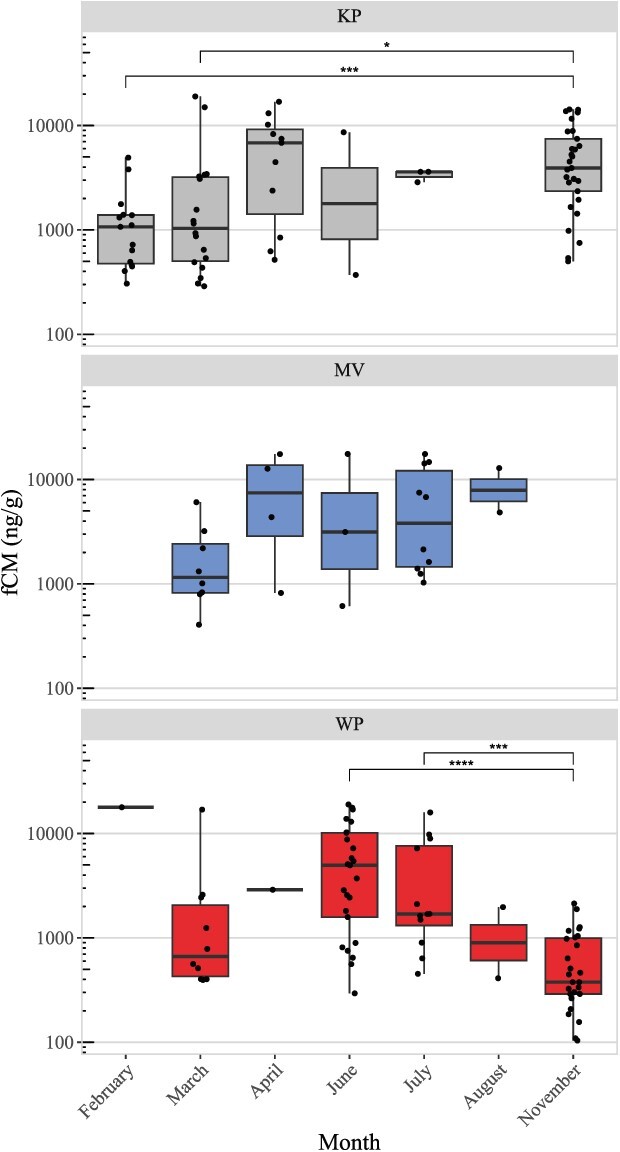
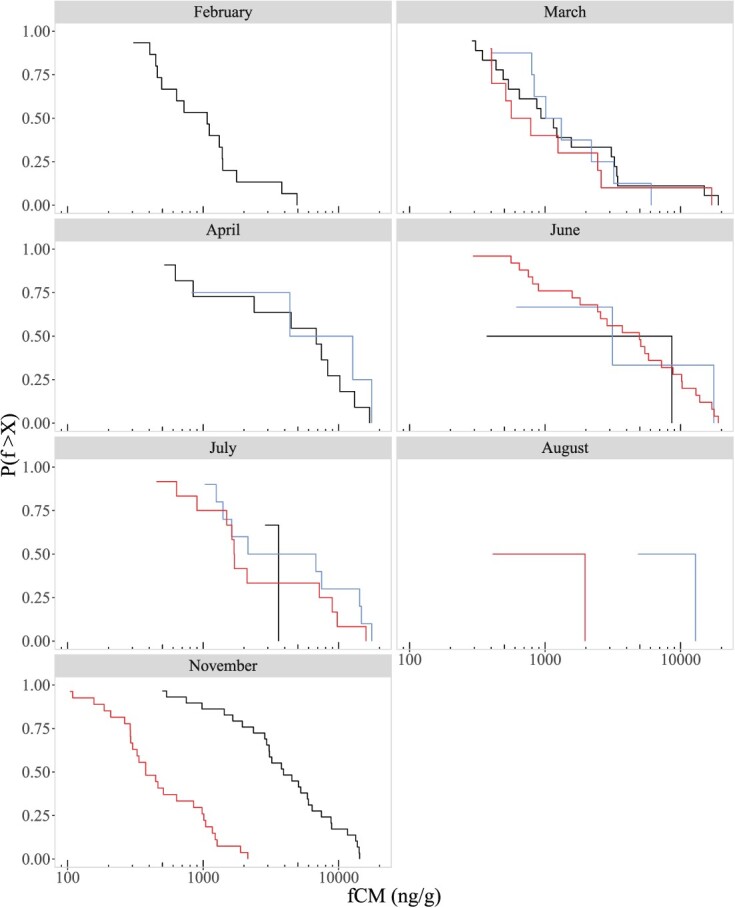
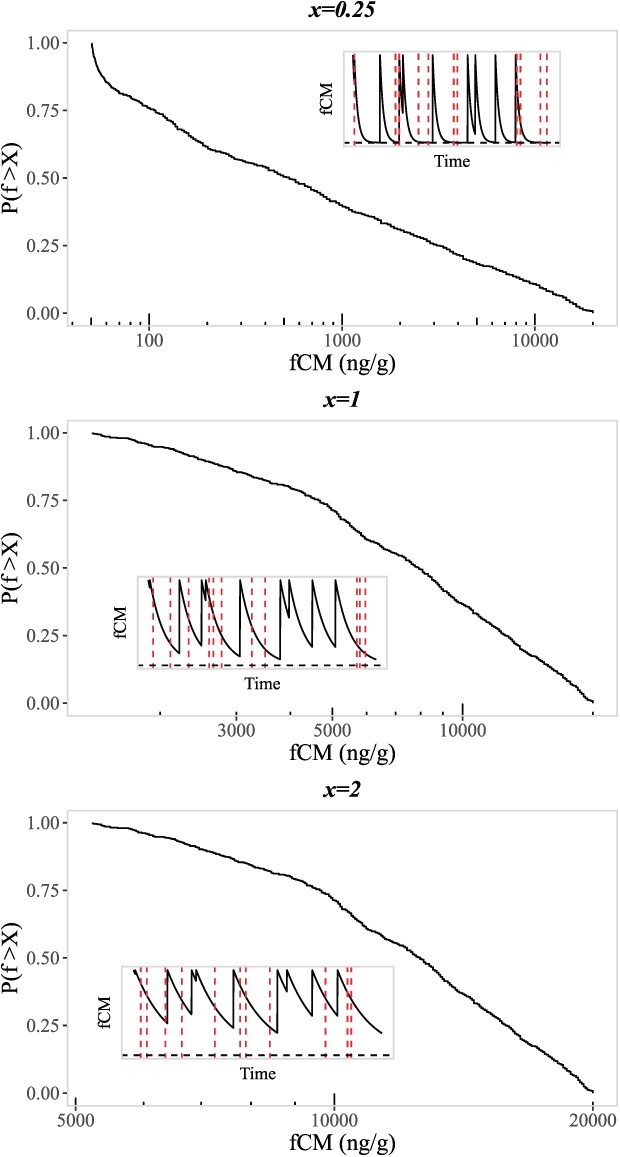
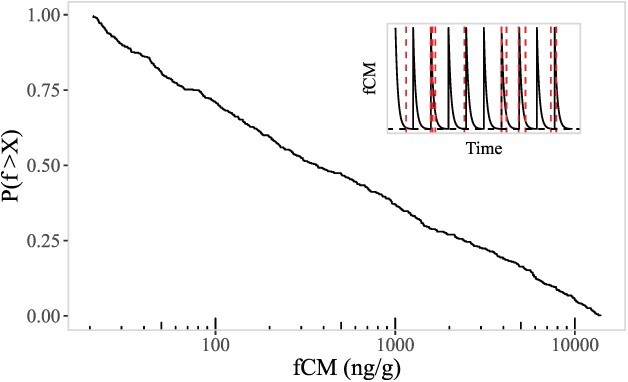
Glucocorticoid (GC) levels have significant impacts on the health and behaviour of wildlife populations and are involved in many essential body functions including circadian rhythm, stress physiology and metabolism. However, studies of GCs in wildlife often focus on estimating mean hormone levels in populations, or a subset of a population, rather than on assessing the entire distribution of hormone levels within populations. Additionally, explorations of population GC data are limited due to the tradeoff between the number of individuals included in studies and the amount of data per individual that can be collected. In this study, we explore patterns of GC level distributions in three white-tailed deer () populations using a non-invasive, opportunistic sampling approach. GC levels were assessed by measuring faecal corticosterone metabolite levels ('fCMs') from deer faecal samples throughout the year. We found both population and seasonal differences in fCMs but observed similarly shaped fCM distributions in all populations. Specifically, all population fCM cumulative distributions were found to be very heavy-tailed. We developed two toy models of acute corticosterone elevation in an effort to recreate the observed heavy-tailed distributions. We found that, in all three populations, cumulative fCM distributions were better described by an assumption of large, periodic spikes in corticosterone levels every few days, as opposed to an assumption of random spikes in corticosterone levels. The analyses presented in this study demonstrate the potential for exploring population-level patterns of GC levels from random, opportunistically sampled data. When taken together with individual-focused studies of GC levels, such analyses can improve our understanding of how individual hormone production scales up to population-level patterns.
糖皮质激素(GC)水平对野生动物种群的健康和行为有重大影响,并参与许多重要的身体功能,包括昼夜节律、应激生理学和新陈代谢。然而,野生动物中糖皮质激素的研究通常侧重于估计种群或种群子集的平均激素水平,而不是评估种群内激素水平的整体分布。此外,由于研究中纳入的个体数量与每个个体可收集的数据量之间的权衡,对种群糖皮质激素数据的探索受到限制。在本研究中,我们使用非侵入性的机会性采样方法,探索了三个白尾鹿种群中糖皮质激素水平分布的模式。通过测量全年鹿粪便样本中的粪便皮质酮代谢物水平(“fCMs”)来评估糖皮质激素水平。我们发现fCMs存在种群和季节差异,但在所有种群中观察到相似形状的fCM分布。具体而言,所有种群的fCM累积分布都被发现是非常重尾的。我们开发了两个急性皮质酮升高的简化模型,以重现观察到的重尾分布。我们发现,在所有三个种群中,与皮质酮水平随机峰值的假设相比,每隔几天皮质酮水平出现大的周期性峰值的假设能更好地描述fCM累积分布。本研究中的分析表明,从随机的机会性采样数据中探索糖皮质激素水平的种群水平模式具有潜力。当与以个体为重点的糖皮质激素水平研究结合起来时,此类分析可以提高我们对个体激素产生如何扩展到种群水平模式的理解。