Sultana Pinky, Novotny Jiri
Department of Physiology, Faculty of Science, Charles University, Prague 128 00, Czechia.
Laboratory of Genome Integrity, Institute of Molecular Genetics of the Czech Academy of Sciences, Prague 142 20, Czechia.
EXCLI J. 2024 Jul 9;23:912-936. doi: 10.17179/excli2024-7369. eCollection 2024.
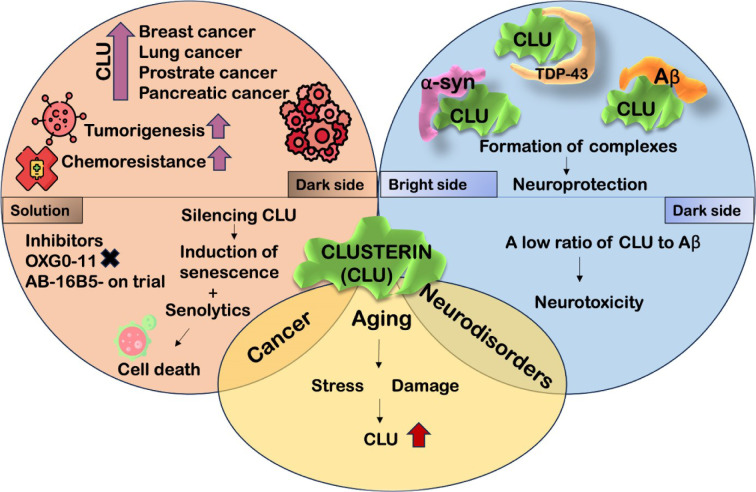
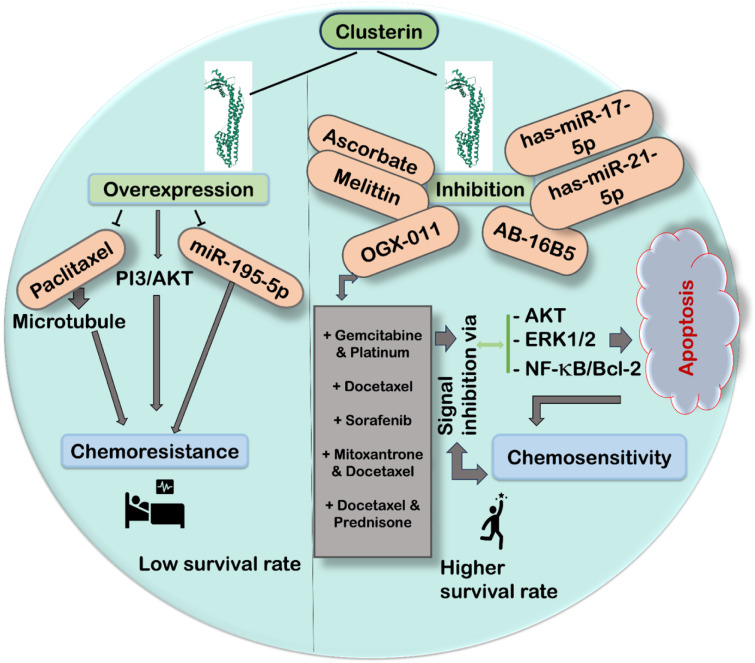
Clusterin is a ubiquitously expressed glycoprotein that is involved in a whole range of biological processes. This protein is known to promote tumor survival and resistance to therapy in cancer, which contrasts sharply with its neuroprotective functions in various neurological diseases. This duality has led to recent investigations into the potential therapeutic applications of clusterin inhibition, particularly in cancer treatment. Inhibition of clusterin has been shown to be able to induce cancer cell senescence, suppress their growth and increase their sensitivity to therapy. The involvement of clusterin in the aging process makes its biological effects even more complex and offers a broad perspective for research and therapeutic exploration of various pathological conditions. This review critically examines the multiple functions of clusterin in cancer and neurological disorders and addresses the controversies surrounding its role in these areas. The assessment includes an in-depth analysis of the existing literature and examining the relationship of clusterin to fundamental aspects of cancer progression, including cell proliferation, apoptosis, metastasis, and drug resistance. In addition, the review addresses the neurobiological implications of clusterin and examines its controversial role in neuroprotection, neurodegeneration, and synaptic plasticity. Attention is also paid to the epigenetic regulation of clusterin expression. By clarifying conflicting findings and discrepancies in the literature, this review aims to provide a nuanced understanding of the molecular mechanisms underlying clusterin functions and its potential clinical implications in both cancer and neurodisorders. See also the graphical abstract(Fig. 1).
簇集素是一种广泛表达的糖蛋白,参与一系列生物过程。已知这种蛋白质在癌症中促进肿瘤存活和对治疗的抗性,这与其在各种神经疾病中的神经保护功能形成鲜明对比。这种双重性导致了最近对簇集素抑制潜在治疗应用的研究,特别是在癌症治疗方面。已表明抑制簇集素能够诱导癌细胞衰老、抑制其生长并增加其对治疗的敏感性。簇集素参与衰老过程使其生物学效应更加复杂,并为各种病理状况的研究和治疗探索提供了广阔的前景。本综述批判性地研究了簇集素在癌症和神经疾病中的多种功能,并探讨了围绕其在这些领域作用的争议。评估包括对现有文献的深入分析,并研究簇集素与癌症进展基本方面的关系,包括细胞增殖、凋亡、转移和耐药性。此外,本综述讨论了簇集素的神经生物学意义,并研究了其在神经保护、神经退行性变和突触可塑性方面存在争议的作用。还关注了簇集素表达的表观遗传调控。通过澄清文献中的矛盾发现和差异,本综述旨在对簇集素功能的分子机制及其在癌症和神经疾病中的潜在临床意义提供细致入微的理解。另见图1的图形摘要。