Dept of Environment and Health, ISS, Viale Regina Elena 299, 00161, Roma, Italy.
Internal Medicine Unit and Obesity Center, University Hospital Policlinico Tor Vergata, Rome, Italy.
Cell Death Dis. 2024 Sep 11;15(9):664. doi: 10.1038/s41419-024-06922-0.
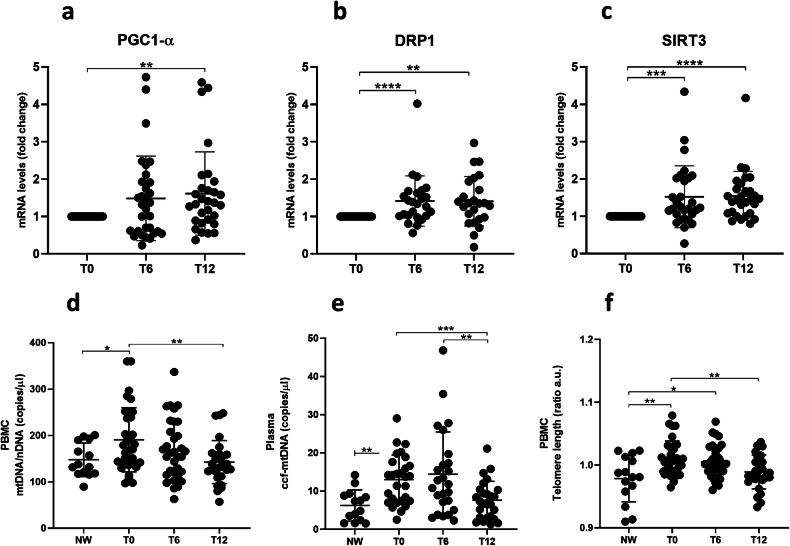
This novel study applies targeted functional proteomics to examine tissues and cells obtained from a cohort of individuals with severe obesity who underwent bariatric surgery (BS), using a Reverse-Phase Protein Array (RPPA). In obese individuals, visceral adipose tissue (VAT), but not subcutaneous adipose tissue (SAT), shows activation of DNA damage response (DDR) markers including ATM, ATR, histone H2AX, KAP1, Chk1, and Chk2, alongside senescence markers p16 and p21. Additionally, stress-responsive metabolic markers, such as survivin, mTOR, and PFKFB3, are specifically elevated in VAT, suggesting both cellular stress and metabolic dysregulation. Conversely, peripheral blood mononuclear cells (PBMCs), while exhibiting elevated mTOR and JNK levels, did not present significant changes in DDR or senescence markers. Following BS, unexpected increases in phosphorylated ATM, ATR, and KAP1 levels, but not in Chk1 and Chk2 nor in senescence markers, were observed. This was accompanied by heightened levels of survivin and mTOR, along with improvement in markers of mitochondrial quality and health. This suggests that, following BS, pro-survival pathways involved in cellular adaptation to various stressors and metabolic alterations are activated in circulating PBMCs. Moreover, our findings demonstrate that the DDR has a dual nature. In the case of VAT from individuals with obesity, chronic DDR proves to be harmful, as it is associated with senescence and chronic inflammation. Conversely, after BS, the activation of DDR proteins in PBMCs is associated with a beneficial survival response. This response is characterized by metabolic redesign and improved mitochondrial biogenesis and functionality. This study reveals physiological changes associated with obesity and BS that may aid theragnostic approaches.
这项新研究应用靶向功能蛋白质组学来检测接受减肥手术 (BS) 的严重肥胖个体的组织和细胞,使用的是反向蛋白质阵列 (RPPA)。在肥胖个体中,内脏脂肪组织 (VAT),而不是皮下脂肪组织 (SAT),显示出 DNA 损伤反应 (DDR) 标志物的激活,包括 ATM、ATR、组蛋白 H2AX、KAP1、Chk1 和 Chk2,以及衰老标志物 p16 和 p21。此外,应激反应代谢标志物,如 survivin、mTOR 和 PFKFB3,在 VAT 中特异性升高,表明存在细胞应激和代谢失调。相反,外周血单核细胞 (PBMCs) 虽然表现出 mTOR 和 JNK 水平升高,但 DDR 或衰老标志物没有明显变化。BS 后,观察到磷酸化 ATM、ATR 和 KAP1 水平的意外增加,但 Chk1 和 Chk2 以及衰老标志物没有增加。这伴随着 survivin 和 mTOR 水平的升高,以及线粒体质量和健康标志物的改善。这表明,BS 后,涉及细胞适应各种应激源和代谢改变的存活途径在循环 PBMCs 中被激活。此外,我们的研究结果表明,DDR 具有双重性质。在肥胖个体的 VAT 中,慢性 DDR 被证明是有害的,因为它与衰老和慢性炎症有关。相反,BS 后,DDR 蛋白在 PBMCs 中的激活与有益的存活反应相关。这种反应的特征是代谢重新设计和改善线粒体生物发生和功能。这项研究揭示了与肥胖和 BS 相关的生理变化,可能有助于诊断和治疗方法。