I. I. Schmalhausen Institute of Zoology, National Academy of Sciences of Ukraine, Kyiv, 01054, Ukraine.
Université de Strasbourg, CNRS, IPHC, UMR 7178, 67000, Strasbourg, France.
Sci Rep. 2024 Sep 10;14(1):21149. doi: 10.1038/s41598-024-71911-4.
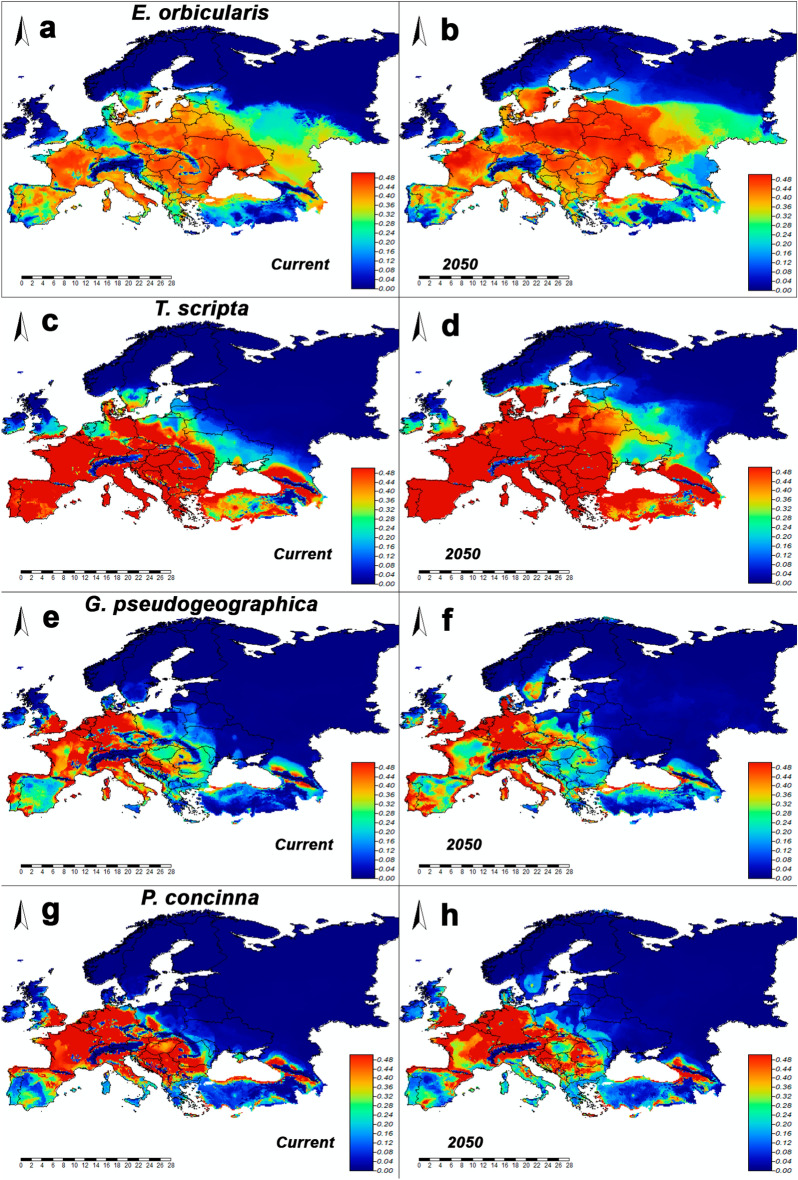
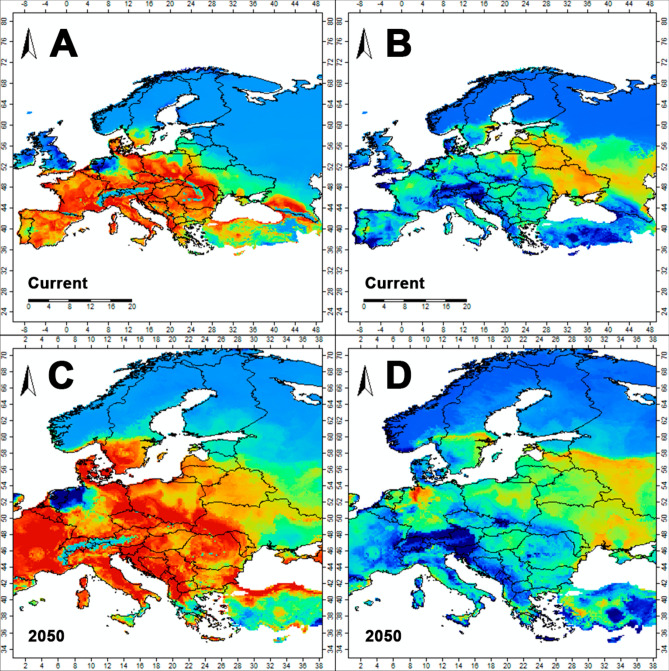
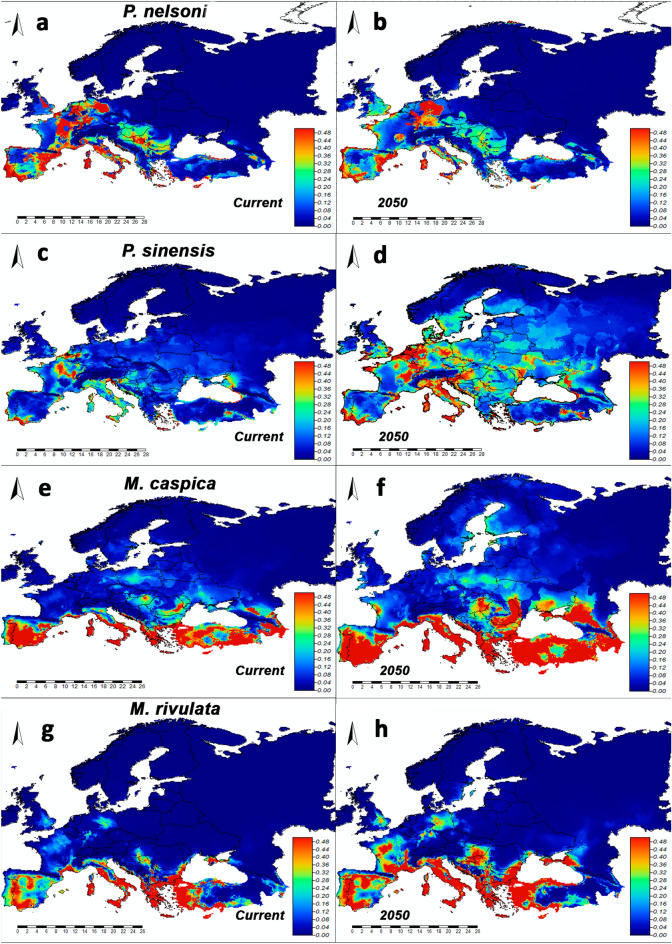
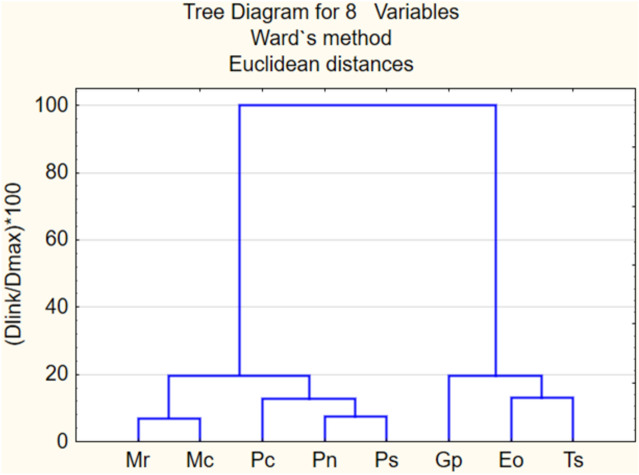
Freshwater turtles are often used as terrarium pets, especially juveniles of exotic species. At the adult stage they are often released by their owners into the wild despite their high invasion potential. In Europe these thermophilic potentially invasive alien species occupy the habitats of the native European pond turtle Emys orbicularis (Linnaeus, 1758), with new records from the wild being made specifically in Eastern Europe (Latvia and Ukraine) during recent decades. Assessing the potential of alien freshwater turtles to establish in new territories is of great concern for preventing invasion risks while preserving native biodiversity in the present context of climate change. We explored this issue by identifying the present and future (by 2050) suitable habitats of the European pond turtle and several potentially invasive alien species of freshwater turtle already settled in Europe, using a geographic information system (GIS) modelling approach based on datasets from CliMond for climate, Near-global environmental information (NGEI) for freshwater ecosystems (EarthEnv) and Maxent modelling using open-access databases, data from the literature and original field data. Modelling was performed for seven species of alien freshwater turtles occurring from the extreme northern to southern borders of the European range of E. orbicularis: the pond slider Trachemys scripta (Thunberg and Schoepff, 1792), the river cooter Pseudemys concinna (Le Conte, 1830), the Florida red-bellied cooter Pseudemys nelsoni (Carr, 1938), the false map turtle Graptemys pseudogeographica (Gray, 1831), the Chinese softshell turtle Pelodiscus sinensis (Wiegmann, 1835), the Caspian turtle Mauremys caspica (Gmelin, 1774) and the Balkan terrapin Mauremys rivulata (Valenciennes, 1833). In Ukraine, the most Eastern limit of E. orbicularis distribution, were previously reported northern American originated T. scripta, M. rivulata, M. caspica, whereas in Latvia, Emys' most northern limit, were additionally reported P. concinna, P. nelsoni, G. pseudogeographica and Asia originated P. sinensis. The resulting Species Distribution Models (SDM) were of excellent performance (AUC > 0.8). Of these alien species, the most potentially successful in terms of range expansion throughout Europe were T. scripta (34.3% of potential range expansion), G. pseudogeographica (24.1%), and M. caspica (8.9%) and M. rivulata (4.3%) mainly in Eastern Europe, especially in the south of Ukraine (Odesa, Kherson, Zaporizhzhia regions, and Crimean Peninsula). Correlation between the built SDMs for the native E. orbicularis and the invasive alien T. scripta was reliably high, confirming the highly likely competition between these two species in places they cooccur. Moreover, a Multiple Regression Analysis revealed that by 2050, in most of Europe (from the western countries to Ukraine), the territory overlap between E. orbicularis and potentially invasive alien species of freshwater turtles will increase by 1.2 times, confirming higher competition in the future. Importantly, by 2050, Eastern Europe and Ukraine are predicted to be the areas with most suitable habitats for the European pond turtle yet with most limited overlap with the invasive alien species. We conclude that Eastern Europe and Ukraine are the most relevant priority conservation areas for the European pond turtle where it is now necessary to take protective measures to ensure safe habitat for this native species on the long-term.
淡水龟通常被用作水族宠物,尤其是外来物种的幼龟。在成年后,尽管它们具有很高的入侵潜力,但其主人常常将其放生到野外。在欧洲,这些嗜热的潜在入侵外来物种占据了本地欧洲池龟(Emys orbicularis)的栖息地,近年来在东欧(拉脱维亚和乌克兰)有新的记录。评估外来淡水龟在新领地建立的潜力,对于防止入侵风险和保护当前气候变化下的本地生物多样性非常重要。我们通过确定欧洲池龟的现有和未来(到 2050 年)适宜栖息地,以及已经在欧洲定居的几种潜在入侵的外来淡水龟物种,来解决这个问题,我们使用基于气候的地理信息系统(GIS)建模方法,该方法基于 CliMond 数据集、用于淡水生态系统的近全球环境信息(NGEI)(EarthEnv)以及 Maxent 建模,使用开放访问数据库、文献数据和原始野外数据。我们为七种生活在欧洲池龟分布范围最北至最南端的外来淡水龟物种进行了建模:拟鳄龟(Trachemys scripta)、红耳滑龟(Pseudemys concinna)、佛罗里达红腹滑龟(Pseudemys nelsoni)、伪地图龟(Graptemys pseudogeographica)、中华鳖(Pelodiscus sinensis)、密西西比地图龟(Graptemys pseudogeographica)和里海龟(Mauremys caspica)。在乌克兰,欧洲池龟分布的最东端,以前曾报道过原产于北美的拟鳄龟、里海龟、密西西比地图龟和巴尔干陆龟,而在拉脱维亚,欧洲池龟最北端,还报道了红耳滑龟、佛罗里达红腹滑龟、伪地图龟和亚洲原产的中华鳖。得到的物种分布模型(SDM)表现出色(AUC>0.8)。在这些外来物种中,最有可能在整个欧洲范围内扩大分布范围的是拟鳄龟(34.3%的潜在分布范围扩大)、伪地图龟(24.1%)和里海龟(8.9%)和巴尔干陆龟(4.3%),主要在东欧,特别是乌克兰的南部(敖德萨、赫尔松、扎波罗热地区和克里米亚半岛)。为欧洲池龟和外来拟鳄龟构建的 SDM 之间存在可靠的高度相关性,证实了这两个物种在它们共存的地方很可能会发生竞争。此外,多元回归分析显示,到 2050 年,在欧洲大部分地区(从西方国家到乌克兰),欧洲池龟和潜在的外来淡水龟物种之间的重叠区域将增加 1.2 倍,这证实了未来竞争将更加激烈。重要的是,到 2050 年,东欧和乌克兰预计将是欧洲池龟最适宜的栖息地,但与外来入侵物种的重叠度最低。我们的结论是,东欧和乌克兰是欧洲池龟最相关的优先保护地区,现在有必要采取保护措施,以确保该本地物种在未来有安全的栖息地。