Department of Gastrointestinal Surgery, The Third Affiliated Hospital of Sun Yat-Sen University, Tianhe Road 600, Guangzhou, 510630, China.
Department of Urology, The First Affiliated Hospital of Guizhou University of Traditional Chinese Medicine, Baoshan North Road 71, Guiyang, 550001, China.
BMC Med. 2024 Sep 11;22(1):376. doi: 10.1186/s12916-024-03609-3.
Neurogenic erectile dysfunction, characterized by neurological repair disorders and progressive corpus cavernosum fibrosis (CCF), is an unbearable disease with limited treatment success. IL-17A exhibits a complex role in tissue remodelling. Nevertheless, the precise role and underlying mechanisms of IL-17A in CCF under denervation remain unclear.
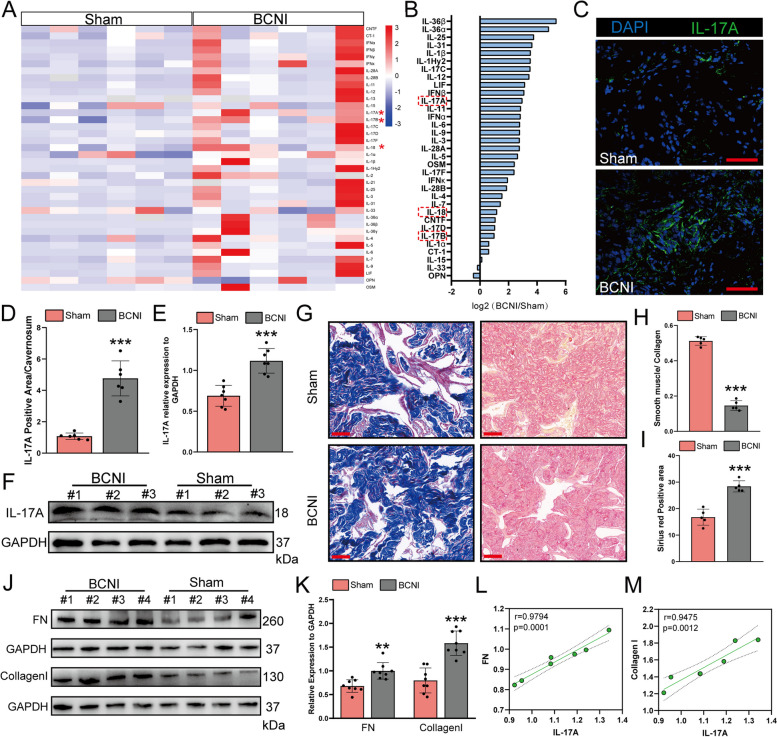
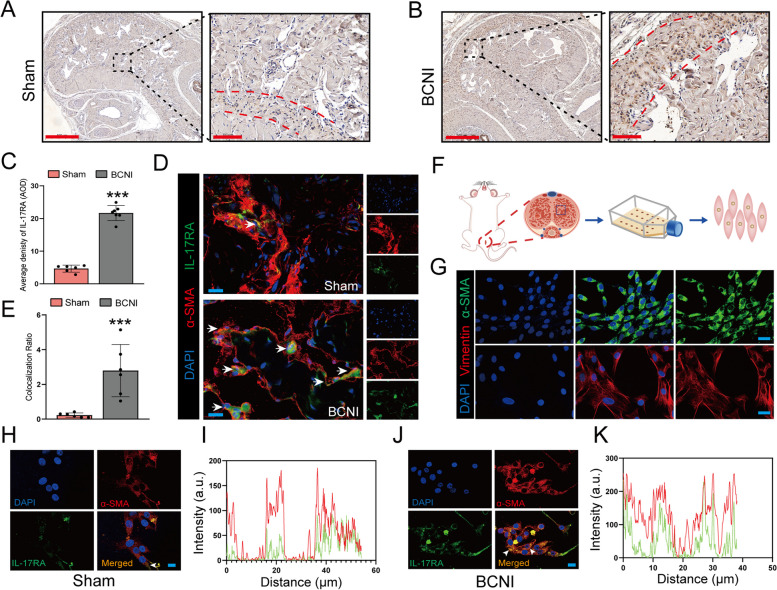
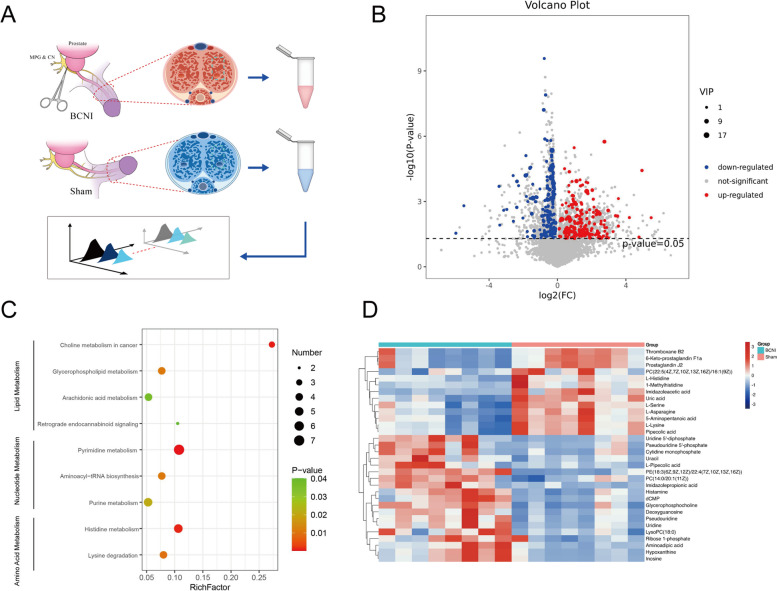
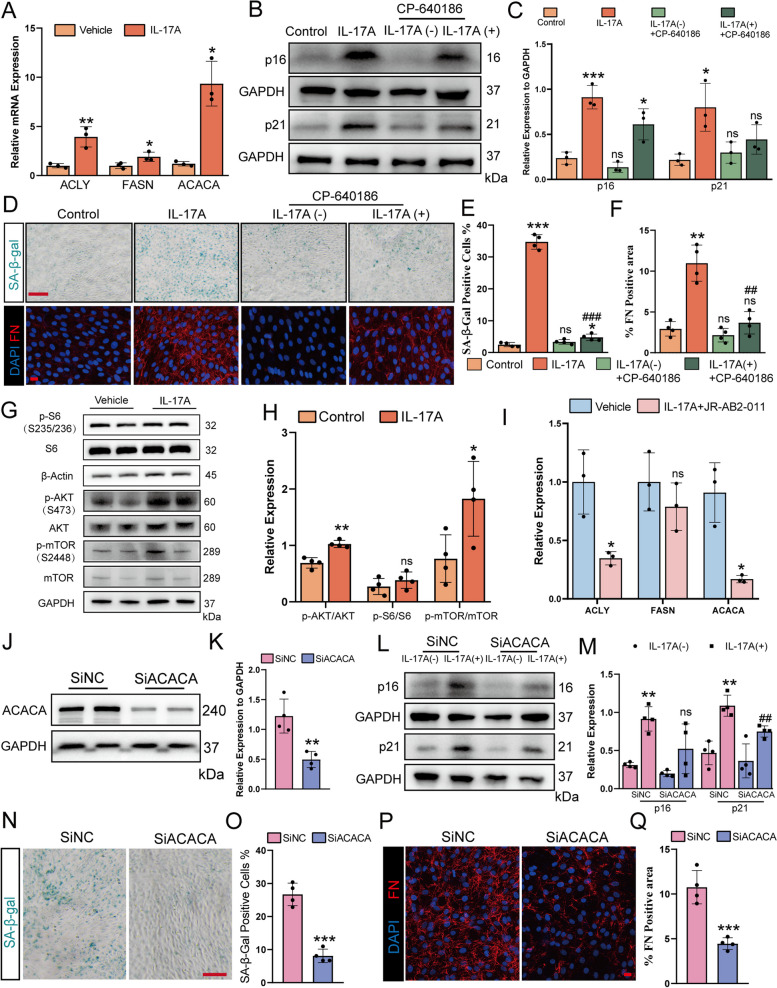
PCR array was employed to identified differentially expressed genes between neurogenic ED and normal rats. IL-17A expression and its main target cells were analyzed using Western blotting, immunofluorescence and immunohistochemistry. The phenotypic regulation of IL-17A on corpus cavernosum smooth muscle cells (CSMCs) was evaluated by cell cycle experiments and SA-β-Gal staining. The mechanism of IL-17A was elucidated using non-target metabolomics and siRNA technique. Finally, IL-17A antagonist and ABT-263 (an inhibitor of B-cell lymphoma 2/w/xL) were utilized to enhance the therapeutic effect in a rat model of neurogenic ED.
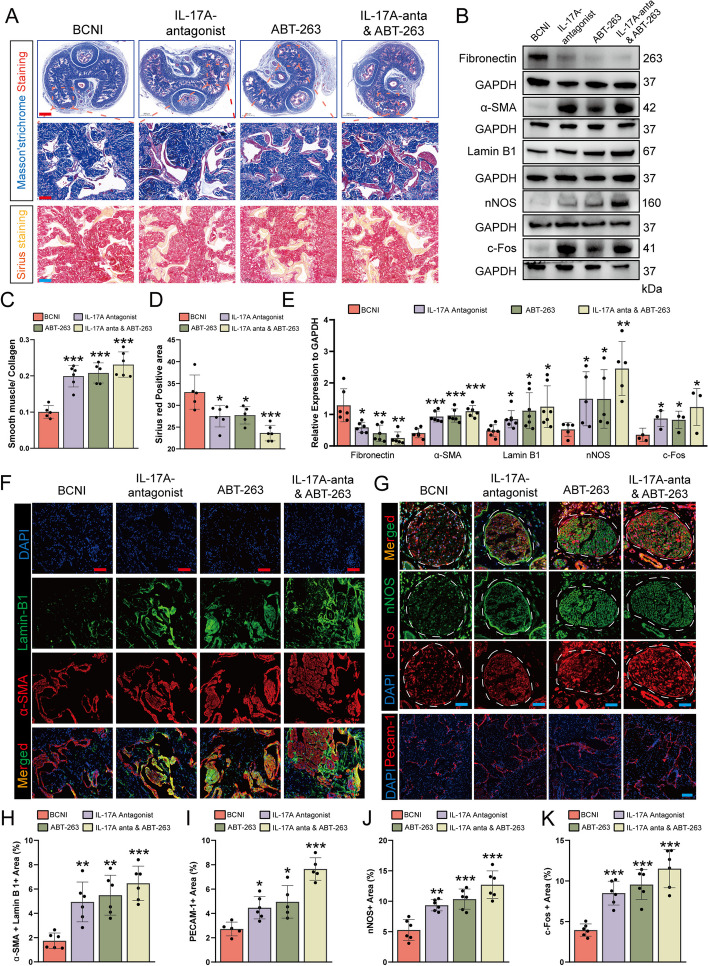
IL-17A emerged as the most significantly upregulated gene in the corpus cavernosum of model rats. It augmented the senescence transformation and fibrotic response of CSMCs, and exhibited a strong correlation with CCF. Mechanistically, IL-17A facilitated CCF by activating the mTORC2-ACACA signalling pathway, upregulating of CSMCs lipid synthesis and senescence transition, and increasing the secretion of fibro-matrix proteins. In vivo, the blockade of IL-17A-senescence signalling improved erectile function and alleviated CCF in neurogenic ED.
IL-17A assumes a pivotal role in denervated CCF by activating the mTORC2-ACACA signalling pathway, presenting itself as a potential therapeutic target for effectively overcoming CCF and erection rehabilitation in neurogenic ED.
神经源性勃起功能障碍的特征是神经修复障碍和进行性海绵体纤维化(CCF),是一种无法忍受的疾病,治疗成功率有限。IL-17A 在组织重塑中表现出复杂的作用。然而,IL-17A 在去神经支配下 CCF 中的确切作用和潜在机制尚不清楚。
采用 PCR 阵列鉴定神经源性 ED 大鼠与正常大鼠之间差异表达的基因。使用 Western blot、免疫荧光和免疫组化分析 IL-17A 的表达及其主要靶细胞。通过细胞周期实验和 SA-β-Gal 染色评估 IL-17A 对海绵体平滑肌细胞(CSMCs)的表型调节。采用非靶向代谢组学和 siRNA 技术阐明 IL-17A 的作用机制。最后,在神经源性 ED 大鼠模型中使用 IL-17A 拮抗剂和 ABT-263(B 细胞淋巴瘤 2/w/xL 的抑制剂)来增强治疗效果。
IL-17A 是模型大鼠海绵体中表达上调最显著的基因。它增强了 CSMC 的衰老转化和纤维化反应,与 CCF 具有很强的相关性。从机制上讲,IL-17A 通过激活 mTORC2-ACACA 信号通路促进 CCF,上调 CSMC 脂质合成和衰老转化,并增加纤维基质蛋白的分泌。在体内,阻断 IL-17A-衰老信号改善了神经源性 ED 的勃起功能并减轻了 CCF。
IL-17A 通过激活 mTORC2-ACACA 信号通路在去神经支配的 CCF 中发挥关键作用,为有效克服 CCF 和勃起功能恢复提供了潜在的治疗靶点。