Department of Plant Breeding, Justus Liebig University, Giessen, Germany.
Theor Appl Genet. 2024 Sep 11;137(10):220. doi: 10.1007/s00122-024-04728-4.
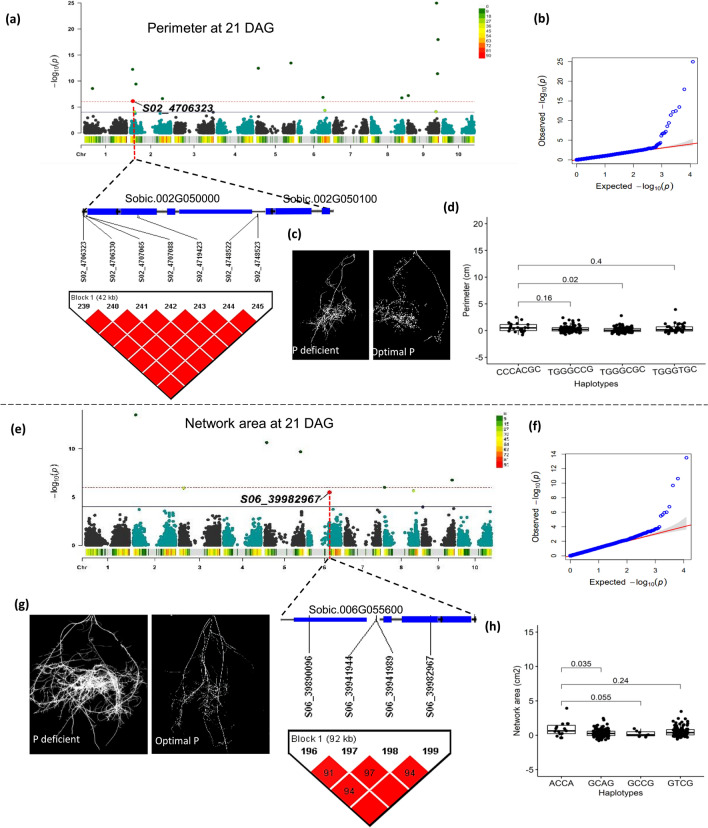
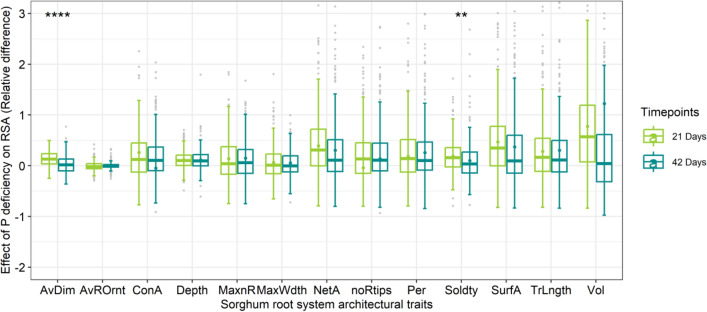
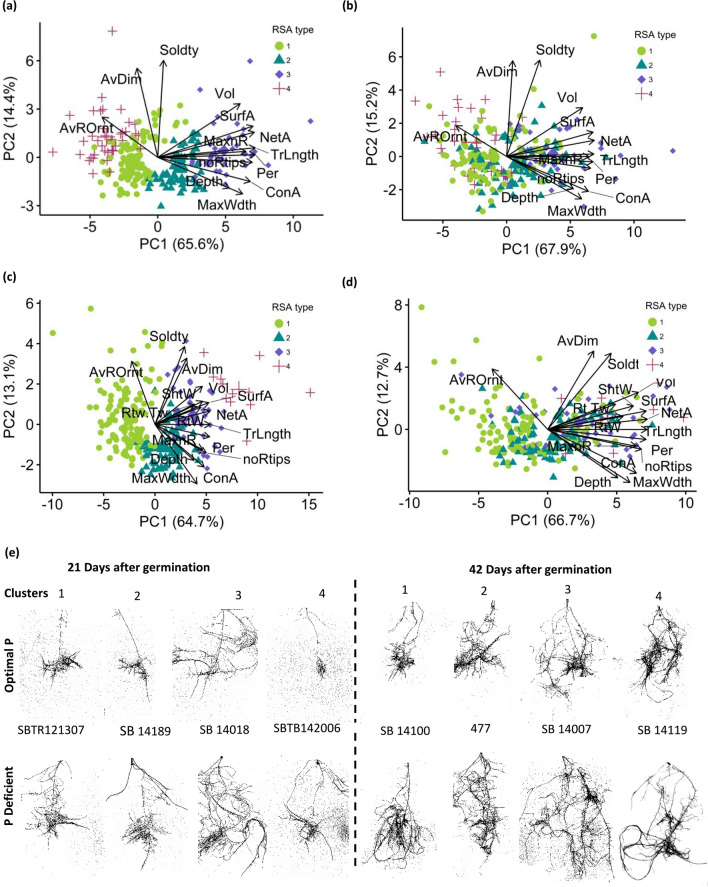
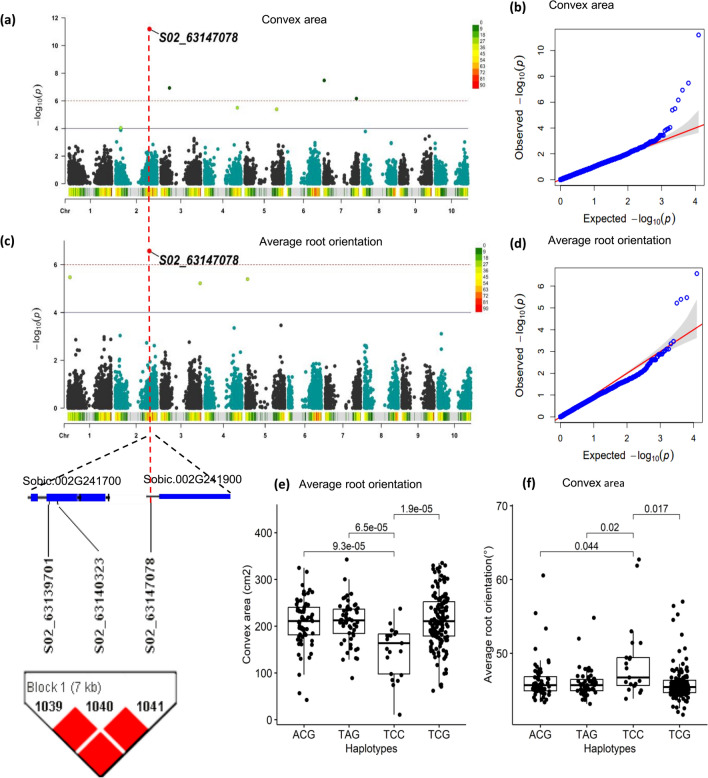
We identified novel physiological and genetic responses to phosphorus starvation in sorghum diversity lines that augment current knowledge of breeding for climate-smart crops in Europe. Phosphorus (P) deficiency and finite P reserves for fertilizer production pose a threat to future global crop production. Understanding root system architecture (RSA) plasticity is central to breeding for P-efficient crops. Sorghum is regarded as a P-efficient and climate-smart crop with strong adaptability to different climatic regions of the world. Here we investigated early genetic responses of sorghum RSA to P deficiency in order to identified genotypes with interesting root phenotypes and responses under low P. A diverse set of sorghum lines (n = 285) was genotyped using DarTSeq generating 12,472 quality genome wide single-nucleotide polymorphisms. Root phenotyping was conducted in a paper-based hydroponic rhizotron system under controlled greenhouse conditions with low and optimal P nutrition, using 16 RSA traits to describe genetic and phenotypic variability at two time points. Genotypic and phenotypic P-response variations were observed for multiple root traits at 21 and 42 days after germination with high broad sense heritability (0.38-0.76). The classification of traits revealed four distinct sorghum RSA types, with genotypes clustering separately under both low and optimal P conditions, suggesting genetic control of root responses to P availability. Association studies identified quantitative trait loci in chromosomes Sb02, Sb03, Sb04, Sb06 and Sb09 linked with genes potentially involved in P transport and stress responses. The genetic dissection of key factors underlying RSA responses to P deficiency could enable early identification of P-efficient sorghum genotypes. Genotypes with interesting RSA traits for low P environments will be incorporated into current sorghum breeding programs for later growth stages and field-based evaluations.
我们在高粱多样性品系中发现了对磷饥饿的新的生理和遗传反应,这增加了当前对欧洲气候智能作物培育的认识。磷(P)缺乏和有限的肥料生产磷储备对未来的全球作物生产构成威胁。了解根系结构(RSA)的可塑性是培育高效磷作物的核心。高粱被认为是一种高效利用磷和适应气候变化的作物,对世界不同气候地区具有很强的适应性。在这里,我们研究了高粱 RSA 对 P 缺乏的早期遗传反应,以确定在低 P 下具有有趣根表型和反应的基因型。利用 DarTSeq 对一组多样化的高粱品系(n=285)进行了基因型分析,生成了 12472 个高质量的全基因组单核苷酸多态性。在受控温室条件下,使用基于纸张的水培根室系统进行根表型分析,低磷和最佳磷营养条件下,使用 16 个 RSA 特征描述两个时间点的遗传和表型变异性。在发芽后 21 和 42 天,多个根性状的基因型和表型 P 反应都发生了变化,广义遗传力较高(0.38-0.76)。性状分类显示,在低磷和最佳磷条件下,高粱 RSA 有四种不同的类型,基因型分别聚类,表明根对磷供应的反应受到遗传控制。关联研究在 Sb02、Sb03、Sb04、Sb06 和 Sb09 染色体上鉴定到与磷运输和应激反应相关的潜在基因的数量性状位点。对 RSA 对 P 缺乏反应的关键因素的遗传剖析可以实现对高效 P 高粱基因型的早期鉴定。具有低 P 环境下有趣 RSA 性状的基因型将被纳入当前的高粱育种计划,以进行后期生长阶段和田间评估。