Keremu Aizaiti, Talat Zulfiye, Lu Xueying, Abdulla Rahima, Habasi Maidina, Aisa Haji Akber
State Key Laboratory Basis of Xinjiang Indigenous Medicinal Plants Resource Utilization, Xinjiang Technical Institute of Physics and Chemistry, Chinese Academy of Sciences, Urumqi, 830011, China.
University of Chinese Academy of Sciences, Beijing, 100049, China.
J Tradit Complement Med. 2024 Mar 6;14(5):477-493. doi: 10.1016/j.jtcme.2024.03.006. eCollection 2024 Sep.
Agarikon pill (AGKP), a traditional Chinese herbal formula, and has been used for chronic obstructive pulmonary disease (COPD) treatment clinically. However, the active components and exact pharmacological mechanisms are still unclear. We aimed to investigate the therapeutic effects and mechanisms of AGKP on COPD and identify the chemical constituents and active compounds.
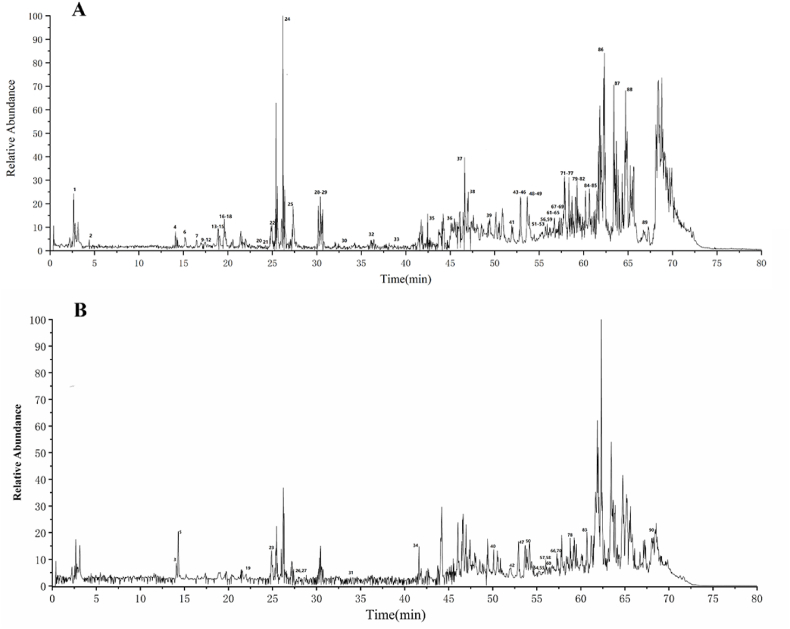
The chemical components of AGKP were identified by ultrahigh-performance liquid chromatography coupled with quadrupole/orbitrap high-resolution mass spectrometry (UHPLC-Q-Orbitrap-HRMS). Network pharmacology analysis was performed to uncover the potential mechanism of AGKP. The efficiencies and mechanisms of AGKP were further confirmed in COPD animal models.
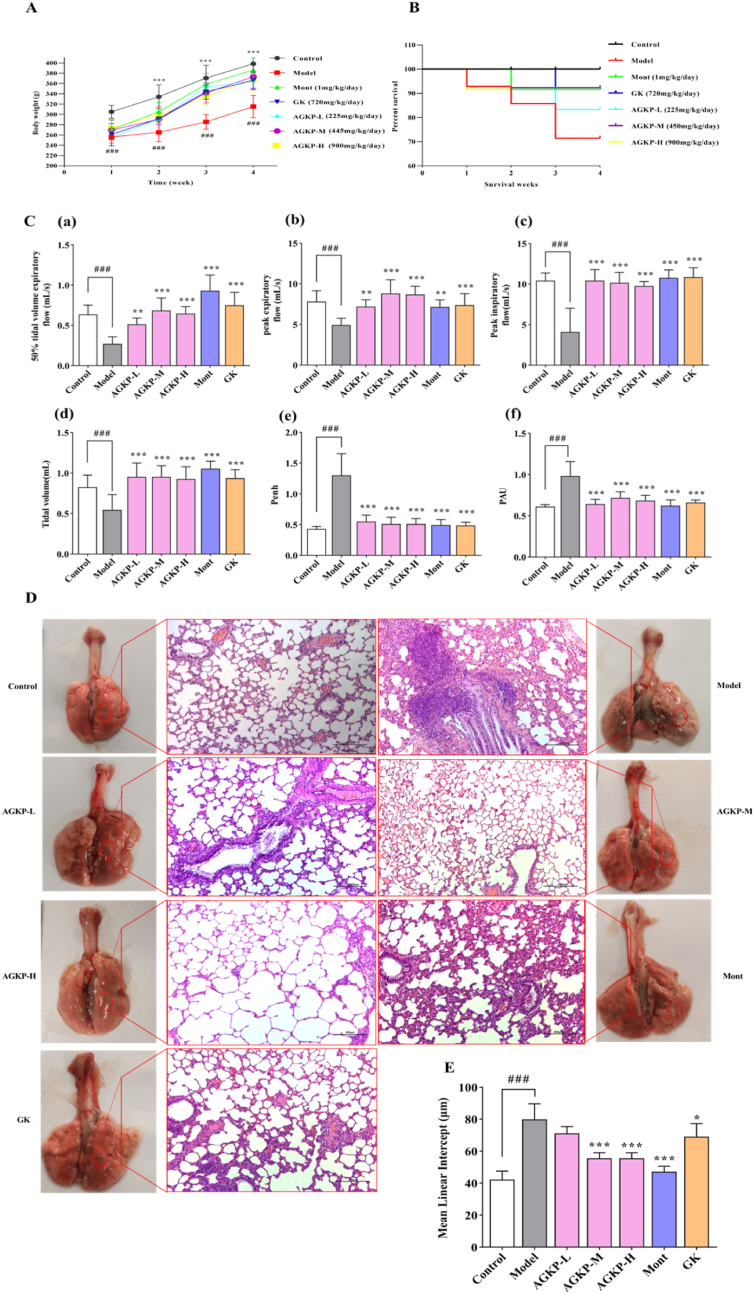
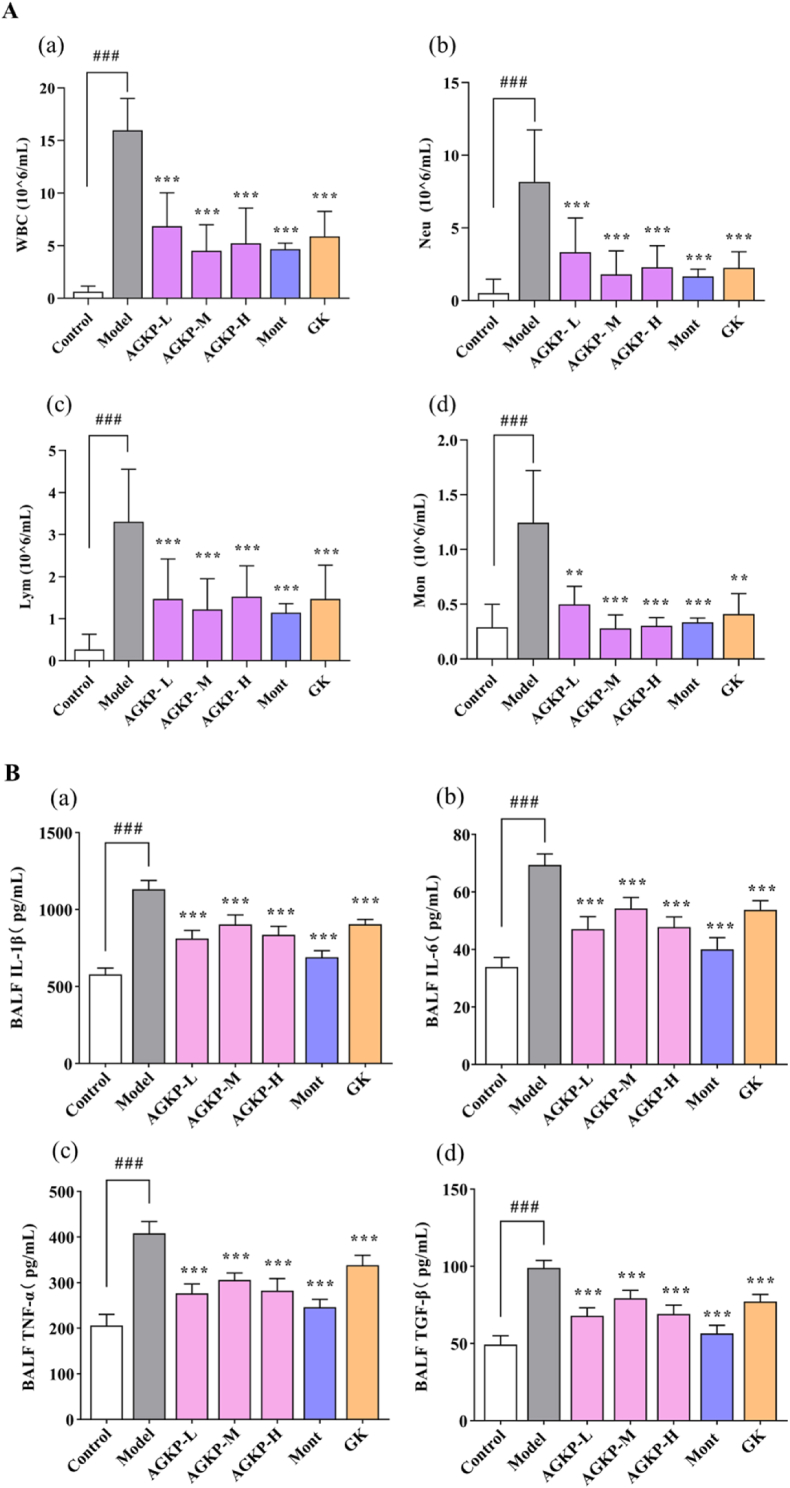
Ninety compounds from AGKP, such as flavonoids, triterpenoids, saponins, anthracenes, derivatives, phenyl propionic acid, and other organic acids, were identified in our study. AGKP improved lung function and pathological changes in COPD model rats. Additionally, inflammatory cell infiltration and proinflammatory cytokine levels were markedly reduced in COPD rats administered AGKP. Network pharmacology analysis showed that the inflammatory response is the crucial mechanism by which AGKP exerts therapeutic effects on COPD rats. WB and PCR data indicated that AGKP attenuated the inflammatory response in COPD model rats. AGKP reduces the pulmonary inflammatory response through the PI3K/AKT and MAPK TLR/NF-κB signaling pathways and exerts therapeutic effects via inhibition of inflammation and mucus hypersecretion on COPD model rats.
松萝丸(AGKP)是一种传统中药配方,临床上已用于治疗慢性阻塞性肺疾病(COPD)。然而,其活性成分和确切的药理机制仍不清楚。我们旨在研究AGKP对COPD的治疗作用和机制,并鉴定其化学成分和活性化合物。
采用超高效液相色谱-四极杆/轨道阱高分辨率质谱联用技术(UHPLC-Q-Orbitrap-HRMS)鉴定AGKP的化学成分。进行网络药理学分析以揭示AGKP的潜在机制。在COPD动物模型中进一步证实AGKP的疗效和机制。
本研究从AGKP中鉴定出90种化合物,如黄酮类、三萜类、皂苷类、蒽类、衍生物、苯丙酸和其他有机酸。AGKP改善了COPD模型大鼠的肺功能和病理变化。此外,给予AGKP的COPD大鼠炎症细胞浸润和促炎细胞因子水平明显降低。网络药理学分析表明,炎症反应是AGKP对COPD大鼠发挥治疗作用的关键机制。WB和PCR数据表明,AGKP减轻了COPD模型大鼠的炎症反应。AGKP通过PI3K/AKT和MAPK TLR/NF-κB信号通路减轻肺部炎症反应,并通过抑制炎症和黏液高分泌对COPD模型大鼠发挥治疗作用。