Kangas Brian D, Ang Yuen-Siang, Short Annabel K, Baram Tallie Z, Pizzagalli Diego A
Department of Psychiatry, Harvard Medical School, Boston, Massachusetts.
Behavioral Biology Program, McLean Hospital, Belmont, Massachusetts.
Biol Psychiatry Glob Open Sci. 2024 Jul 20;4(6):100362. doi: 10.1016/j.bpsgos.2024.100362. eCollection 2024 Nov.
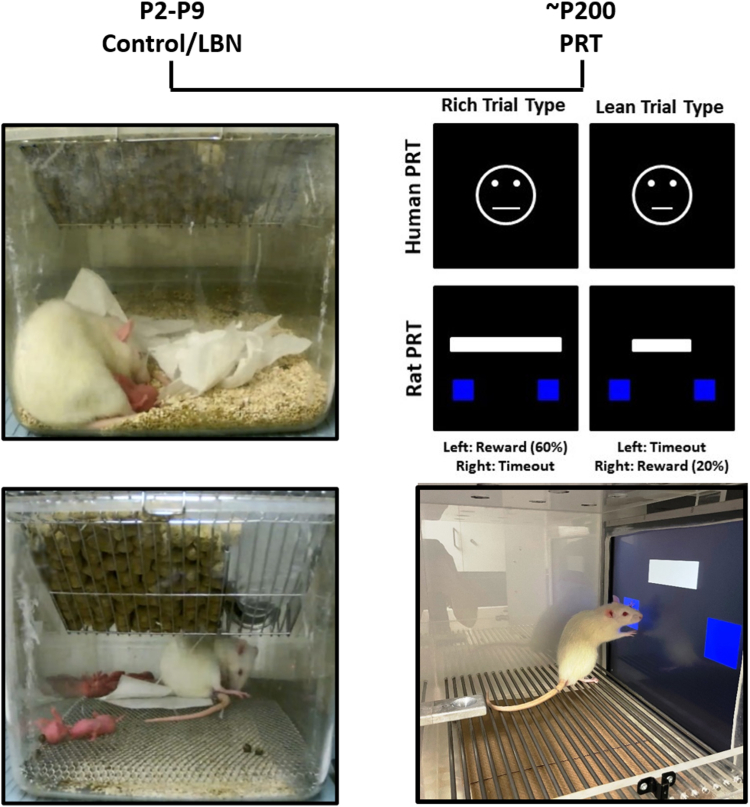
Exposure to adversity, including unpredictable environments, during early life is associated with neuropsychiatric illness in adulthood. One common factor in this sequela is anhedonia, the loss of responsivity to previously reinforcing stimuli. To accelerate the development of new treatment strategies for anhedonic disorders induced by early-life adversity, animal models have been developed to capture critical features of early-life stress and the behavioral deficits that such stressors induce. We have previously shown that rats exposed to the limited bedding and nesting protocol exhibited blunted reward responsivity in the probabilistic reward task, a touchscreen-based task reverse translated from human studies.
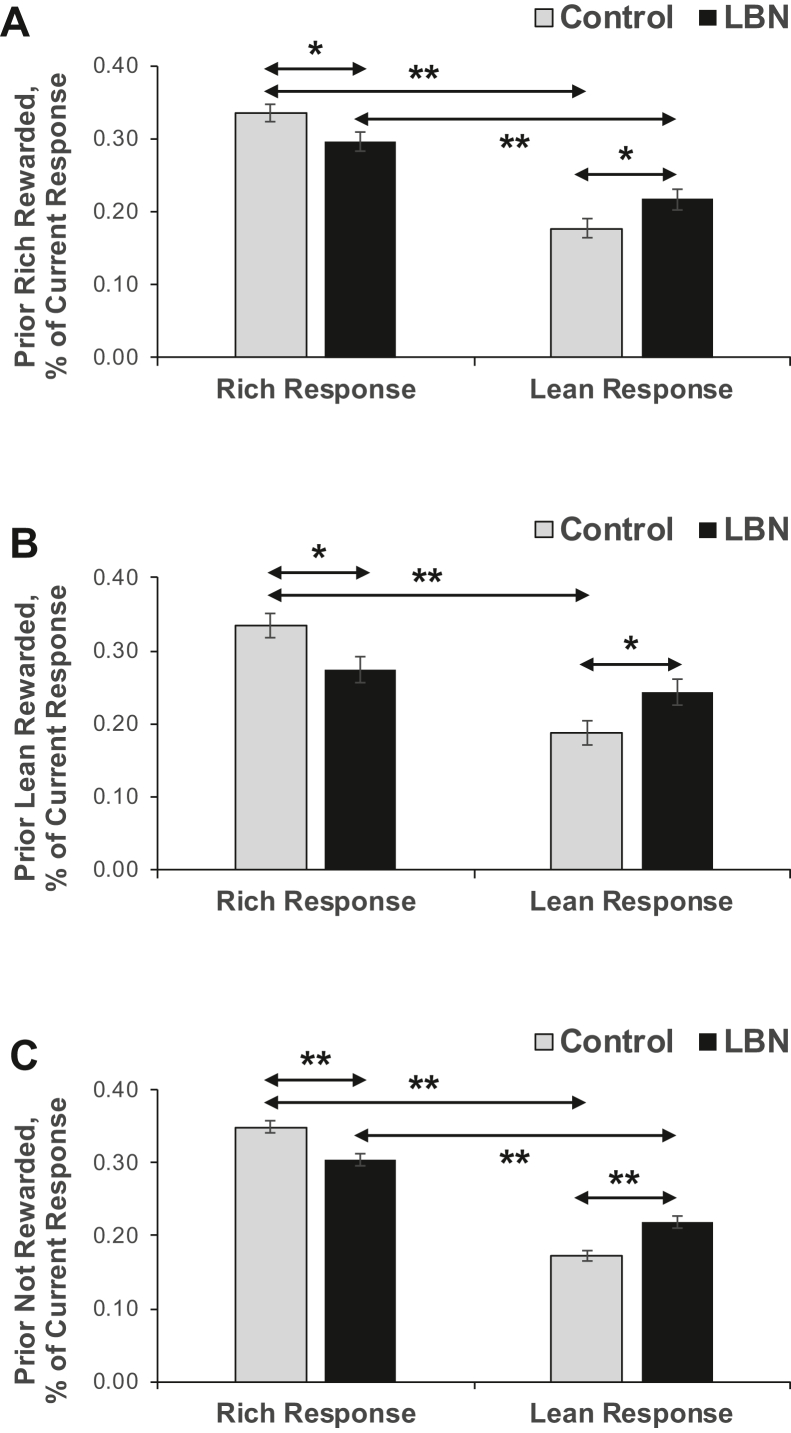
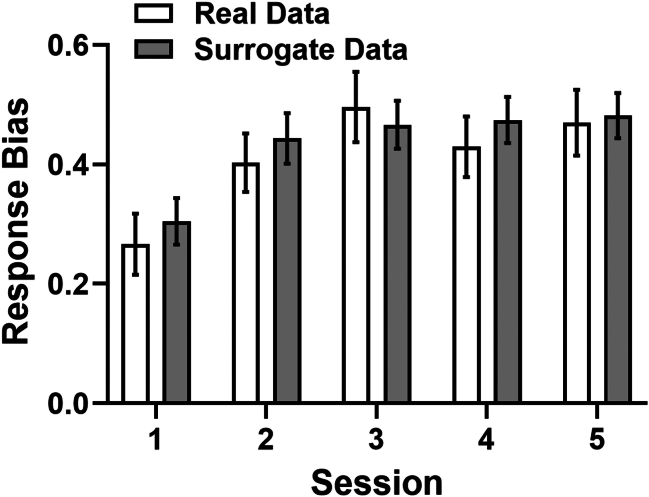
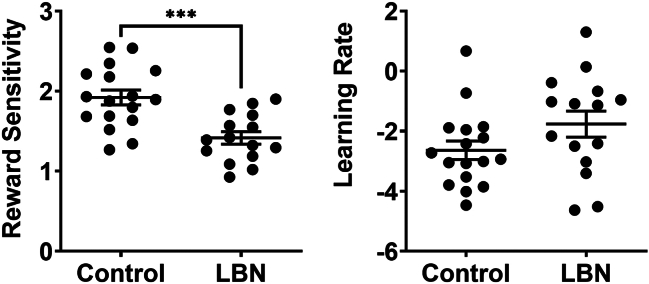
To test the quantitative limits of this translational platform, we examined the ability of Bayesian computational modeling and probability analyses identical to those optimized in previous human studies to quantify the putative mechanisms that underlie these deficits with precision. Specifically, 2 parameters that have been shown to independently contribute to probabilistic reward task outcomes in patient populations, reward sensitivity and learning rate, were extracted, as were trial-by-trial probability analyses of choices as a function of the preceding trial.
Significant deficits in reward sensitivity, but not learning rate, contributed to the anhedonic phenotypes in rats exposed to early-life adversity.
The current findings confirm and extend the translational value of these rodent models by verifying the effectiveness of computational modeling in distinguishing independent features of reward sensitivity and learning rate that complement the probabilistic reward task's signal detection end points. Together, these metrics serve to objectively quantify reinforcement learning deficits associated with anhedonic phenotypes.
早年暴露于包括不可预测环境在内的逆境与成年期神经精神疾病有关。这种后遗症的一个常见因素是快感缺失,即对先前强化刺激的反应性丧失。为了加速开发针对早年逆境所致快感缺失障碍的新治疗策略,已建立动物模型来捕捉早年应激的关键特征以及此类应激源所诱发的行为缺陷。我们之前已经表明,暴露于有限垫料和筑巢方案的大鼠在概率奖励任务中表现出奖励反应迟钝,该任务是从人类研究反向翻译而来的基于触摸屏的任务。
为了测试这个转化平台的定量极限,我们检查了贝叶斯计算建模和概率分析的能力,这些分析与之前人类研究中优化的分析相同,以精确量化这些缺陷背后的假定机制。具体而言,提取了已被证明在患者群体中独立影响概率奖励任务结果的两个参数,即奖励敏感性和学习率,以及作为前一次试验函数的逐次试验选择概率分析。
奖励敏感性存在显著缺陷,但学习率没有,这导致了暴露于早年逆境的大鼠出现快感缺失表型。
当前研究结果通过验证计算建模在区分奖励敏感性和学习率的独立特征方面的有效性,证实并扩展了这些啮齿动物模型的转化价值,这些特征补充了概率奖励任务的信号检测终点。总之,这些指标有助于客观量化与快感缺失表型相关的强化学习缺陷。