Davis Elysia Poggi, Leonard Bianca T, Jirsaraie Robert J, Keator David B, Small Steven L, Sandman Curt A, Risbrough Victoria B, Stern Hal S, Glynn Laura M, Yassa Michael A, Baram Tallie Z, Rasmussen Jerod M
Department of Psychology, University of Denver, Colorado 80208.
Department of Pediatrics, University of California, Irvine, California 92697.
bioRxiv. 2024 Sep 21:2024.09.20.614130. doi: 10.1101/2024.09.20.614130.
Unpredictable childhood experiences are an understudied form of early life adversity that impacts neurodevelopment in a sex-specific manner. The neurobiological processes by which exposure to early-life unpredictability impacts development and vulnerability to psychopathology remain poorly understood. The present study investigates the sex-specific consequences of early-life unpredictability on the limbic network, focusing on the hippocampus and the amygdala.
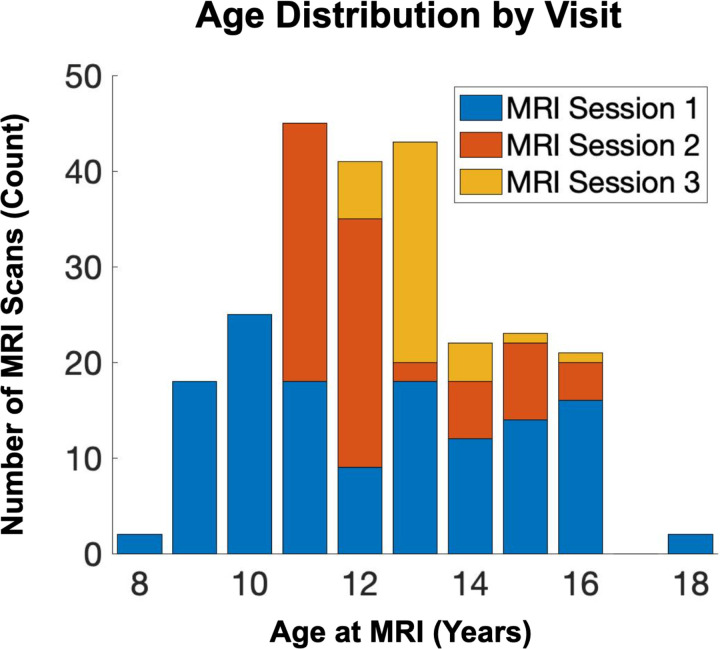
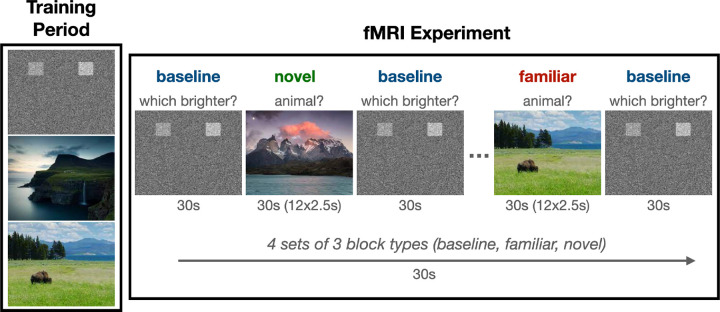
Participants included 150 youth (54% female). Early life unpredictability was assessed using the Questionnaire of Unpredictability in Childhood (QUIC). Participants engaged in a task-fMRI scan between the ages of 8 and 17 (223 total observations) measuring BOLD responses to novel and familiar scenes.
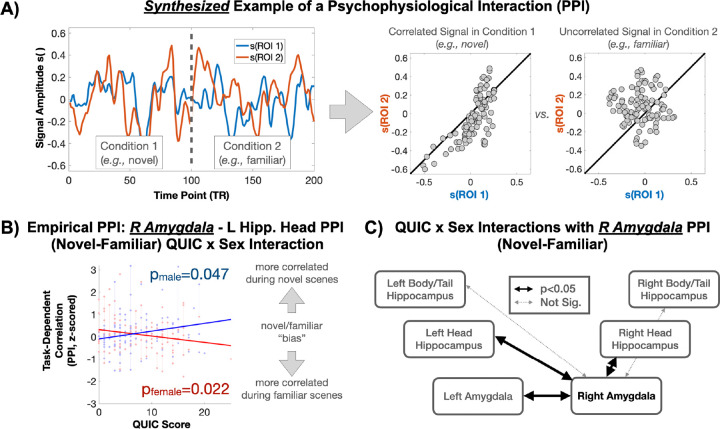
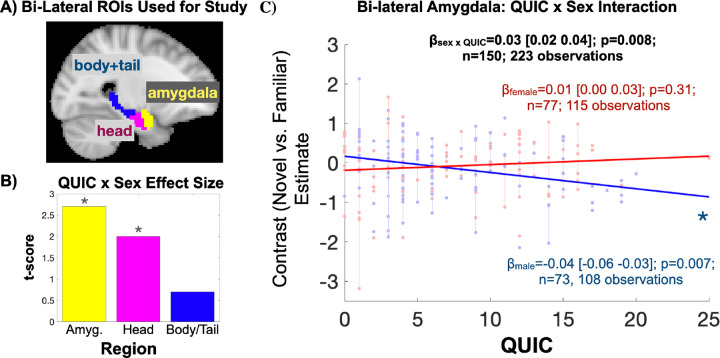
Exposure to early-life unpredictability associated with BOLD contrast (novel vs. familiar) in a sex-specific manner. For males, but not females, higher QUIC scores were associated with lower BOLD activation in response to novel vs. familiar stimuli in the hippocampal head and amygdala. Secondary psychophysiological interaction (PPI) analyses revealed complementary sex-specific associations between QUIC and condition-specific functional connectivity between the right and left amygdala, as well as between the right amygdala and hippocampus bilaterally.
Exposure to unpredictability in early life has persistent implications for the functional operations of limbic circuits. Importantly, consistent with emerging experimental animal and human studies, the consequences of early life unpredictability differ for males and females. Further, impacts of early-life unpredictability were independent of other risk factors including lower household income and negative life events, indicating distinct consequences of early-life unpredictability over and above more commonly studied types of early life adversity.
不可预测的童年经历是一种研究不足的早期生活逆境形式,它以性别特异性的方式影响神经发育。早期生活不可预测性影响发育和精神病理学易感性的神经生物学过程仍知之甚少。本研究调查了早期生活不可预测性对边缘系统网络的性别特异性影响,重点关注海马体和杏仁核。
参与者包括150名青少年(54%为女性)。使用童年不可预测性问卷(QUIC)评估早期生活不可预测性。参与者在8至17岁之间进行了任务功能磁共振成像扫描(共223次观察),测量对新场景和熟悉场景的血氧水平依赖(BOLD)反应。
早期生活不可预测性的暴露与BOLD对比度(新场景与熟悉场景)存在性别特异性关联。对于男性而非女性,较高的QUIC分数与海马头部和杏仁核对新刺激与熟悉刺激的较低BOLD激活相关。二级心理生理交互作用(PPI)分析揭示了QUIC与左右杏仁核之间以及右侧杏仁核与双侧海马体之间特定条件功能连接的互补性性别特异性关联。
早期生活中暴露于不可预测性对边缘回路的功能运作具有持久影响。重要的是,与新兴的实验动物和人类研究一致,早期生活不可预测性对男性和女性的影响不同。此外,早期生活不可预测性的影响独立于其他风险因素,包括较低的家庭收入和负面生活事件,这表明早期生活不可预测性的影响不同于更常研究的早期生活逆境类型,具有独特的后果。