Department of Neuroscience, Reproductive Sciences, and Dentistry and.
Department of Advanced Biomedical Sciences, "Federico II" University, Naples, Italy.
J Clin Invest. 2024 Sep 12;134(21):e183777. doi: 10.1172/JCI183777.
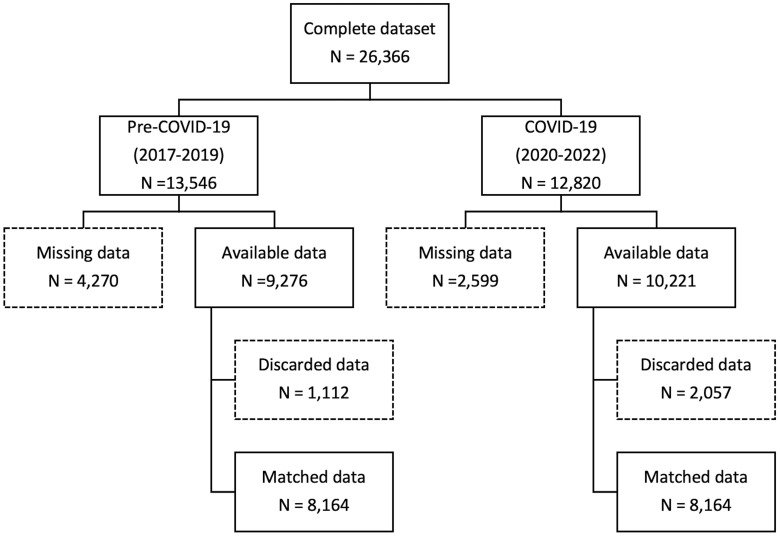
BACKGROUNDRecent studies conducted in individuals who survived COVID-19 suggest that SARS-CoV-2 infection is associated with an increased risk of dyslipidemia. However, it remains unclear whether this augmented risk is confirmed in the general population and how this phenomenon is affecting the overall burden of cardiometabolic diseases.METHODSTo address these aspects, we conducted a 6-year longitudinal study to examine the broader effects of COVID-19 on dyslipidemia incidence in a real-world population (228,266 individuals) residing in Naples in southern Italy. The pre-COVID-19 and COVID-19 groups were balanced for demographic and clinical factors using propensity score matching.RESULTSOur analysis spans a period of 3 years during the COVID-19 pandemic (2020-2022), comparing dyslipidemia incidence with pre-pandemic data (2017-2019), with a follow-up of at least 1,095 days corresponding to 21,349,215 person-years. During the COVID-19 period, we detected an increased risk of developing any dyslipidemia when compared with the pre-COVID-19 triennium (OR = 1.29; 95% CI, 1.19-1.39). Importantly, these estimates were adjusted for comorbidities by a multivariate analysis.CONCLUSIONSTaken together, our data reveal a notable rise in dyslipidemia incidence during the COVID-19 pandemic, suggesting the utility of establishing specialized clinical monitoring protocols for patients who survive COVID-19 to mitigate the risk of developing dyslipidemia.
最近对 COVID-19 幸存者进行的研究表明,SARS-CoV-2 感染与血脂异常风险增加有关。然而,目前尚不清楚这种风险增加是否在普通人群中得到证实,以及这种现象如何影响心血管代谢疾病的总体负担。
为了解决这些问题,我们进行了一项为期 6 年的纵向研究,以在意大利南部那不勒斯的真实人群(228266 人)中研究 COVID-19 对血脂异常发生率的更广泛影响。使用倾向评分匹配使 COVID-19 前组和 COVID-19 组在人口统计学和临床因素方面保持平衡。
我们的分析跨越了 COVID-19 大流行期间的 3 年(2020-2022 年),将血脂异常发生率与大流行前数据(2017-2019 年)进行了比较,随访时间至少为 1095 天,对应 21349215 人年。在 COVID-19 期间,与 COVID-19 前三年相比,我们发现血脂异常的发生风险增加(OR=1.29;95%CI,1.19-1.39)。重要的是,这些估计值通过多变量分析根据合并症进行了调整。
综上所述,我们的数据显示 COVID-19 大流行期间血脂异常的发生率显著上升,这表明对于 COVID-19 幸存者,建立专门的临床监测方案以降低血脂异常风险是有必要的。