Wang Jin, Wang Minglin, Wu Shaobo, Zhu Yanan, Fan Kexin, Chen Yuhan, Xiao Zhengtao, Chen Jing, Tu Kangsheng, Huang Dongsheng, Zhang Yilei, Xu Qiuran
The Key Laboratory of Tumor Molecular Diagnosis and Individualized Medicine of Zhejiang Province, Zhejiang Provincial People's Hospital, Affiliated People's Hospital, Hangzhou Medical College, Hangzhou, Zhejiang, China.
Research Center of Diagnosis and Treatment Technology for Hepatocellular Carcinoma of Zhejiang Province, Hangzhou, Zhejiang, China.
Oncogenesis. 2024 Sep 12;13(1):31. doi: 10.1038/s41389-024-00535-0.
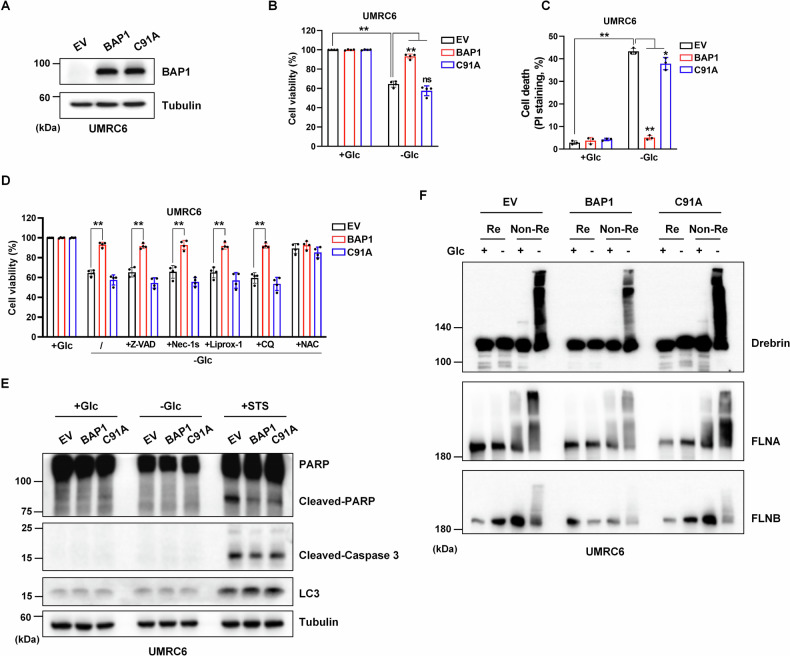
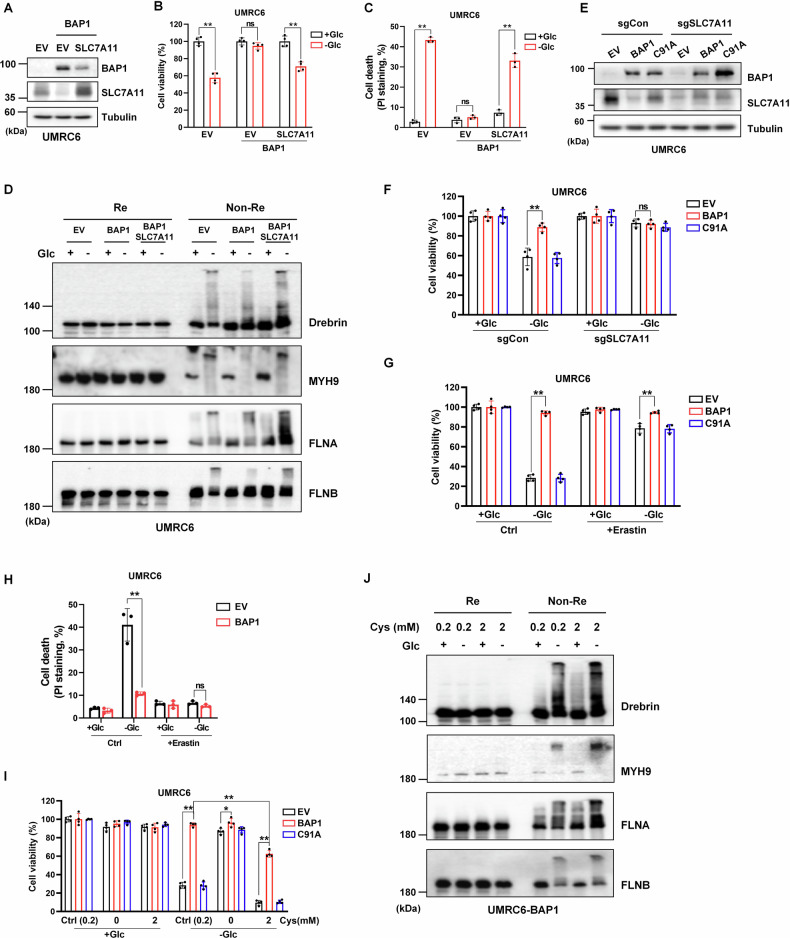
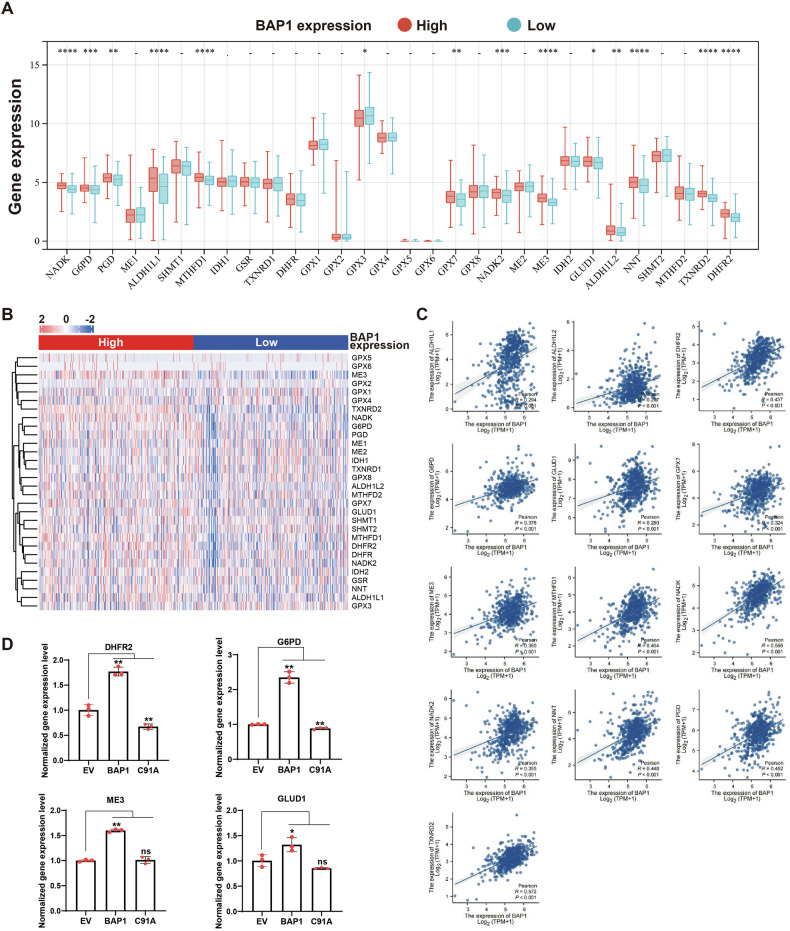
BAP1, BRCA1-Associated Protein 1, serves as a novel tumor suppressor through the deubiquitination of monoubiquitination of H2A and subsequent gene transcriptional regulation. Regulated cell death like apoptosis or ferroptosis is considered an essential mechanism mediating tumor suppression. Previous reports, including ours, have demonstrated that BAP1 could promote apoptosis and ferroptosis to inhibit tumor development. Whether BAP1 regulated additional types of cell death remains unclear. Disulfidptosis is a recently identified novel cell death mode characterized by aberrant accumulation of intracellular disulfide (e.g., cystine) and depletion of NADPH. In this study, we first demonstrated that BAP1 could significantly protect disulfidptosis induced by glucose starvation, which is validated by various cell death inhibitors and the accumulation of disulfide bonds in the cytoskeleton proteins. BAP1 is known to inhibit SLC7A11 expression. We found that the protective effect of BAP1 against disulfidptosis was counteracted when overexpressing SLC7A11 or adding additional cystine. Conversely, BAP1-mediated suppression of disulfidptosis was largely abrogated when SLC7A11-mediated cystine uptake was inhibited by the knockout of SLC7A11 or erastin treatment. Besides, high BAP1 expression showed lower NADP/NADPH levels, which might confer resistance to disulfidptosis. Consistent with these observations, the expression level of BAP1 was also positively correlated with NADPH-related genes in KIRC patients, though the underlying mechanism mediating NADPH regulation remains further investigation. In summary, our results revealed the role of BAP1 in the regulation disulfidptosis and provided new insights into the understanding of disulfidptosis in tumor development.
BAP1,即BRCA1相关蛋白1,通过对组蛋白H2A单泛素化的去泛素化作用及随后的基因转录调控,发挥新型肿瘤抑制因子的作用。诸如凋亡或铁死亡等受调控的细胞死亡被认为是介导肿瘤抑制的重要机制。包括我们之前的报告在内,已有研究表明BAP1可促进凋亡和铁死亡以抑制肿瘤发展。BAP1是否调控其他类型的细胞死亡仍不清楚。二硫化物诱导的细胞死亡是最近发现的一种新型细胞死亡模式,其特征是细胞内二硫化物(如胱氨酸)异常积累和NADPH耗竭。在本研究中,我们首次证明BAP1可显著保护细胞免受葡萄糖饥饿诱导的二硫化物诱导的细胞死亡,这一结果通过各种细胞死亡抑制剂以及细胞骨架蛋白中二硫键的积累得到验证。已知BAP1可抑制SLC7A11的表达。我们发现,过表达SLC7A11或添加额外的胱氨酸时,BAP1对二硫化物诱导的细胞死亡的保护作用会被抵消。相反,当通过敲除SLC7A11或使用厄拉司丁处理抑制SLC7A11介导 的胱氨酸摄取时,BAP1介导的对二硫化物诱导的细胞死亡的抑制作用在很大程度上被消除。此外,BAP1高表达显示出较低的NADP/NADPH水平,这可能赋予对二硫化物诱导的细胞死亡的抗性。与这些观察结果一致,在肾透明细胞癌(KIRC)患者中,BAP1的表达水平也与NADPH相关基因呈正相关,尽管介导NADPH调节的潜在机制仍有待进一步研究。总之,我们的结果揭示了BAP1在调控二硫化物诱导的细胞死亡中的作用,并为理解肿瘤发展中的二硫化物诱导的细胞死亡提供了新的见解。