Myruski Sarah, de Rutte Jennifer, Findley Abigail, Roy Amy K, Dennis-Tiwary Tracy A
The Pennsylvania State University, United States.
Hunter College, CUNY, United States.
Comput Hum Behav Rep. 2024 Aug;15. doi: 10.1016/j.chbr.2024.100439. Epub 2024 Jun 4.
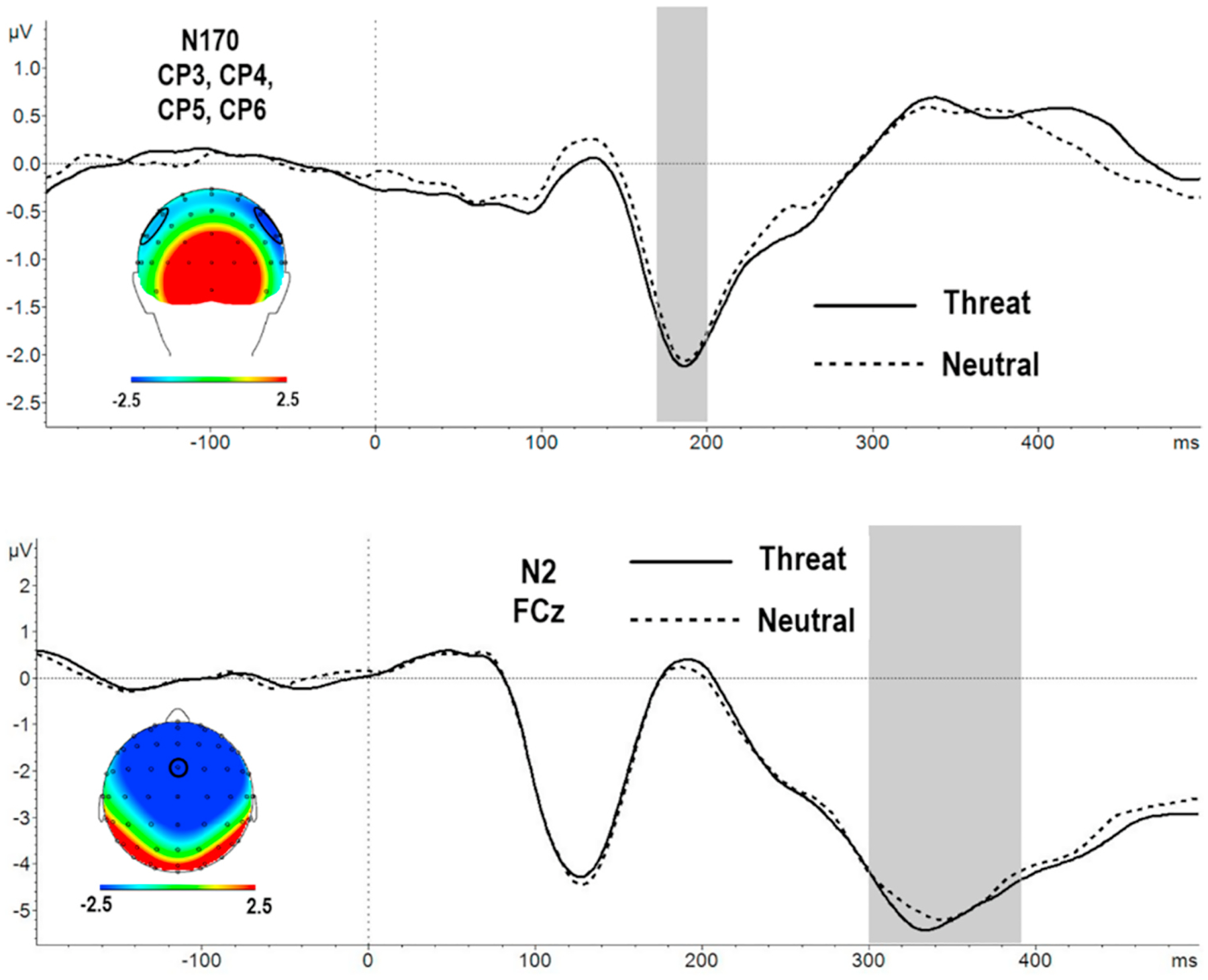
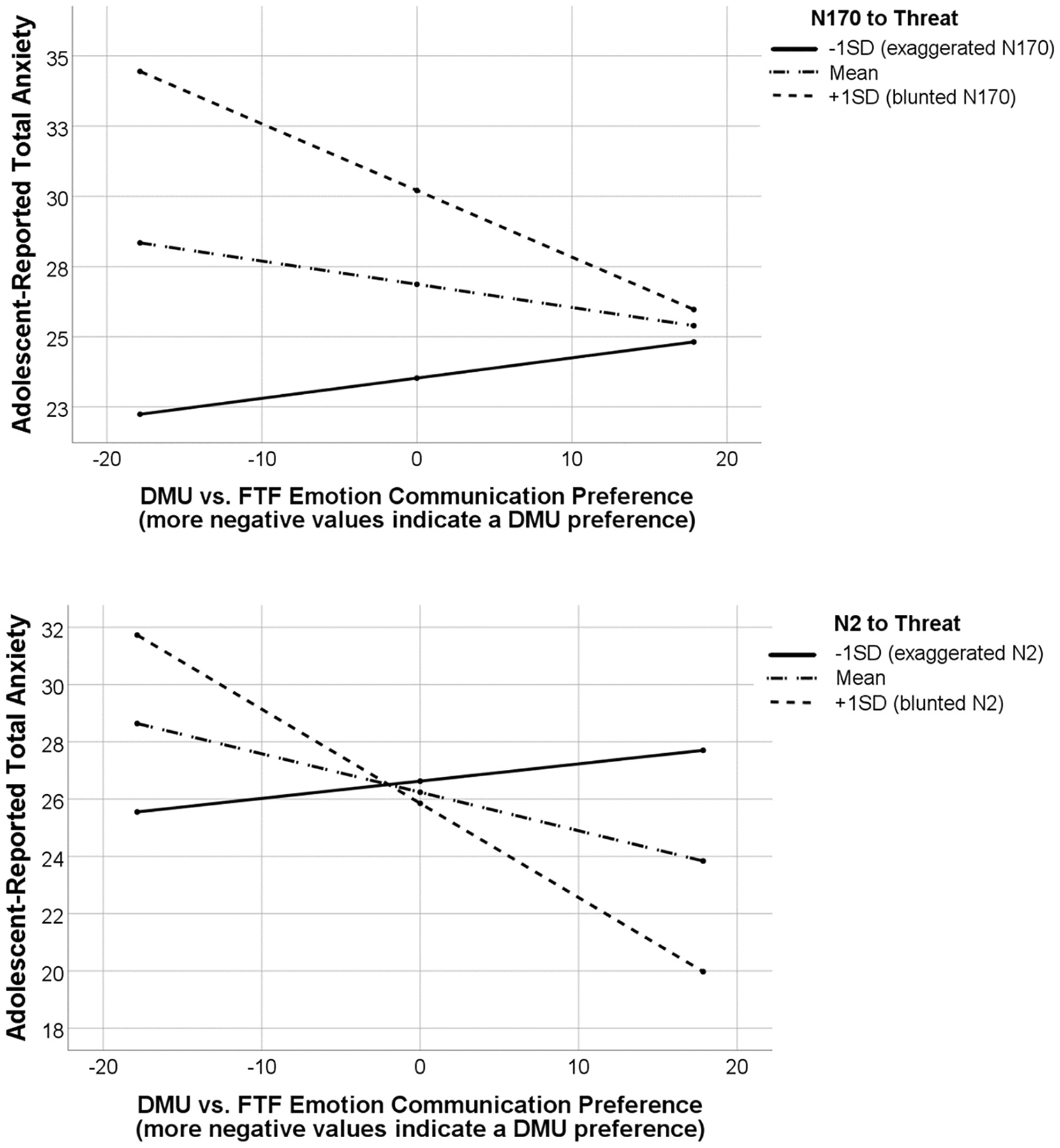
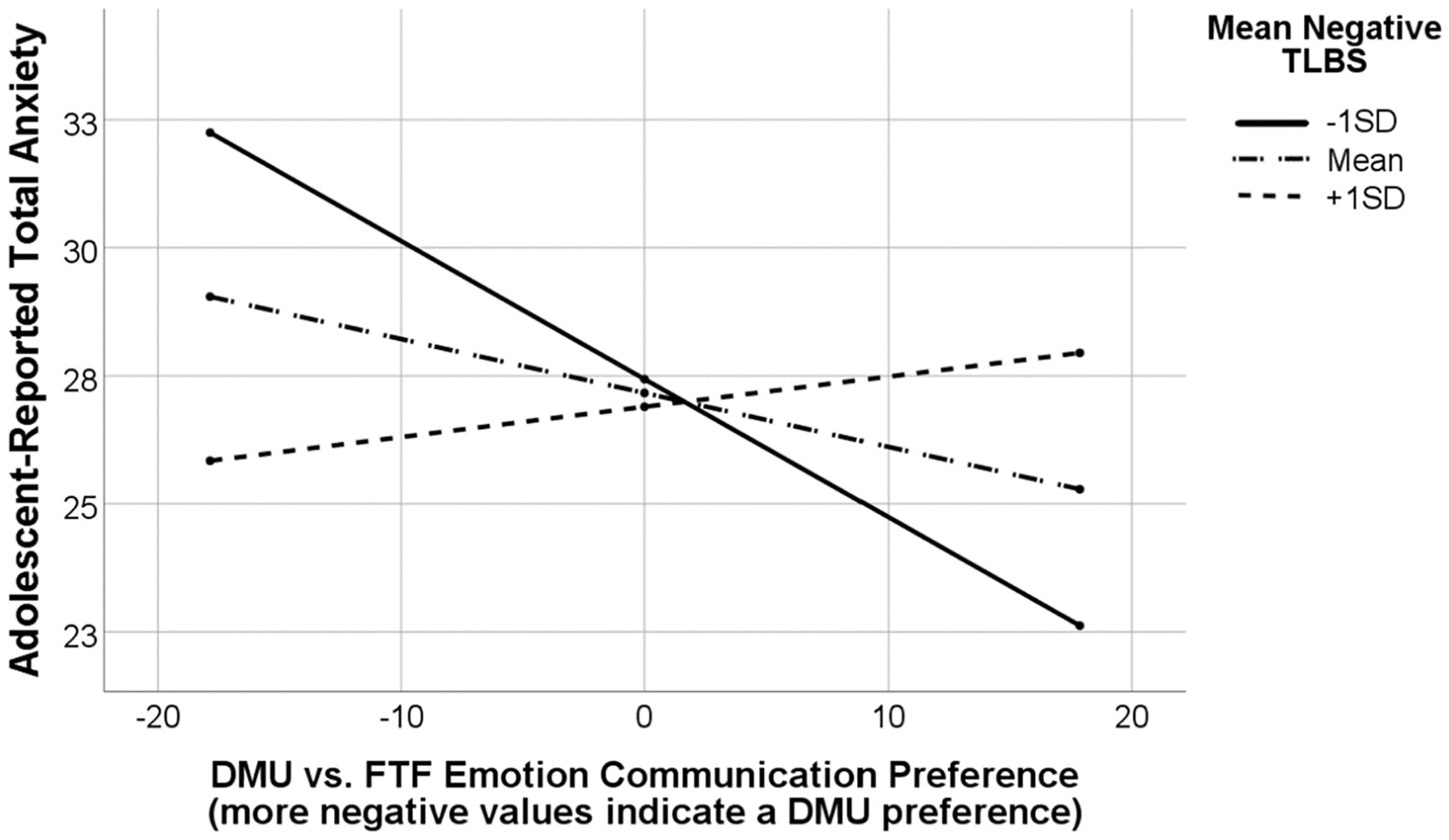
Adolescence is a critical developmental period of biological and social change during which 1 in 3 youth experience significant anxiety symptoms. The social-emotional lives of the majority of adolescents are largely conducted via digital media use (DMU; e.g., social media, text messaging). Yet the past decade of research on DMU and anxiety has yielded mixed results (e.g., Keles et al., 2020 review), leaving the complex role that DMU might play in the emergence and maintenance of anxiety poorly understood. A key step forward is to leverage psychophysiology to identify individual differences in cognitive and emotional processes that confer vulnerability to potential negative effects of DMU. Further, given the ubiquity of DMU, a greater focus is needed on measurements that move beyond sheer frequency to capture DMU in comparison to face-to-face (FTF) social interactions. This study examined attention bias (AB), characterized by selective and exaggerated attention toward or away from threat, as a moderator of the link between DMU and anxiety in adolescents ( = 75; 42 female) aged 12-14 years ( = 13.28, = 0.87). AB was indexed during a dot probe task using reaction time metrics (i.e., trial-level bias) and via ERPs capturing attentional selection and discrimination (N170) and cognitive control (N2) to threat compared to neutral faces. AB moderated associations between DMU and anxiety. A greater preference to use DMU vs FTF predicted greater anxiety among those with a greater behavioral bias away from threat, blunted N170, and blunted N2 in the presence of threat. Future research should examine potential causal and bidirectional links between DMU and anxiety and explore whether preferences for technology-mediated interactions and individual differences in threat processing increase risk.
青春期是生物和社会发生变化的关键发育时期,在此期间,三分之一的青少年会出现明显的焦虑症状。大多数青少年的社交情感生活在很大程度上是通过数字媒体使用(DMU;例如,社交媒体、短信)来进行的。然而,过去十年关于数字媒体使用与焦虑的研究结果喜忧参半(例如,凯莱斯等人,2020年综述),数字媒体使用在焦虑的产生和维持中可能扮演的复杂角色仍未得到充分理解。向前迈出的关键一步是利用心理生理学来识别认知和情感过程中的个体差异,这些差异会使人容易受到数字媒体使用潜在负面影响的影响。此外,鉴于数字媒体使用的普遍性,需要更加关注那些超越单纯频率的测量方法,以便与面对面(FTF)社交互动相比,能够捕捉数字媒体使用情况。本研究考察了注意偏向(AB),其特征是对威胁的选择性和夸张性注意,作为12至14岁青少年(N = 75;42名女性)(M = 13.28,SD = 0.87)数字媒体使用与焦虑之间联系的调节因素。在点探测任务中,使用反应时指标(即试验水平偏向)以及通过ERP来索引注意偏向,该ERP捕捉对威胁与中性面孔相比的注意选择和辨别(N170)以及认知控制(N2)。注意偏向调节了数字媒体使用与焦虑之间的关联。与面对面社交相比,更多地偏好使用数字媒体预测了在面对威胁时行为偏向远离威胁、N170钝化和N2钝化的个体中焦虑程度更高。未来的研究应该考察数字媒体使用与焦虑之间潜在的因果和双向联系,并探索对技术介导互动的偏好以及威胁处理中的个体差异是否会增加风险。