Department of Clinical Sciences, Neurosciences, Umeå University, Norrlands University Hospital, Building 6 M, Floor 4, Umeå SE-90184, Sweden.
Department of Medical Biosciences, Umeå University, Norrlands University Hospital, Building 6 M, Floor 2, Umeå SE-90184, Sweden.
Hum Mol Genet. 2024 Nov 8;33(22):1966-1974. doi: 10.1093/hmg/ddae137.
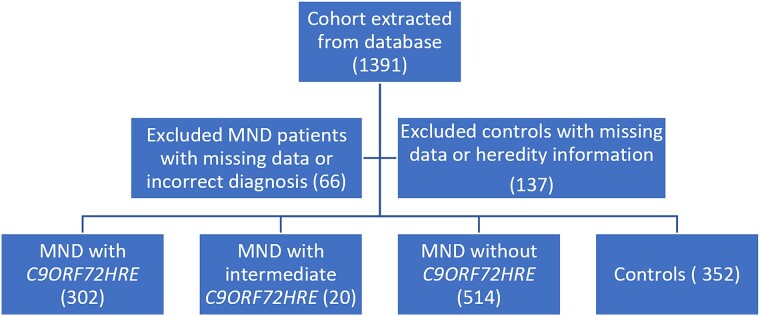
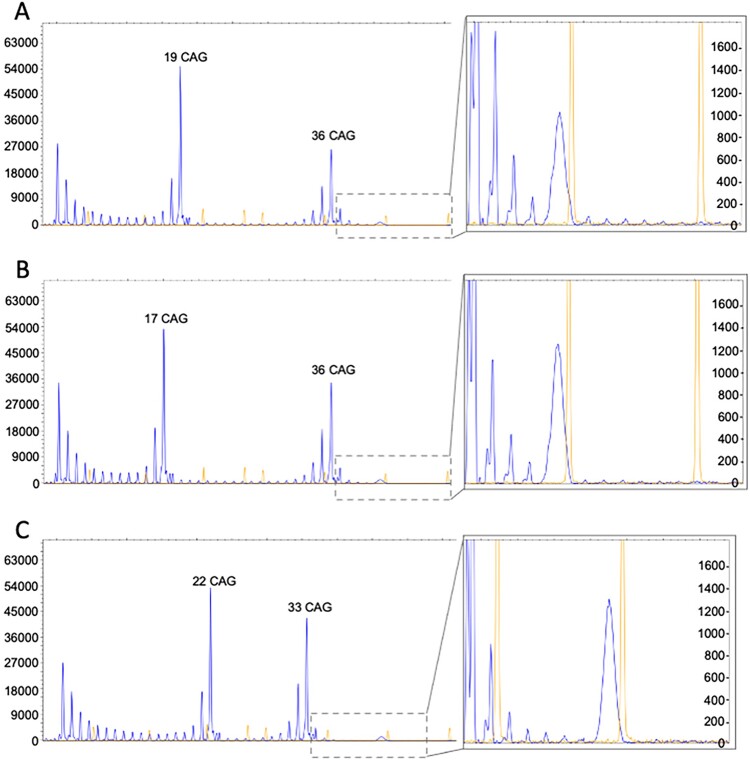
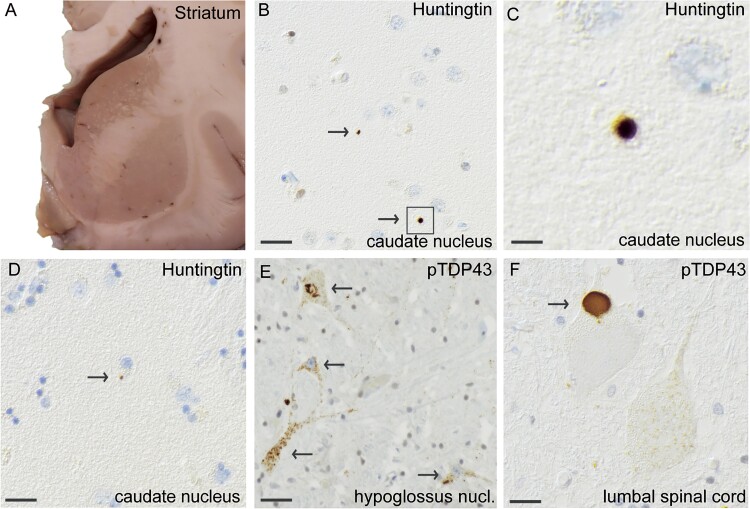
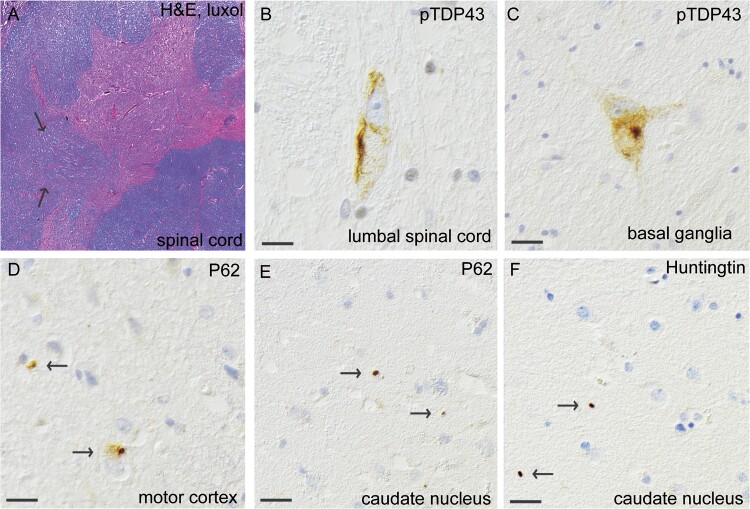
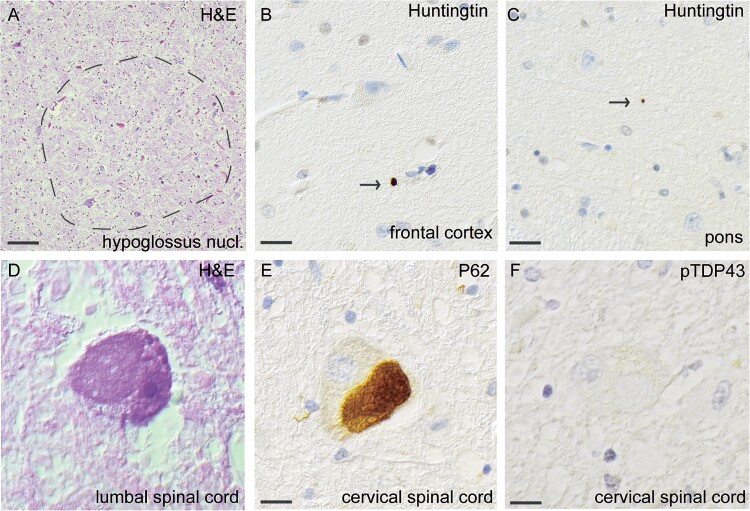
Short tandem repeat expansions in the human genome are overrepresented in a variety of neurological disorders. It was recently shown that huntingtin (HTT) repeat expansions with full penetrance, i.e. 40 or more CAG repeats, which normally cause Huntington's disease (HD), are overrepresented in patients with amyotrophic lateral sclerosis (ALS). Whether patients carrying HTT repeat expansions with reduced penetrance, (36-39 CAG repeats), or alleles with intermediate penetrance, (27-35 CAG repeats), have an increased risk of ALS has not yet been investigated. Here, we examined the role of HTT repeat expansions in a motor neuron disease (MND) cohort, searched for expanded HTT alleles, and investigated correlations with phenotype and neuropathology. MND patients harboring C9ORF72 hexanucleotide repeat expansions (HREs) were included, to investigate whether HTT repeat expansions were more common in this group. We found a high prevalence of intermediate (range 5.63%-6.61%) and reduced penetrance (range 0.57%-0.66%) HTT gene expansions in this cohort compared to other populations of European ancestry, but no differences between the MND cohort and the control cohort were observed, regardless of C9ORF72HRE status. Upon autopsy of three patients with intermediate or reduced penetrance HTT alleles, huntingtin inclusions were observed in the caudate nucleus and frontal lobe, but no significant somatic mosaicism was detected in different parts of the nervous system. Thus, we demonstrate, for the first time, huntingtin inclusions in individuals with MND and intermediate and reduced penetrance HTT repeat expansions but more clinicopathological investigations are needed to further understand the impact of HTT gene expansion-related pleiotropy.
人类基因组中的短串联重复扩展在多种神经紊乱中过度表达。最近表明,具有完全外显率的亨廷顿病(HD)的亨廷顿蛋白(HTT)重复扩展(即 40 个或更多的 CAG 重复)在肌萎缩侧索硬化症(ALS)患者中过度表达。携带 HTT 重复扩展但外显率降低的患者(36-39 个 CAG 重复),或具有中间外显率的等位基因(27-35 个 CAG 重复),是否具有增加的 ALS 风险尚未被研究。在这里,我们检查了 HTT 重复扩展在运动神经元疾病(MND)队列中的作用,寻找扩展的 HTT 等位基因,并研究其与表型和神经病理学的相关性。包含携带 C9ORF72 六核苷酸重复扩展(HRE)的 MND 患者,以研究 HTT 重复扩展是否在该组中更为常见。我们发现,与其他欧洲血统人群相比,该队列中具有中间(范围 5.63%-6.61%)和降低的外显率(范围 0.57%-0.66%)的 HTT 基因扩展的患病率较高,但无论 C9ORF72HRE 状态如何,MND 队列与对照组之间均未观察到差异。在对三个具有中间或降低外显率 HTT 等位基因的患者进行尸检时,在尾状核和额叶中观察到亨廷顿蛋白包涵体,但在神经系统的不同部位未检测到明显的体细胞镶嵌现象。因此,我们首次在 MND 患者和具有中间和降低外显率 HTT 重复扩展的个体中证明了亨廷顿蛋白包涵体,但需要更多的临床病理研究来进一步了解 HTT 基因扩展相关多效性的影响。