Hepatobiliary Center of The First Affiliated Hospital, Nanjing Medical University, Research Unit of Liver Transplantation and Transplant Immunology, Chinese Academy of Medical Sciences, Nanjing, China.
Hepatobiliary Center of The First Affiliated Hospital, Nanjing Medical University, Research Unit of Liver Transplantation and Transplant Immunology, Chinese Academy of Medical Sciences, Nanjing, China; Center of Gastrointestinal Disease, The Affiliated Changzhou NO.2 People's Hospital of Nanjing Medical University, Changzhou, China.
Cell Mol Gastroenterol Hepatol. 2024;18(6):101402. doi: 10.1016/j.jcmgh.2024.101402. Epub 2024 Sep 12.
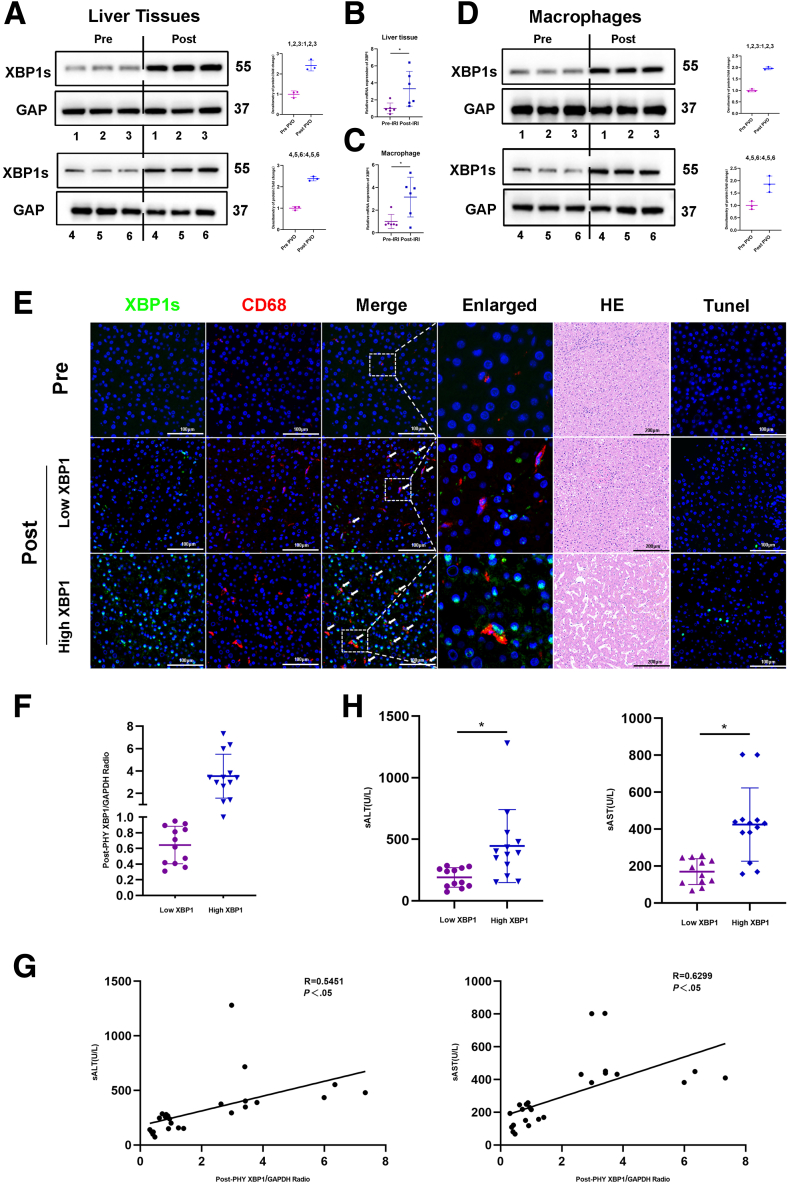
BACKGROUND & AIMS: XBP1, most conserved transcription factor of endoplasmic reticulum stress, plays important roles in physiological and pathologic settings and has profound effects on disease progression and prognosis, so it is necessary to investigate XBP1 in macrophage-originated sterile inflammation during liver ischemia/reperfusion injury (IRI). Macrophage XBP1 expression and liver injury are analyzed in patients undergoing ischemia-related hepatectomy.
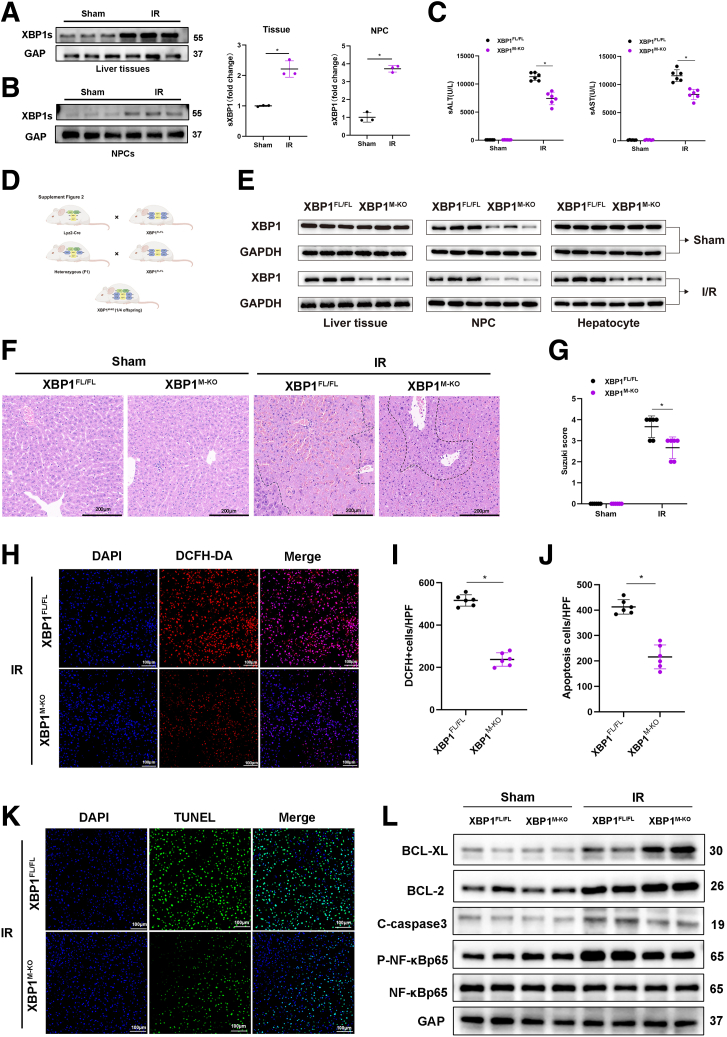
A myeloid-specific male XBP1-knockout (XBP1) strain is created for function and mechanism of XBP1 on macrophage-derived sterile inflammation in murine liver IRI with in vitro parallel research. Macrophages cocultured with hypoxia-treated hepatocytes are applied to investigate impact of XBP1 in vitro, with analysis of RNA sequencing and databases.
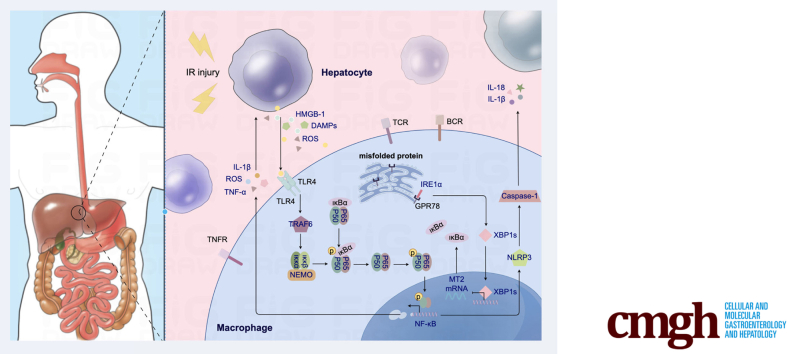
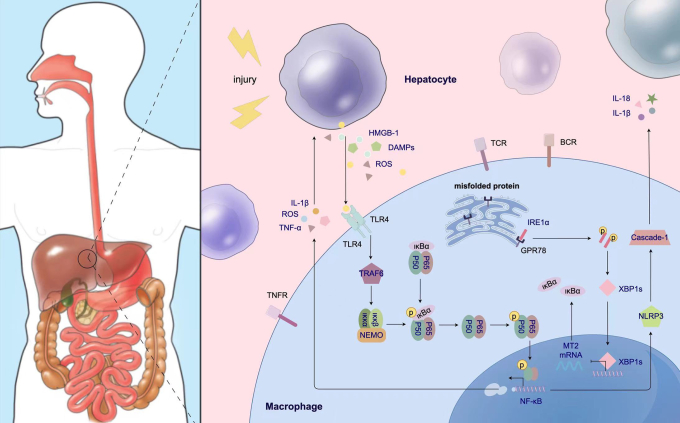
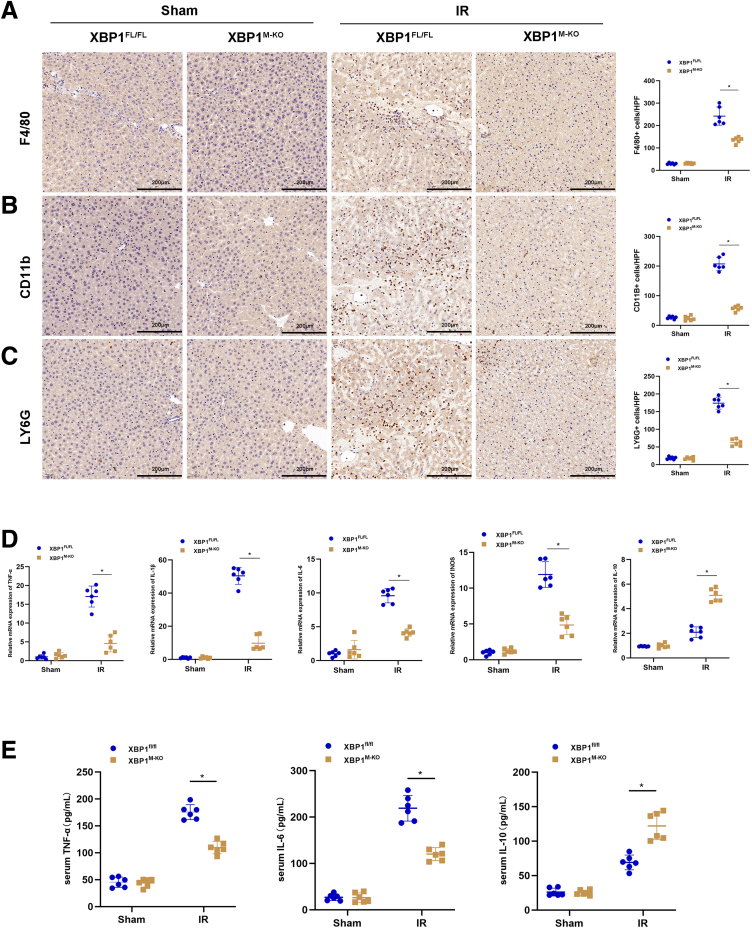
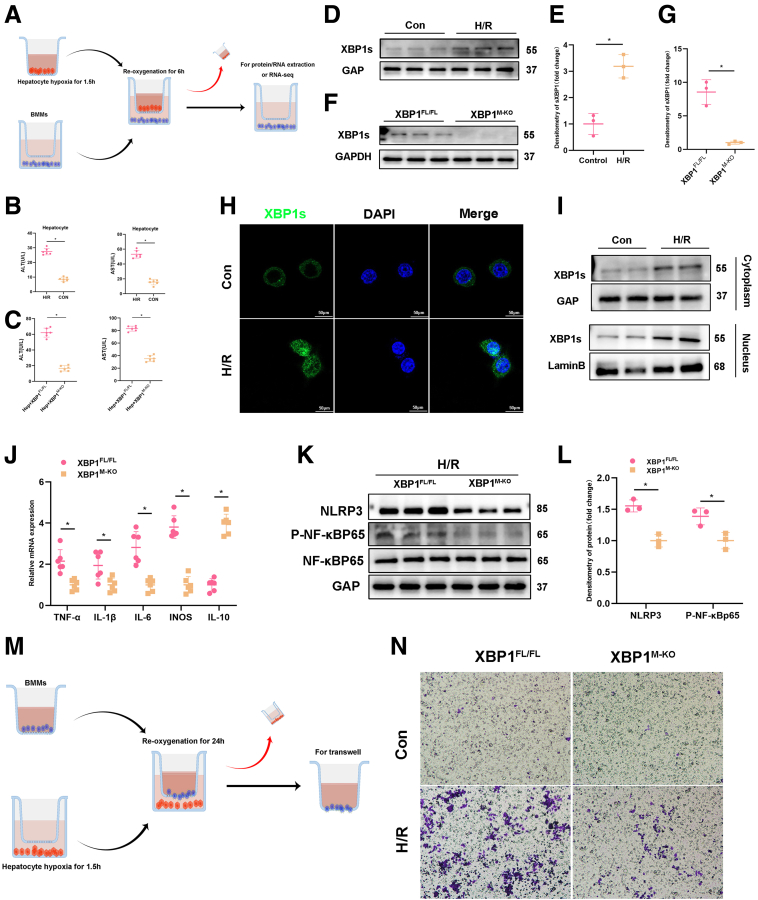
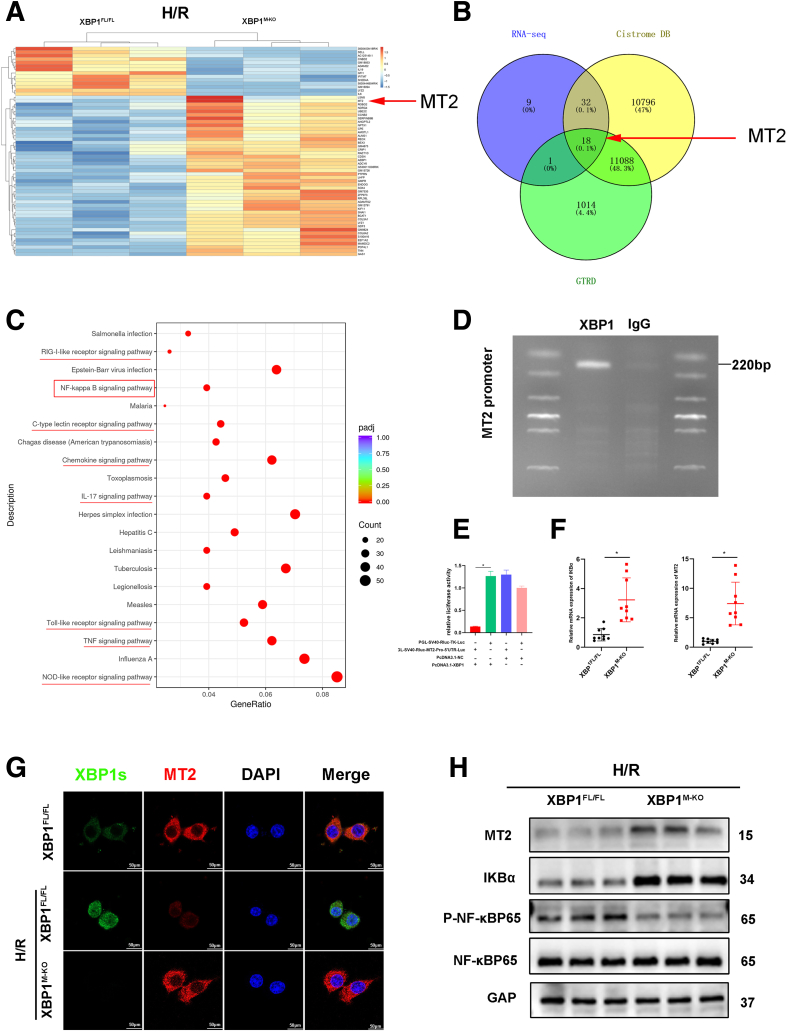
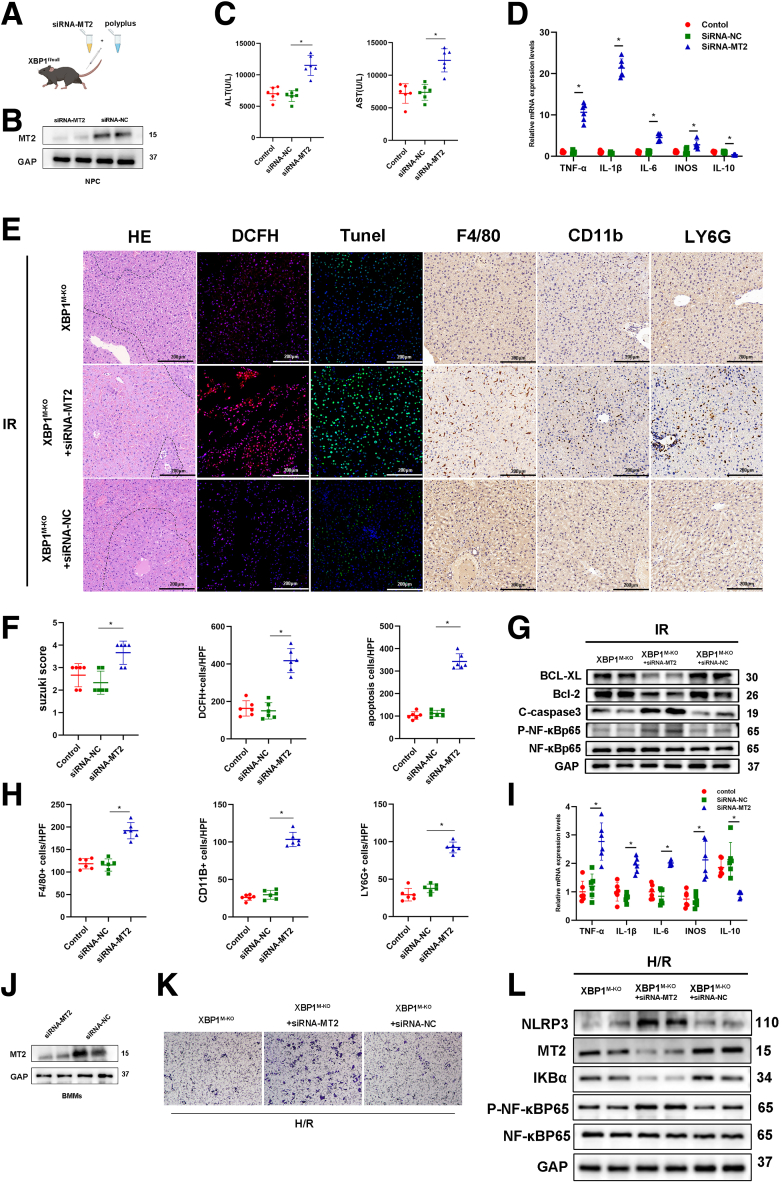
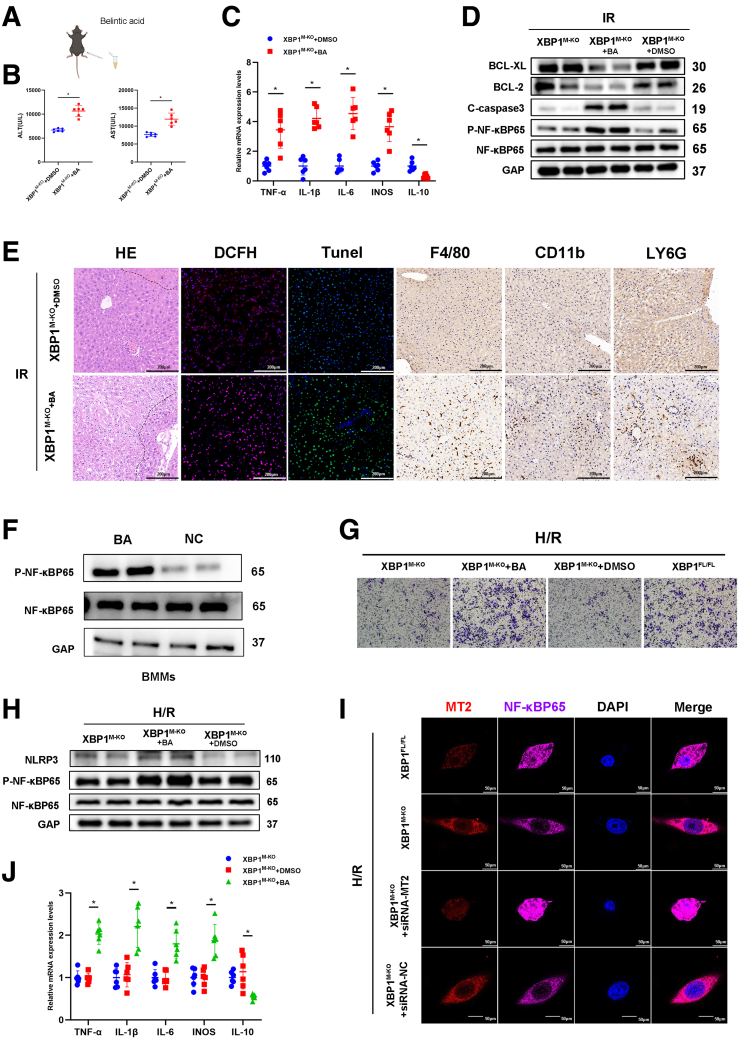
Clinically, macrophage XBP1 expression significantly increases in ischemic liver tissues and positively correlates with liver injury after hepatectomy. Less hepatocellular damage is presented in XBP1 mice than in XBP1-proficient (XBP1) control animals. In vitro, XBP1 deficiency inhibits sterile inflammation and migration in macrophages cocultured with hypoxia-treated hepatocytes. Analysis of RNA sequencing and databases determines Metallothionein 2 (MT2) as XBP1 target gene, negatively regulated by binding with its promoter. XBP1 deficiency increases MT2 and IKBα expression, but inhibits nuclear factor-κB-p65 phosphorylation, markedly neutralizing XBP1-related benefits by promoting sterile inflammation during liver IRI.
XBP1 promotes macrophage-originated sterile inflammation, increases liver IRI by binding to MT2 promoter, and regulates MT2/nuclear factor-κB pathway, potentially therapeutic for clinical liver IRI.
内质网应激的最保守转录因子 XBP1 在生理和病理环境中发挥重要作用,对疾病进展和预后有深远影响,因此有必要研究其在肝缺血/再灌注损伤(IRI)中巨噬细胞源性无菌性炎症中的作用。本研究分析了行缺血相关肝切除术患者的巨噬细胞 XBP1 表达与肝损伤情况。
构建髓系特异性雄性 XBP1 敲除(XBP1)小鼠,研究 XBP1 对小鼠肝 IRI 中巨噬细胞源性无菌性炎症的功能和机制,并进行体外平行研究。应用缺氧处理的肝细胞与巨噬细胞共培养,研究 XBP1 在体外的影响,同时进行 RNA 测序和数据库分析。
临床研究发现,缺血性肝组织中巨噬细胞 XBP1 表达明显增加,且与肝切除术后肝损伤呈正相关。与 XBP1 功能正常(XBP1)对照动物相比,XBP1 敲除(XBP1)小鼠的肝细胞损伤较少。体外研究发现,XBP1 缺乏可抑制缺氧处理的肝细胞与巨噬细胞共培养后的无菌性炎症和迁移。RNA 测序和数据库分析确定 Metallothionein 2(MT2)为 XBP1 靶基因,其启动子与 XBP1 结合后受到负调控。XBP1 缺乏可增加 MT2 和 IKBα 的表达,但抑制核因子-κB-p65 磷酸化,通过促进肝 IRI 期间的无菌性炎症,显著中和 XBP1 相关益处。
XBP1 通过与 MT2 启动子结合,促进巨噬细胞源性无菌性炎症,增加肝 IRI,并调节 MT2/核因子-κB 通路,为临床肝 IRI 的治疗提供了潜在靶点。