Zhan Yongqiang, Xu Dongwei, Tian Yizhu, Qu Xiaoye, Sheng Mingwei, Lin Yuanbang, Ke Michael, Jiang Longfeng, Xia Qiang, Kaldas Fady M, Farmer Douglas G, Ke Bibo
The Dumont-UCLA Transplant Center, Division of Liver and Pancreas Transplantation, Department of Surgery, David Geffen School of Medicine at UCLA, Los Angeles, CA, USA.
Department of Hepatobiliary and Pancreatic Surgery, First Affiliated Hospital of Shenzhen University, Shenzhen Second People's Hospital, Shenzhen, China.
JHEP Rep. 2022 Jul 8;4(9):100532. doi: 10.1016/j.jhepr.2022.100532. eCollection 2022 Sep.
BACKGROUND & AIMS: The stimulator of interferon genes (STING)/TANK-binding kinase 1 (TBK1) pathway is vital in mediating innate immune and inflammatory responses during oxidative/endoplasmic reticulum (ER) stress. However, it remains unknown whether macrophage thioredoxin-interacting protein (TXNIP) may regulate TBK1 function and cell death pathways during oxidative/ER stress.
A mouse model of hepatic ischaemia/reperfusion injury (IRI), the primary hepatocytes, and bone marrow-derived macrophages were used in the myeloid-specific TXNIP knockout (TXNIP) and TXNIP-proficient (TXNIP) mice.
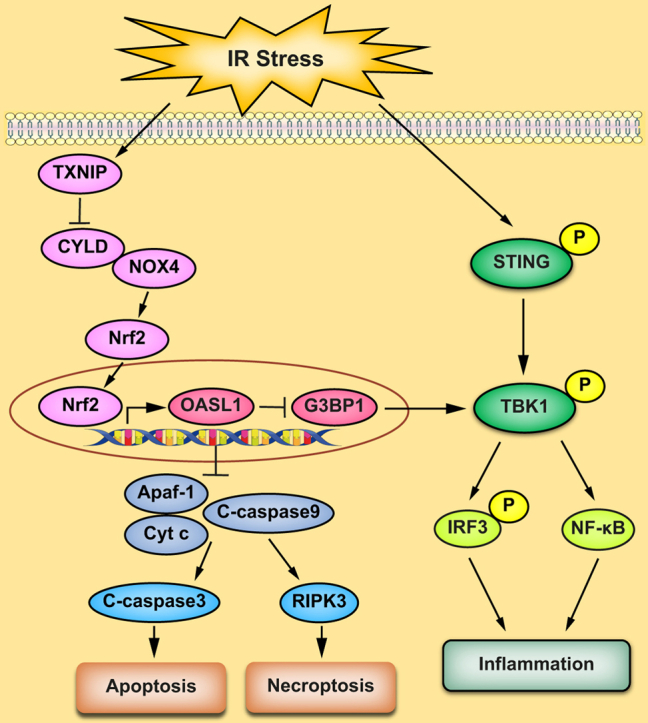
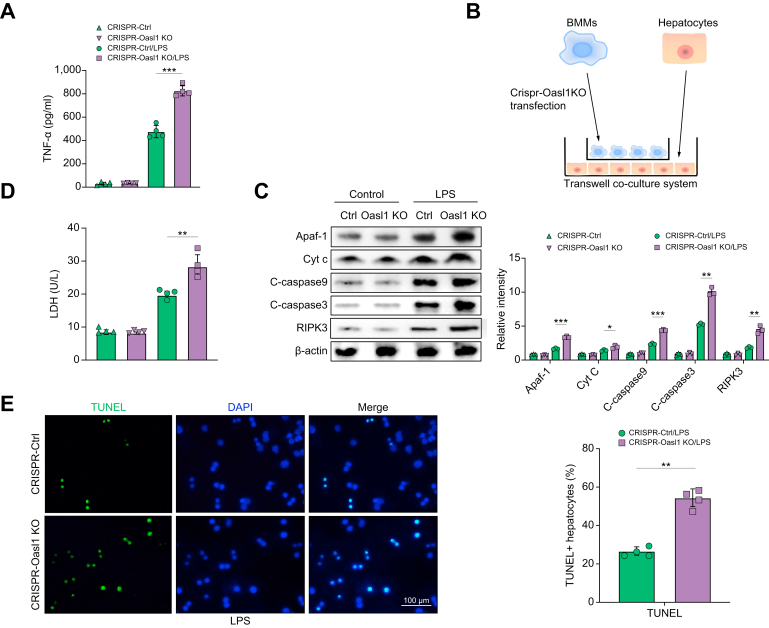
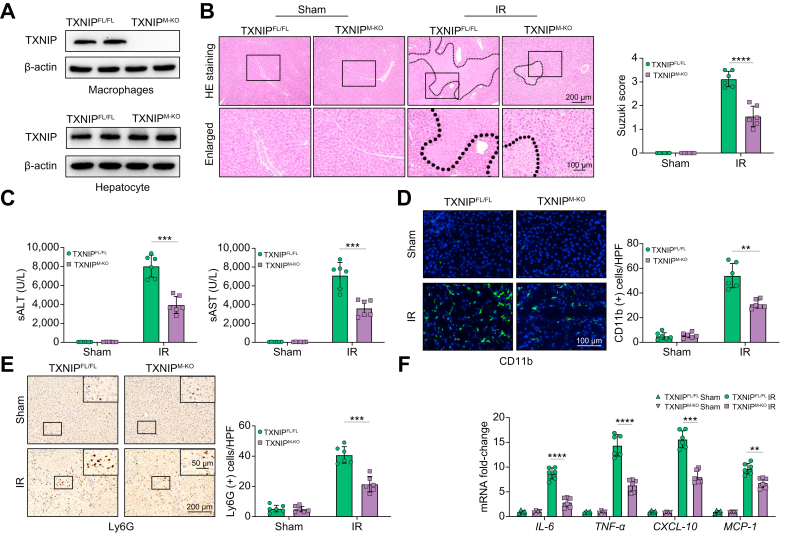
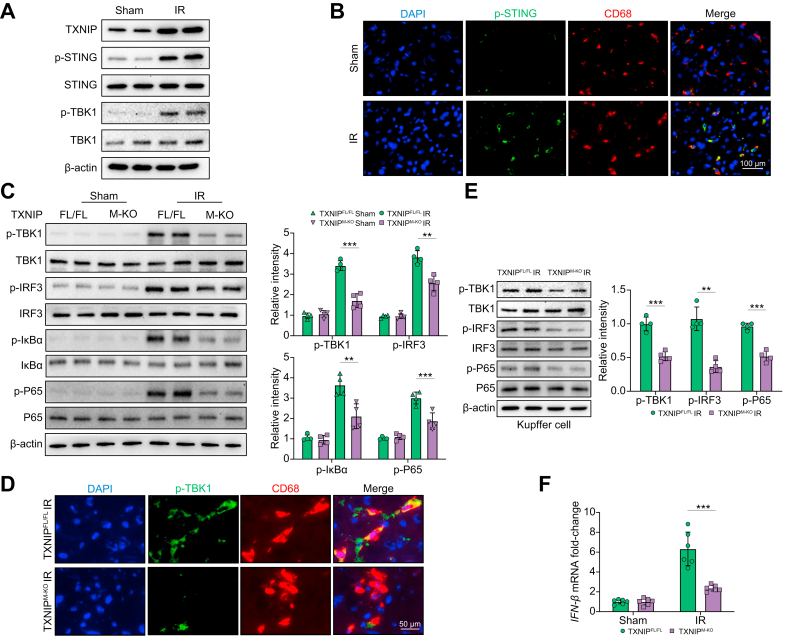
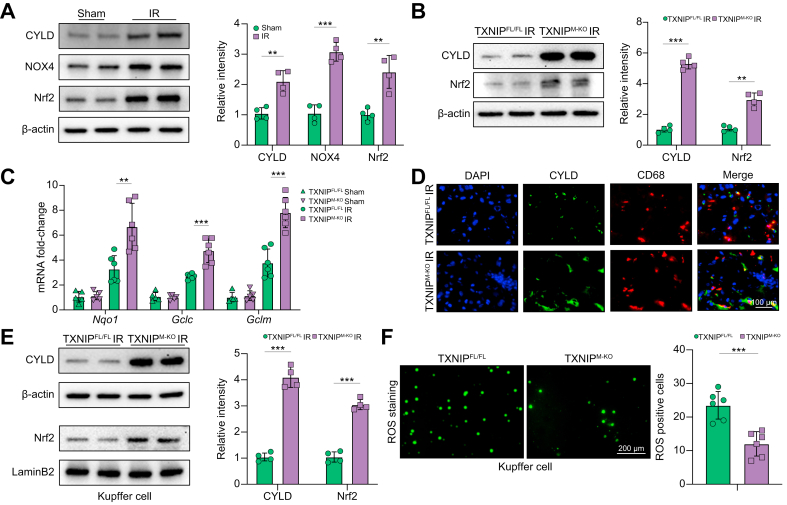
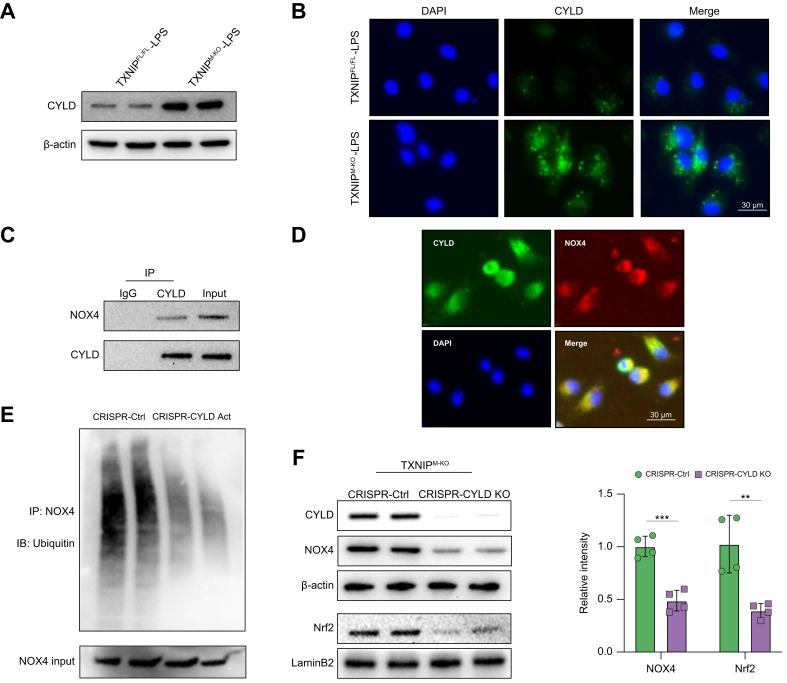
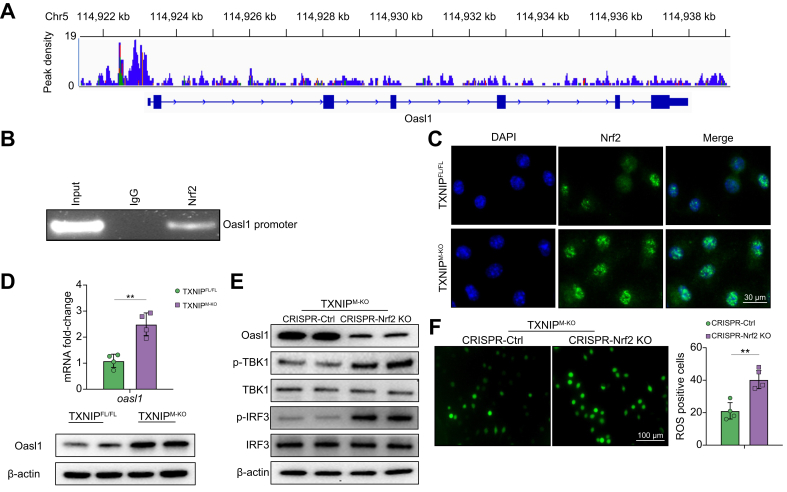
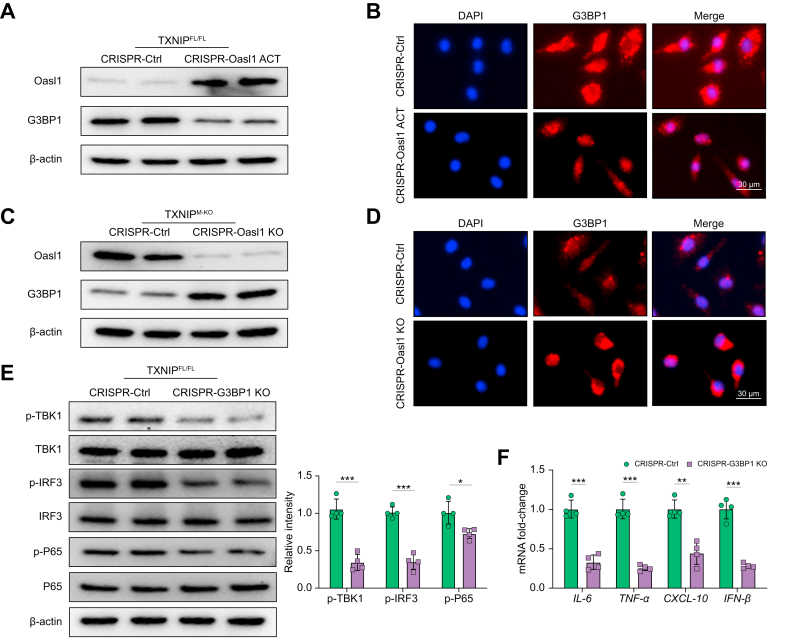
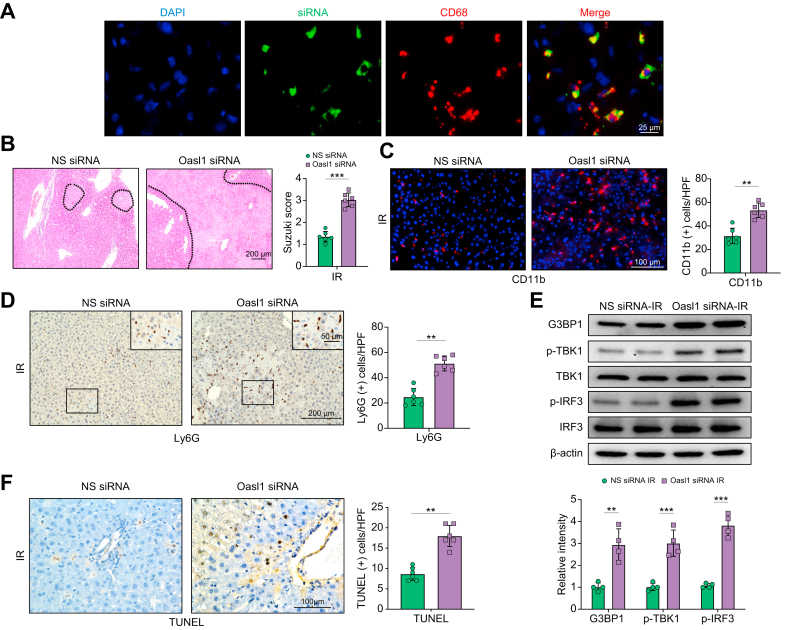
The TXNIP mice were resistant to ischaemia/reperfusion (IR) stress-induced liver damage with reduced serum alanine aminotransferase (ALT)/aspartate aminotransferase (AST) levels, macrophage/neutrophil infiltration, and pro-inflammatory mediators compared with the TXNIP controls. IR stress increased TXNIP, p-STING, and p-TBK1 expression in ischaemic livers. However, TXNIP inhibited STING, TBK1, interferon regulatory factor 3 (IRF3), and NF-κB activation with interferon-β (IFN-β) expression. Interestingly, TXNIP augmented nuclear factor (erythroid-derived 2)-like 2 (NRF2) activity, increased antioxidant gene expression, and reduced macrophage reactive oxygen species (ROS) production and hepatic apoptosis/necroptosis in IR-stressed livers. Mechanistically, macrophage TXNIP deficiency promoted cylindromatosis (CYLD), which colocalised and interacted with NADPH oxidase 4 (NOX4) to enhance NRF2 activity by deubiquitinating NOX4. Disruption of macrophage NRF2 or its target gene 2',5' oligoadenylate synthetase-like 1 (OASL1) enhanced Ras GTPase-activating protein-binding protein 1 (G3BP1) and TBK1-mediated inflammatory response. Notably, macrophage OASL1 deficiency induced hepatocyte apoptotic peptidase activating factor 1 (APAF1), cytochrome c, and caspase-9 activation, leading to increased caspase-3-initiated apoptosis and receptor-interacting serine/threonine-protein kinase 3 (RIPK3)-mediated necroptosis.
Macrophage TXNIP deficiency enhances CYLD activity and activates the NRF2-OASL1 signalling, controlling IR stress-induced liver injury. The target gene OASL1 regulated by NRF2 is crucial for modulating STING-mediated TBK1 activation and Apaf1/cytochrome c/caspase-9-triggered apoptotic/necroptotic cell death pathway. Our findings underscore a novel role of macrophage TXNIP-mediated CYLD-NRF2-OASL1 axis in stress-induced liver inflammation and cell death, implying the potential therapeutic targets in liver inflammatory diseases.
Liver inflammation and injury induced by ischaemia and reperfusion (the absence of blood flow to the liver tissue followed by the resupply of blood) is a significant cause of hepatic dysfunction and failure following liver transplantation, resection, and haemorrhagic shock. Herein, we uncover an underlying mechanism that contributes to liver inflammation and cell death in this setting and could be a therapeutic target in stress-induced liver inflammatory injury.
干扰素基因刺激因子(STING)/TANK结合激酶1(TBK1)通路在氧化/内质网(ER)应激期间介导先天性免疫和炎症反应中至关重要。然而,巨噬细胞硫氧还蛋白相互作用蛋白(TXNIP)在氧化/ER应激期间是否可调节TBK1功能和细胞死亡途径仍不清楚。
在髓系特异性TXNIP基因敲除(TXNIP -/-)和TXNIP基因正常(TXNIP +/+)小鼠中,使用肝缺血/再灌注损伤(IRI)小鼠模型、原代肝细胞和骨髓来源的巨噬细胞。
与TXNIP +/+对照组相比,TXNIP -/-小鼠对缺血/再灌注(IR)应激诱导的肝损伤具有抗性,血清丙氨酸氨基转移酶(ALT)/天冬氨酸氨基转移酶(AST)水平降低,巨噬细胞/中性粒细胞浸润减少,促炎介质减少。IR应激增加了缺血肝脏中TXNIP、p - STING和p - TBK1的表达。然而,TXNIP抑制了STING、TBK1、干扰素调节因子3(IRF3)和NF -κB的激活以及干扰素-β(IFN -β)的表达。有趣的是,TXNIP增强了核因子(红细胞衍生2)样2(NRF2)的活性,增加了抗氧化基因的表达,并减少了IR应激肝脏中巨噬细胞活性氧(ROS)的产生以及肝脏细胞凋亡/坏死性凋亡。机制上,巨噬细胞TXNIP缺陷促进了圆柱瘤蛋白(CYLD)的表达,CYLD与NADPH氧化酶4(NOX4)共定位并相互作用,通过去泛素化NOX4增强NRF2活性。巨噬细胞NRF2或其靶基因2',5'寡腺苷酸合成酶样1(OASL1)的破坏增强了Ras GTP酶激活蛋白结合蛋白1(G3BP1)和TBK1介导的炎症反应。值得注意的是,巨噬细胞OASL1缺陷诱导肝细胞凋亡肽酶激活因子1(APAF1)、细胞色素c和半胱天冬酶 - 9的激活,导致半胱天冬酶 - 3启动的细胞凋亡增加以及受体相互作用丝氨酸/苏氨酸蛋白激酶3(RIPK3)介导的坏死性凋亡增加。
巨噬细胞TXNIP缺陷增强CYLD活性并激活NRF2 - OASL1信号通路,控制IR应激诱导的肝损伤。NRF2调节的靶基因OASL1对于调节STING介导的TBK1激活以及Apaf1/细胞色素c/半胱天冬酶 - 9触发的凋亡/坏死性凋亡细胞死亡途径至关重要。我们的研究结果强调了巨噬细胞TXNIP介导的CYLD - NRF2 - OASL1轴在应激诱导的肝脏炎症和细胞死亡中的新作用,暗示了在肝脏炎症性疾病中的潜在治疗靶点。
缺血和再灌注(肝脏组织血流缺失后再恢复血流)诱导的肝脏炎症和损伤是肝移植、肝切除和失血性休克后肝功能障碍和衰竭的重要原因。在此,我们揭示了在这种情况下导致肝脏炎症和细胞死亡的潜在机制,并且这可能是应激诱导的肝脏炎症性损伤的治疗靶点。