Department of Medical Laboratory Sciences, College of Health Sciences, Debre Tabor University, Debre Tabor, Ethiopia.
Department of Medical Microbiology, School of Biomedical and Laboratory Sciences, College of Medicine and Health Sciences, University of Gondar, Gondar, Ethiopia.
Sci Rep. 2024 Sep 13;14(1):21409. doi: 10.1038/s41598-024-72762-9.
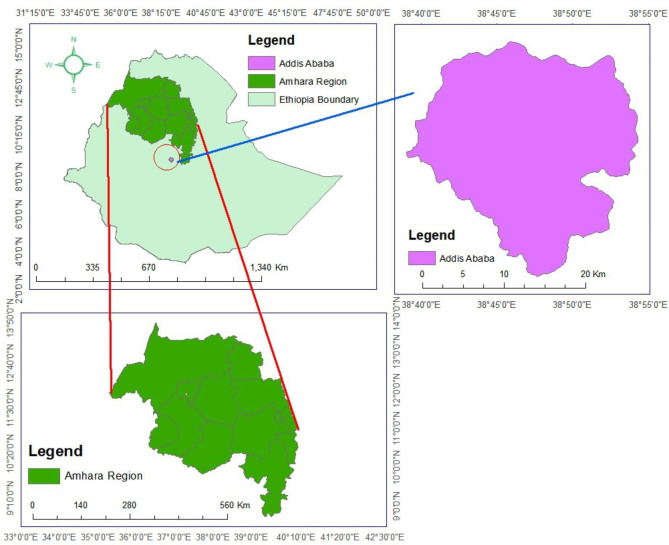
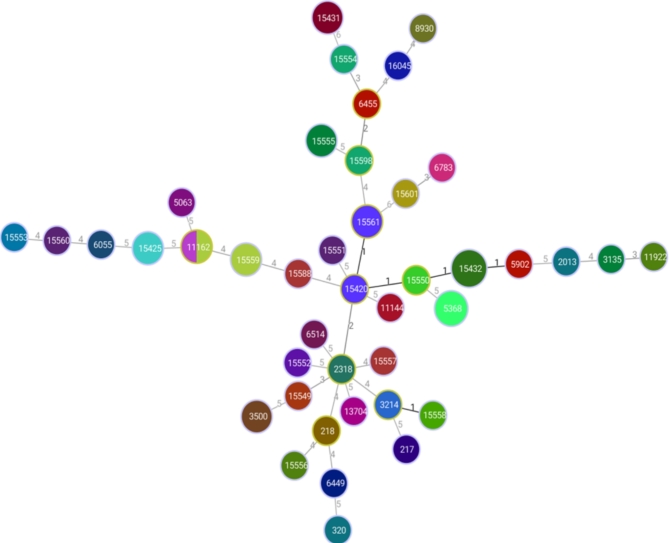
Streptococcus pneumoniae, a medically important opportunistic bacterial pathogen of the upper respiratory tract, is a major public health concern, causing a wide range of pneumococcal illnesses, both invasive and noninvasive. It is associated with significant global morbidity and mortality, including pneumonia, meningitis, sepsis, and acute otitis media. The major purpose of this study was to determine the molecular epidemiology of Streptococcus pneumoniae strains that cause invasive and noninvasive infections in Ethiopia. A prospective study was undertaken in two regional hospitals between January 2018 and December 2019. Whole-genome sequencing was used to analyze all isolates. Serotypes and multilocus sequence types (MLST) were derived from genomic data. The E-test was used for antimicrobial susceptibility testing. Patient samples obtained 54 Streptococcus pneumoniae isolates, 33 from invasive and 21 from noninvasive specimens. Our findings identified 32 serotypes expressed by 25 Global Pneumococcal Sequence Clusters (GPSCs) and 42 sequence types (STs), including 21 new STs. The most common sequence types among the invasive isolates were ST3500, ST5368, ST11162, ST15425, ST15555, ST15559, and ST15561 (2/33, 6% each). These sequence types were linked to serotypes 8, 7 C, 15B/C, 16 F, 10 A, 15B, and 6 A, respectively. Among the noninvasive isolates, only ST15432, associated with serotype 23 A, had numerous isolates (4/21, 19%). Serotype 14 was revealed as the most resistant strain to penicillin G, whereas isolates from serotypes 3, 8, 7 C, and 10 A were resistant to erythromycin. Notably, all serotype 6 A isolates were resistant to both erythromycin and penicillin G. Our findings revealed an abnormally significant number of novel STs, as well as extremely diversified serotypes and sequence types, implying that Ethiopia may serve as a breeding ground for novel STs. Recombination can produce novel STs that cause capsular switching. This has the potential to influence how immunization campaigns affect the burden of invasive pneumococcal illness. The findings highlight the importance of continuous genetic surveillance of the pneumococcal population as a vital step toward enhancing future vaccine design.
肺炎链球菌是一种重要的呼吸道机会致病菌,是主要的公共卫生关注问题,可引起广泛的侵袭性和非侵袭性肺炎球菌病。它与全球发病率和死亡率显著相关,包括肺炎、脑膜炎、败血症和急性中耳炎。本研究的主要目的是确定引起埃塞俄比亚侵袭性和非侵袭性感染的肺炎链球菌菌株的分子流行病学。2018 年 1 月至 2019 年 12 月,在两家地区医院进行了一项前瞻性研究。对所有分离株进行全基因组测序分析。血清型和多位点序列分型(MLST)源自基因组数据。采用 E 试验进行抗菌药物敏感性试验。从患者样本中获得了 54 株肺炎链球菌分离株,其中 33 株来自侵袭性标本,21 株来自非侵袭性标本。我们的研究结果确定了 25 个全球肺炎链球菌序列群(GPSCs)和 42 个序列型(STs)表达的 32 种血清型,包括 21 个新的 STs。侵袭性分离株中最常见的序列类型是 ST3500、ST5368、ST11162、ST15425、ST15555、ST15559 和 ST15561(各 2/33,6%)。这些序列类型分别与血清型 8、7C、15B/C、16F、10A、15B 和 6A 相关。在非侵袭性分离株中,只有与血清型 23A 相关的 ST15432 有大量分离株(4/21,19%)。血清型 14 对青霉素 G 的耐药性最强,而血清型 3、8、7C 和 10A 的分离株对红霉素耐药。值得注意的是,所有血清型 6A 分离株对红霉素和青霉素 G 均耐药。我们的研究结果显示了大量异常的新型 STs,以及极其多样化的血清型和序列类型,这表明埃塞俄比亚可能是新型 STs 的滋生地。重组可以产生导致荚膜转换的新型 STs。这可能会影响免疫接种运动如何影响侵袭性肺炎球菌病的负担。这些发现强调了对肺炎球菌群体进行连续遗传监测的重要性,这是加强未来疫苗设计的重要一步。