Hou Zhiqiang, Yuan Ruifu, Chen Yan, Sun Wei
School of Energy Science and Engineering, Henan Polytechnic University, Jiaozuo, 454000, Henan, China.
Henan International Joint Laboratory of Coalmine Ground Control, Henan Polytechnic University, Jiaozuo, 454000, Henan, China.
Sci Rep. 2024 Sep 13;14(1):21424. doi: 10.1038/s41598-024-72302-5.
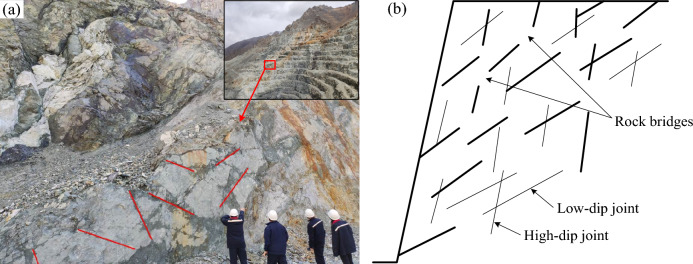
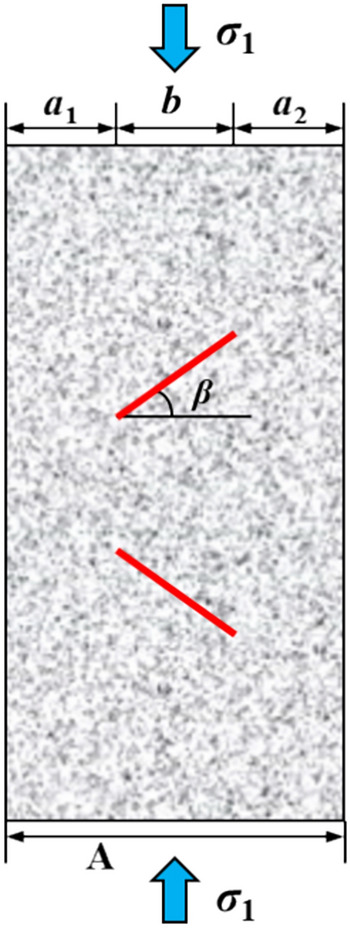
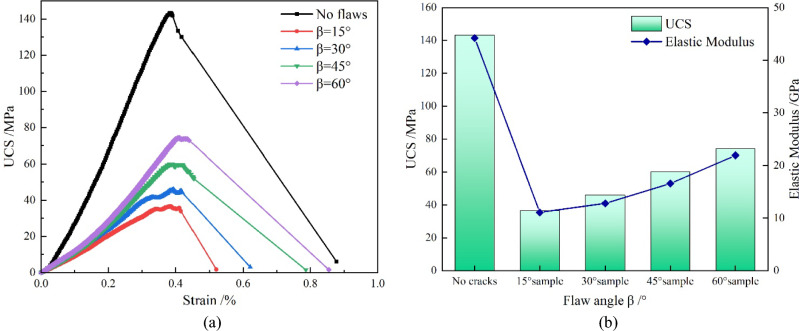
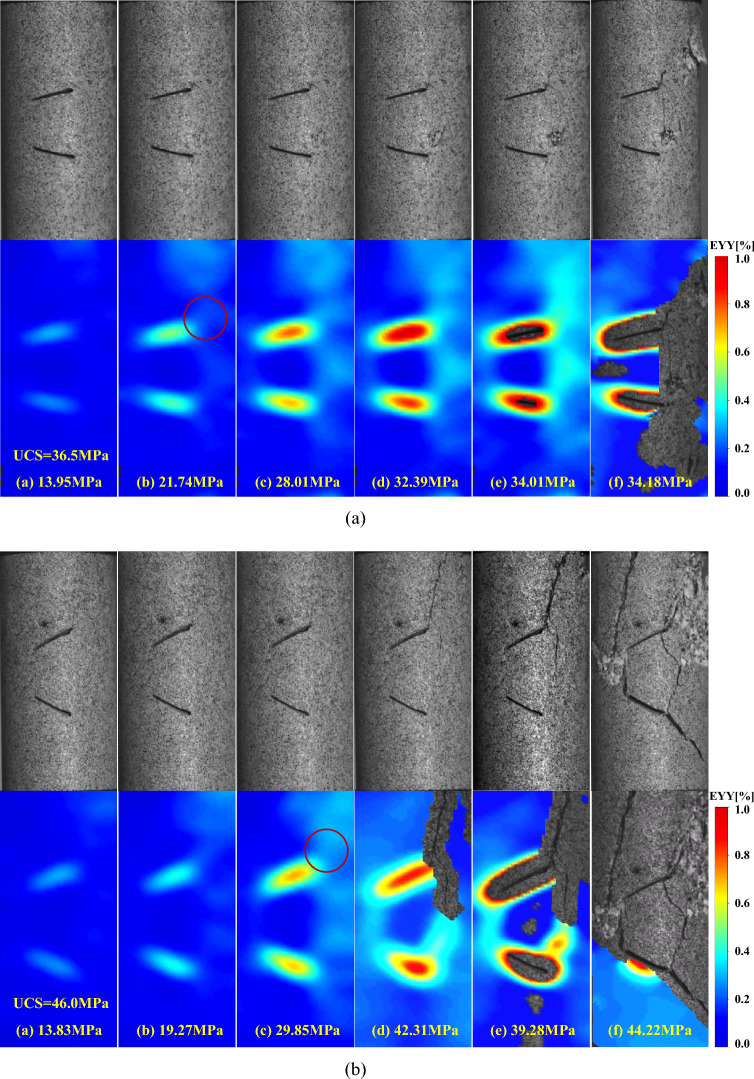
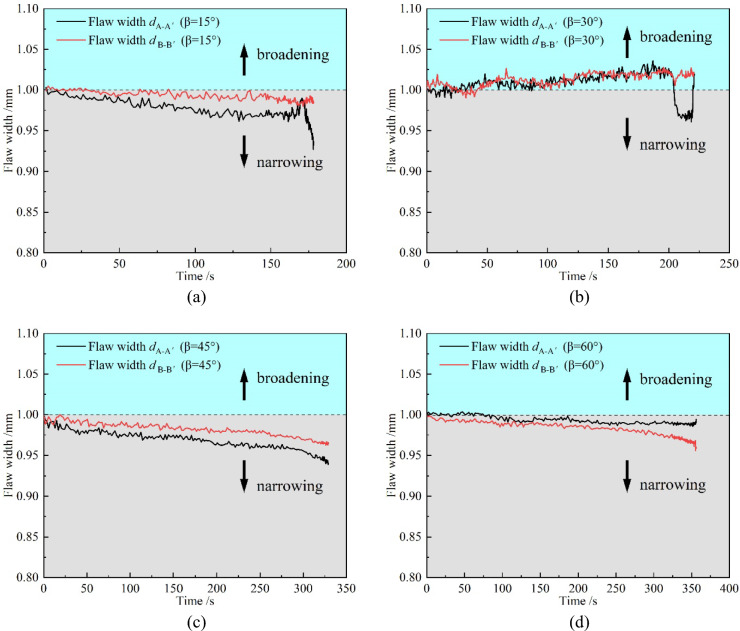
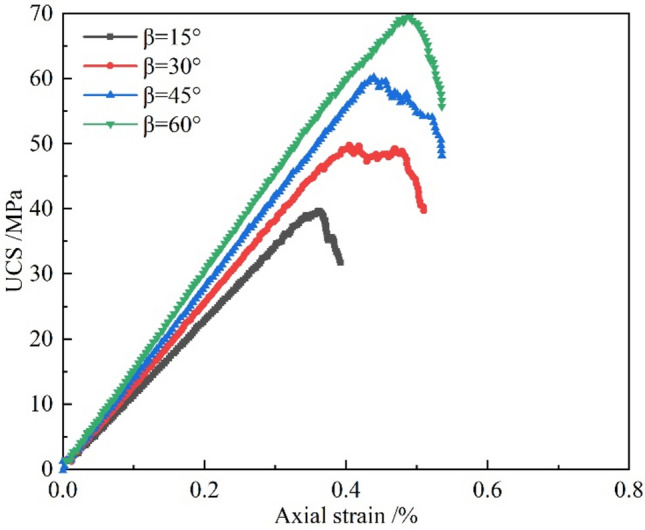
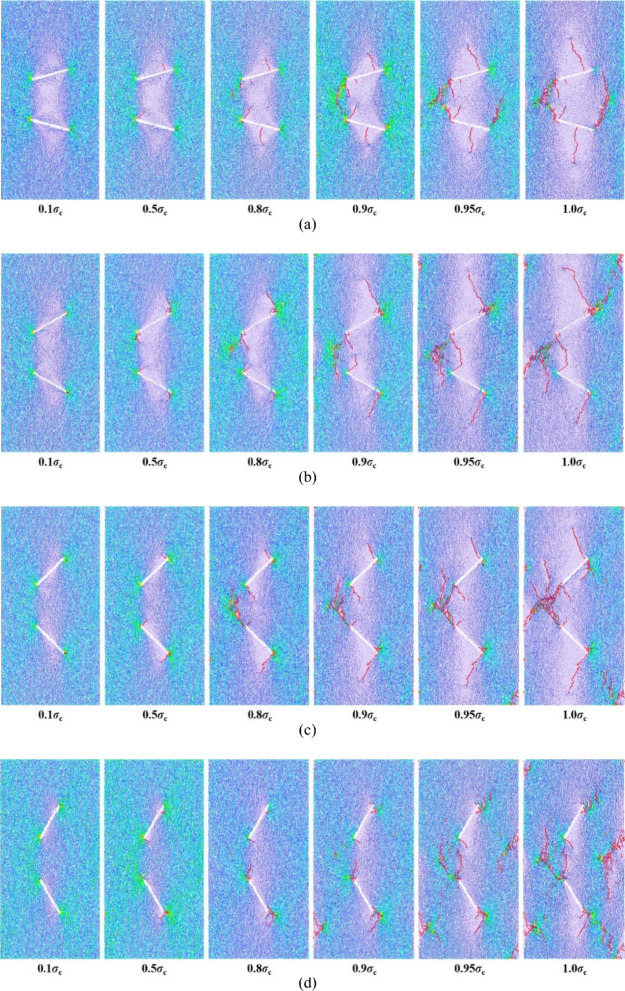
The existence of flaws seriously weakens the rock strength, directly affects the crack expansion morphology, and indirectly affects the slope stability. In this study, uniaxial compression tests were carried out on double-flawed granite to investigate the effects of flaw angle on its compressive strength and crack coalescence based on DIC technology and PFC2D numerical simulation. The result indicates that the UCS values of flawed specimens at angles of 15°, 30°, 45°, and 60° are approximately 25.5-51.7% lower than that of the intact specimen. The failure strength of the double-flawed sample increases with the increase of flaw inclination angle, and the fracture morphology shifts from no expansion to split expansion. When the flaw tip strain of each flaw sample exceeded 0.6%, the stress concentration was generated at the flaw tip, and the sample began to appear macroscopic large cracks. DIC technique can well observe the crack initiation and propagation process, recording inclined shear strain bands at flaw tips, tensile strain bands in the middle of flaws, and tensile shear O-shaped strain ring in rock bridge areas. Numerical simulations using PFC2D software were carried out and showed a good agreement with the physical results. In addition, the effect of structural inclination on specimen failure strength is clearly explained by the theory of compressive damage based on the projected size of flaws. The deformation of rock mass is not a simple material deformation but is composed of material deformation and structural deformation. These experimental and numerical results enhance our understanding of crack initiation and coalescence characteristics, aiding in the analysis of rock structure stability in scenarios such as excavated underground openings, slopes, and tunneling construction, where pre-existing cracks or step-path fractures are pivotal to structural integrity.
缺陷的存在严重削弱了岩石强度,直接影响裂纹扩展形态,间接影响边坡稳定性。本研究对含双缺陷花岗岩进行单轴压缩试验,基于数字图像相关(DIC)技术和颗粒流代码2D(PFC2D)数值模拟,研究缺陷角度对其抗压强度和裂纹贯通的影响。结果表明,缺陷角度为15°、30°、45°和60°的含缺陷试样的单轴抗压强度(UCS)值比完整试样低约25.5 - 51.7%。双缺陷试样的破坏强度随缺陷倾角的增大而增大,断裂形态从无扩展转变为劈裂扩展。当各缺陷试样的缺陷尖端应变超过0.6%时,在缺陷尖端产生应力集中,试样开始出现宏观大裂纹。DIC技术能够很好地观测裂纹起裂和扩展过程,记录缺陷尖端的倾斜剪切应变带、缺陷中部的拉伸应变带以及岩桥区的拉剪O形应变环。利用PFC2D软件进行了数值模拟,结果与物理试验结果吻合良好。此外,基于缺陷投影尺寸的压缩损伤理论清晰地解释了结构倾角对试样破坏强度的影响。岩体的变形不是简单的材料变形,而是由材料变形和结构变形组成。这些试验和数值结果加深了我们对裂纹起裂和贯通特性的理解,有助于分析地下开挖洞室、边坡和隧道施工等场景下的岩石结构稳定性,在这些场景中,既有裂缝或阶梯状断裂对结构完整性至关重要。