Department of Surgery, Dentistry, Pediatrics and Gynecology, Division of Cardiac Surgery, University of Verona, 37129 Verona, Italy.
Department of Biosciences, Biotechnologies and Environment, University of Bari Aldo Moro, 70125 Bari, Italy.
Int J Mol Sci. 2024 Aug 31;25(17):9481. doi: 10.3390/ijms25179481.
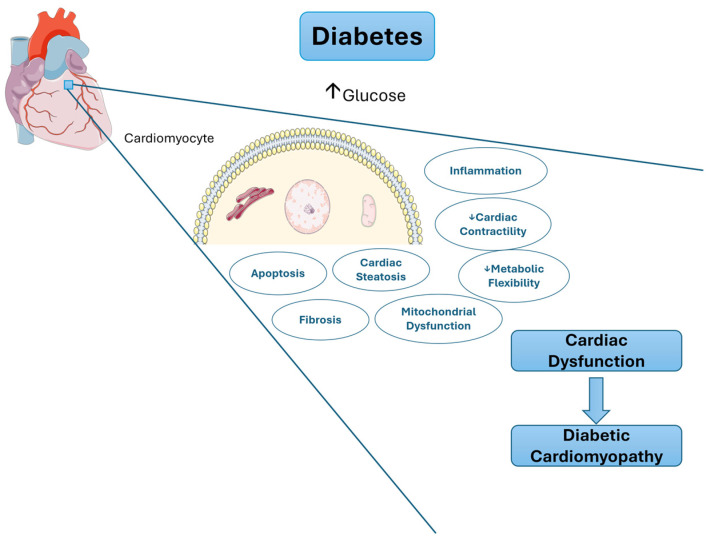
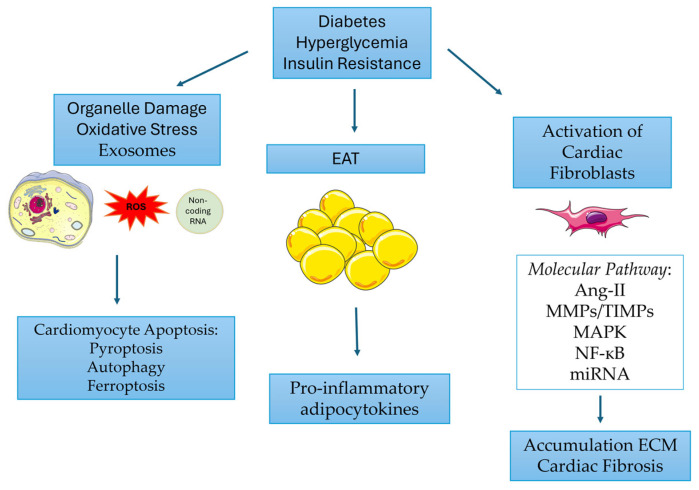
Diabetic cardiomyopathy (DCM) represents one of the typical complications associated with diabetes. It has been described as anomalies in heart function and structure, with consequent high morbidity and mortality. DCM development can be described by two stages; the first is characterized by left ventricular hypertrophy and diastolic dysfunction, and the second by heart failure (HF) with systolic dysfunction. The proposed mechanisms involve cardiac inflammation, advanced glycation end products (AGEs) and angiotensin II. Furthermore, different studies have focused their attention on cardiomyocyte death through the different mechanisms of programmed cell death, such as apoptosis, autophagy, necrosis, pyroptosis and ferroptosis. Exosome release, adipose epicardial tissue and aquaporins affect DCM development. This review will focus on the description of the mechanisms involved in DCM progression and development.
糖尿病心肌病(DCM)是糖尿病相关的典型并发症之一。它被描述为心脏功能和结构的异常,随之而来的是高发病率和死亡率。DCM 的发展可以分为两个阶段;第一阶段的特征是左心室肥厚和舒张功能障碍,第二阶段是心力衰竭(HF)伴收缩功能障碍。所涉及的机制包括心脏炎症、晚期糖基化终产物(AGEs)和血管紧张素 II。此外,不同的研究已经通过程序性细胞死亡的不同机制,如细胞凋亡、自噬、坏死、细胞焦亡和铁死亡,关注心肌细胞的死亡。外泌体的释放、脂肪心外膜组织和水通道蛋白影响 DCM 的发展。本综述将重点描述 DCM 进展和发展所涉及的机制。