Makino Yuki, Rajapakshe Kimal I, Chellakkan Selvanesan Benson, Okumura Takashi, Date Kenjiro, Dutta Prasanta, Abou-Elkacem Lotfi, Sagara Akiko, Min Jimin, Sans Marta, Yee Nathaniel, Siemann Megan J, Enriquez Jose, Smith Paytience, Bhattacharya Pratip, Kim Michael, Dede Merve, Hart Traver, Maitra Anirban, Thege Fredrik Ivar
Translational Molecular Pathology, UTMDACC, Houston, Texas, USA
Sheikh Ahmed Center for Pancreatic Cancer Research, UTMDACC, Houston, Texas, USA.
Gut. 2024 Dec 10;74(1):75-88. doi: 10.1136/gutjnl-2024-332412.
Oncogenic 'hotspot' mutations of and are two major driver alterations in intraductal papillary mucinous neoplasms (IPMNs), which are precursors to pancreatic ductal adenocarcinoma. We previously reported that pancreas-specific and co-expression in p48; Kras; Rosa26; Tg (TetO-Gnas) mice (' mice) caused development of cystic lesions recapitulating IPMNs.
We aim to unveil the consequences of mutant expression on phenotype, transcriptomic profile and genomic dependencies.
We performed multimodal transcriptional profiling (bulk RNA sequencing, single-cell RNA sequencing and spatial transcriptomics) in the ' autochthonous model and tumour-derived cell lines ( cells), where expression is inducible. A genome-wide CRISPR/9 screen was conducted to identify potential vulnerabilities in co-expressing cells.
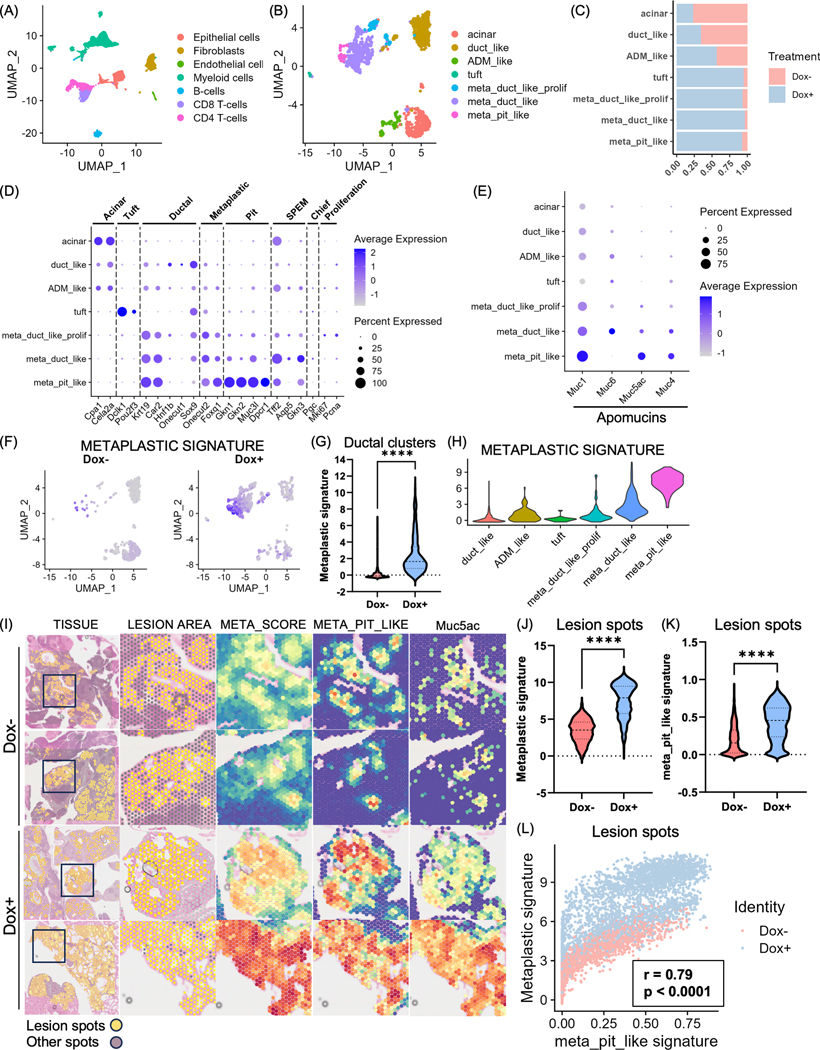
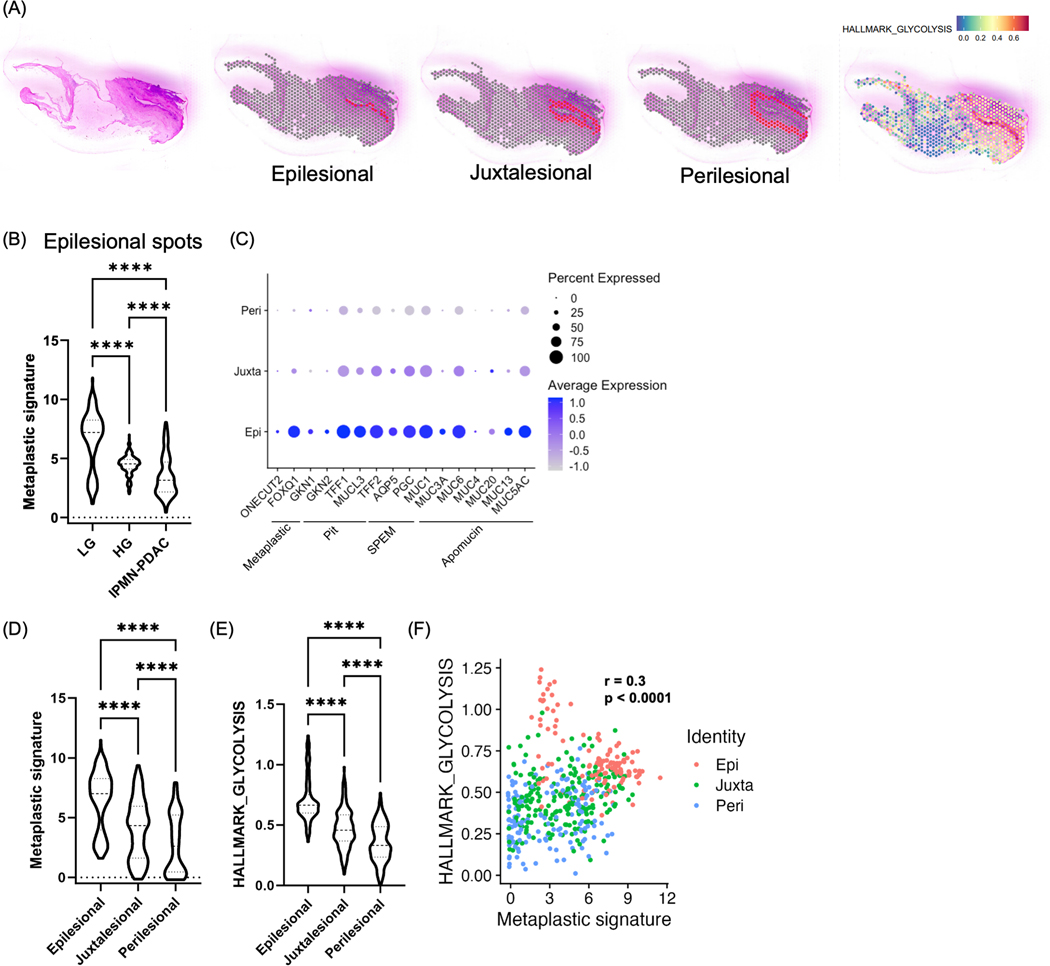
Induction of -and resulting Galpha signalling-leads to the emergence of a gene signature of gastric (pyloric type) metaplasia in pancreatic neoplastic epithelial cells. CRISPR screening identified the synthetic essentiality of glycolysis-related genes and in ; co-expressing cells. Real-time metabolic analyses in cells and autochthonous model confirmed enhanced glycolysis on induction. Induction of made expressing cells more dependent on glycolysis for their survival. Protein kinase A-dependent phosphorylation of the glycolytic intermediate enzyme 6-phosphofructo-2-kinase/fructose-2,6-biphosphatase 3 (PFKFB3) was a driver of increased glycolysis on induction.
Multiple orthogonal approaches demonstrate that and co-expression results in a gene signature of gastric pyloric metaplasia and glycolytic dependency during IPMN pathogenesis. The observed metabolic reprogramming may provide a potential target for therapeutics and interception of IPMNs.
KRAS和GNAS的致癌“热点”突变是导管内乳头状黏液性肿瘤(IPMN)的两个主要驱动改变,IPMN是胰腺导管腺癌的前体。我们之前报道过,在p48;Kras;Rosa26;Tg(TetO-Gnas)小鼠(“双表达”小鼠)中胰腺特异性的KRAS和GNAS共表达会导致出现模拟IPMN的囊性病变。
我们旨在揭示突变型GNAS表达对表型、转录组谱和基因组依赖性的影响。
我们在双表达自发型模型和肿瘤衍生细胞系(双表达细胞)中进行了多模态转录谱分析(批量RNA测序、单细胞RNA测序和空间转录组学),在这些模型和细胞系中GNAS表达是可诱导的。进行了全基因组CRISPR/Cas9筛选以确定共表达GNAS的细胞中的潜在脆弱性。
GNAS的诱导以及由此产生的Gα信号传导导致胰腺肿瘤上皮细胞中出现胃(幽门型)化生的基因特征。CRISPR筛选确定了糖酵解相关基因HK2和PFKFB3在KRAS;GNAS共表达细胞中的合成必需性。对双表达细胞和自发型双表达模型进行实时代谢分析证实了GNAS诱导后糖酵解增强。GNAS的诱导使表达GNAS的细胞在生存上更依赖糖酵解。糖酵解中间酶6-磷酸果糖-2-激酶/果糖-2,6-二磷酸酶3(PFKFB3)的蛋白激酶A依赖性磷酸化是GNAS诱导后糖酵解增加的驱动因素。
多种正交方法表明,KRAS和GNAS共表达导致IPMN发病过程中出现胃幽门化生的基因特征和糖酵解依赖性。观察到的代谢重编程可能为IPMN的治疗和干预提供潜在靶点。