Ajmera Transplant Centre, Toronto General Hospital, Toronto, Canada.
Division of Nephrology, The Hospital for Sick Children, Toronto, Canada.
Nat Commun. 2024 Sep 15;15(1):8086. doi: 10.1038/s41467-024-52140-9.
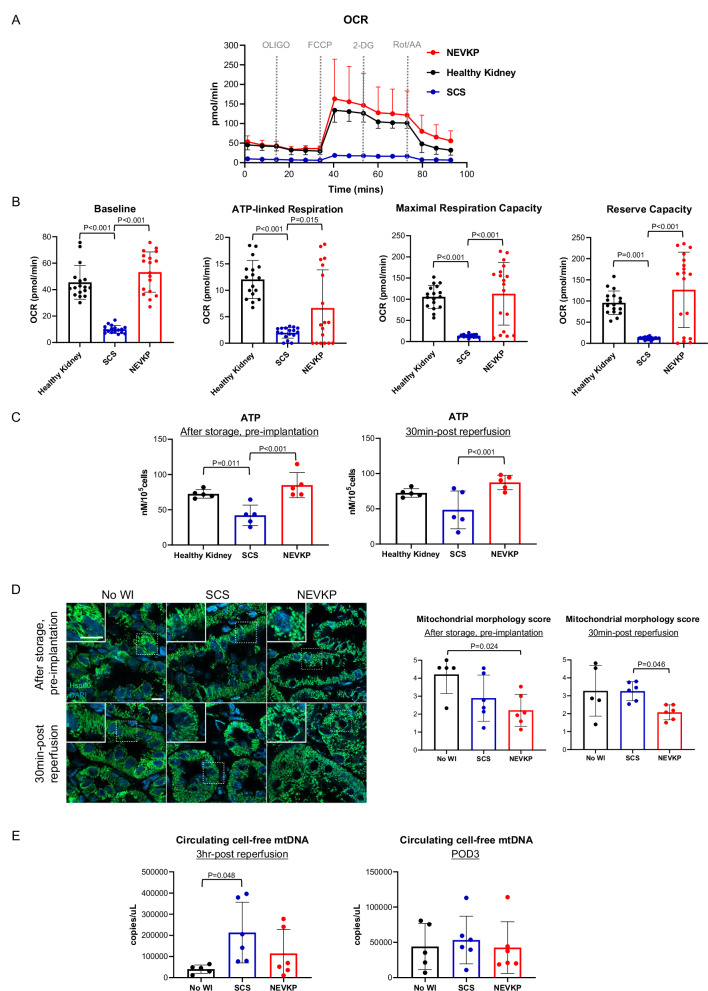
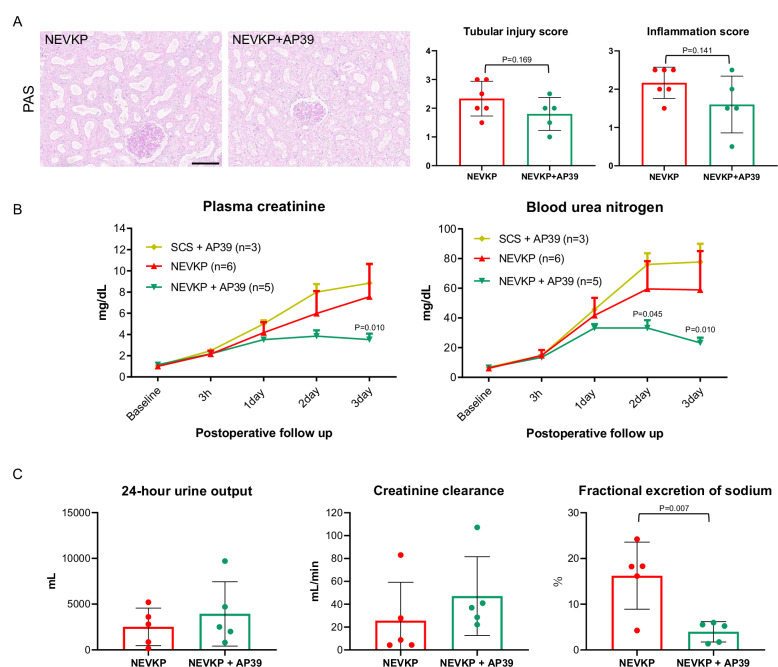
We previously reported that normothermic ex vivo kidney perfusion (NEVKP) is superior in terms of organ protection compared to static cold storage (SCS), which is still the standard method of organ preservation, but the mechanisms are incompletely understood. We used a large animal kidney autotransplant model to evaluate mitochondrial function during organ preservation and after kidney transplantation, utilizing live cells extracted from fresh kidney tissue. Male porcine kidneys stored under normothermic perfusion showed preserved mitochondrial function and higher ATP levels compared to kidneys stored at 4 °C (SCS). Mitochondrial respiration and ATP levels were further enhanced when AP39, a mitochondria-targeted hydrogen sulfide donor, was administered during warm perfusion. Correspondingly, the combination of NEVKP and AP39 was associated with decreased oxidative stress and inflammation, and with improved graft function after transplantation. In conclusion, our findings suggest that the organ-protective effects of normothermic perfusion are mediated by maintenance of mitochondrial function and enhanced by AP39 administration. Activation of mitochondrial function through the combination of AP39 and normothermic perfusion could represent a new therapeutic strategy for long-term renal preservation.
我们之前报道过,与仍然是器官保存标准方法的静态冷保存(SCS)相比,常温体外肾脏灌注(NEVKP)在器官保护方面具有优势,但机制尚不完全清楚。我们使用大型动物肾自体移植模型,利用从新鲜肾组织中提取的活细胞,评估器官保存期间和肾移植后的线粒体功能。与在 4°C(SCS)下保存的肾脏相比,在常温灌注下保存的猪肾脏显示出保留的线粒体功能和更高的 ATP 水平。当在温热灌注期间给予线粒体靶向氢硫化物供体 AP39 时,线粒体呼吸和 ATP 水平进一步增强。相应地,NEVKP 和 AP39 的联合应用与氧化应激和炎症减少以及移植后移植物功能改善相关。总之,我们的研究结果表明,常温灌注的器官保护作用是通过维持线粒体功能介导的,并通过 AP39 给药增强。通过 AP39 和常温灌注的联合应用激活线粒体功能可能代表一种长期肾脏保存的新治疗策略。