Department of Dermatology, University of Pittsburgh Medical Center, Pittsburgh, PA, USA.
Albany Medical Center, Albany, NY, USA.
Am J Clin Dermatol. 2024 Nov;25(6):891-908. doi: 10.1007/s40257-024-00889-6. Epub 2024 Sep 15.
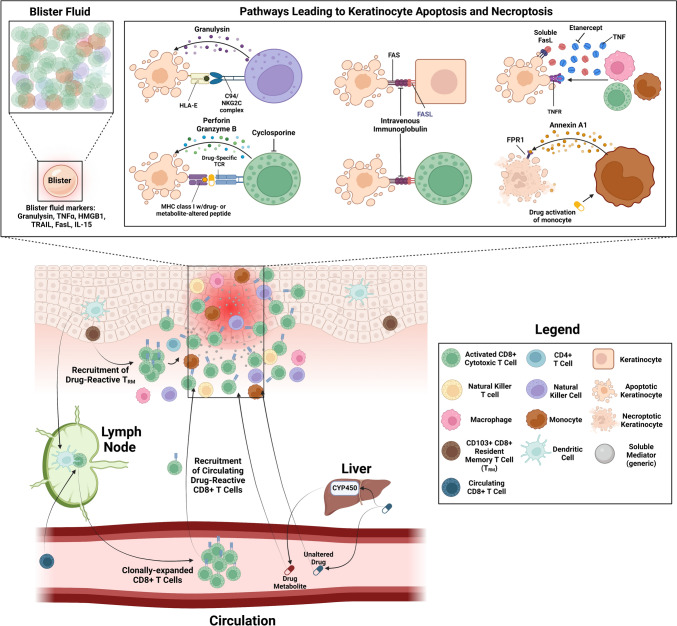
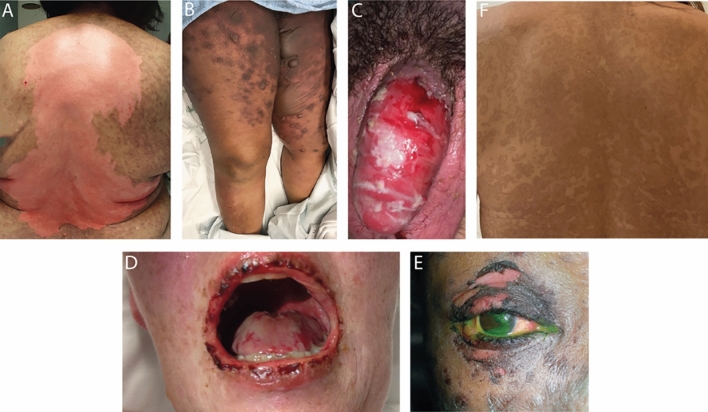
Stevens-Johnson syndrome (SJS) and toxic epidermal necrolysis (TEN) are the most severe cutaneous adverse reactions that are typically drug-induced in adults. Both SJS and TEN have high morbidity and mortality rates. SJS/TEN imposes clinical challenges for physicians managing patients suffering from this condition, both because it is rare and because it is a rapidly progressing systemic disease with severe cutaneous, mucosal, and systemic manifestations. Although many cases of SJS/TEN have been reported in the literature, there is no consensus regarding diagnostic criteria or treatment. Significant progress has been made in understanding its genetic predisposition and pathogenesis. This review is intended to provide physicians with a comprehensive but practical SJS/TEN roadmap to guide diagnosis and management. We review data on pathogenesis, reported precipitating factors, presentation, diagnosis, and management SJS/TEN focusing on what is new over the last 5 years.
史蒂文斯-约翰逊综合征(SJS)和中毒性表皮坏死松解症(TEN)是成人中最严重的药物诱导性皮肤不良反应。SJS 和 TEN 的发病率和死亡率都很高。SJS/TEN 给管理此类患者的医生带来了临床挑战,因为它不仅罕见,而且是一种快速进展的全身性疾病,具有严重的皮肤、黏膜和全身表现。尽管文献中已经报道了许多 SJS/TEN 病例,但在诊断标准或治疗方面尚无共识。人们在理解其遗传易感性和发病机制方面取得了重大进展。这篇综述旨在为医生提供一份全面但实用的 SJS/TEN 路线图,以指导诊断和管理。我们综述了过去 5 年来关于发病机制、已报道的诱发因素、临床表现、诊断和 SJS/TEN 管理方面的数据,重点介绍了最新的进展。