Kim Emily H, Teerdhala Sridatta V, Padilla Marshall S, Joseph Ryann A, Li Jacqueline J, Haley Rebecca M, Mitchell Michael J
Department of Bioengineering, School of Engineering and Applied Science, University of Pennsylvania, Philadelphia, Pennsylvania, USA.
Abramson Cancer Center, Perelman School of Medicine, University of Pennsylvania, Philadelphia, Pennsylvania, USA.
Eur J Immunol. 2024 Dec;54(12):e2451008. doi: 10.1002/eji.202451008. Epub 2024 Sep 16.
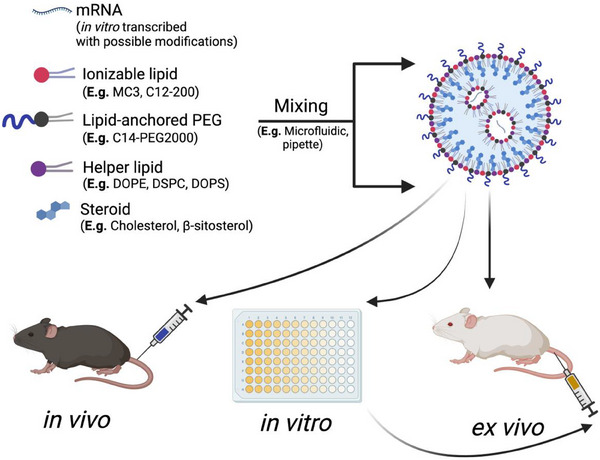
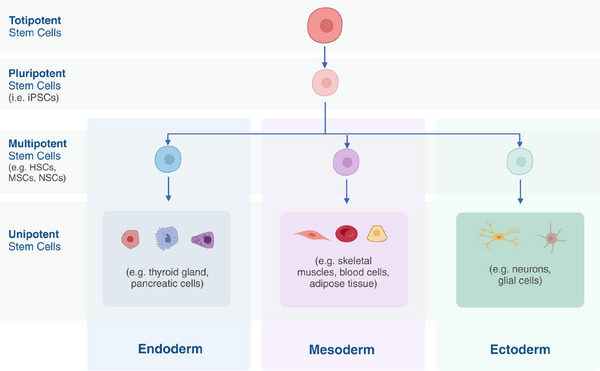
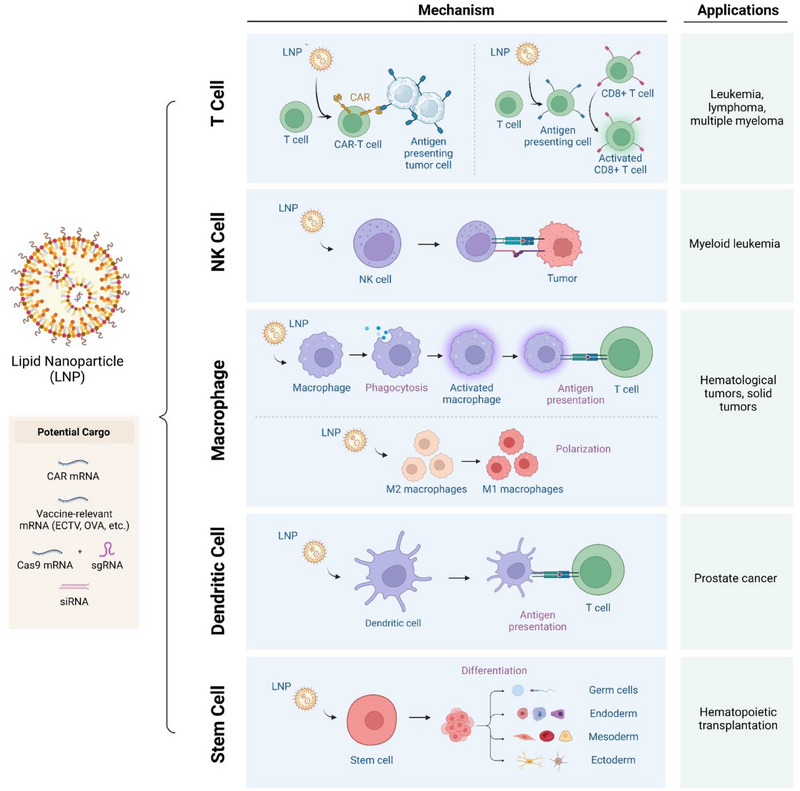
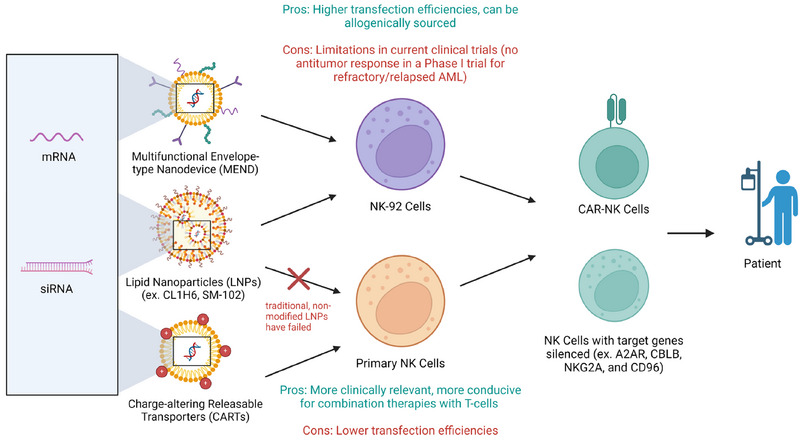
Lipid nanoparticles (LNPs) have emerged as the preeminent nonviral drug delivery vehicles for nucleic acid therapeutics, as exemplified by their usage in the mRNA COVID-19 vaccines. As a safe and highly modular delivery platform, LNPs are attractive for a wide range of applications. In addition to vaccines, LNPs are being utilized as platforms for other immunoengineering efforts, especially as cancer immunotherapies by modulating immune cells and their functionality via nucleic acid delivery. In this review, we focus on the methods and applications of LNP-based immunotherapy in five cell types: T cells, NK cells, macrophages, stem cells, and dendritic cells. Each of these cell types has wide-reaching applications in immunotherapy but comes with unique challenges and delivery barriers. By combining knowledge of immunology and nanotechnology, LNPs can be developed for improved immune cell targeting and transfection, ultimately working toward novel clinical therapeutics.
脂质纳米颗粒(LNPs)已成为核酸治疗领域卓越的非病毒药物递送载体,如在mRNA新冠疫苗中的应用所示。作为一个安全且高度模块化的递送平台,LNPs在广泛的应用中颇具吸引力。除了疫苗,LNPs还被用作其他免疫工程研究的平台,特别是通过核酸递送调节免疫细胞及其功能,从而作为癌症免疫疗法。在本综述中,我们重点关注基于LNP的免疫疗法在五种细胞类型中的方法和应用:T细胞、自然杀伤细胞(NK细胞)、巨噬细胞、干细胞和树突状细胞。这些细胞类型中的每一种在免疫疗法中都有广泛的应用,但也伴随着独特的挑战和递送障碍。通过结合免疫学和纳米技术知识,可以开发出LNPs,以改善免疫细胞靶向和转染,最终朝着新型临床治疗方法迈进。