Mitchell A Lee, Chapman Kyle, Farris Kerry, Naderi Pooya, Hansen Ashley
Oregon Institute of Technology AIRE Center, Klamath Falls, OR, USA.
Oregon Institute of Technology, Humanities and Social Sciences Department, AIRE Center, Klamath Falls, OR, USA.
Public Health Pract (Oxf). 2024 Aug 23;8:100540. doi: 10.1016/j.puhip.2024.100540. eCollection 2024 Dec.
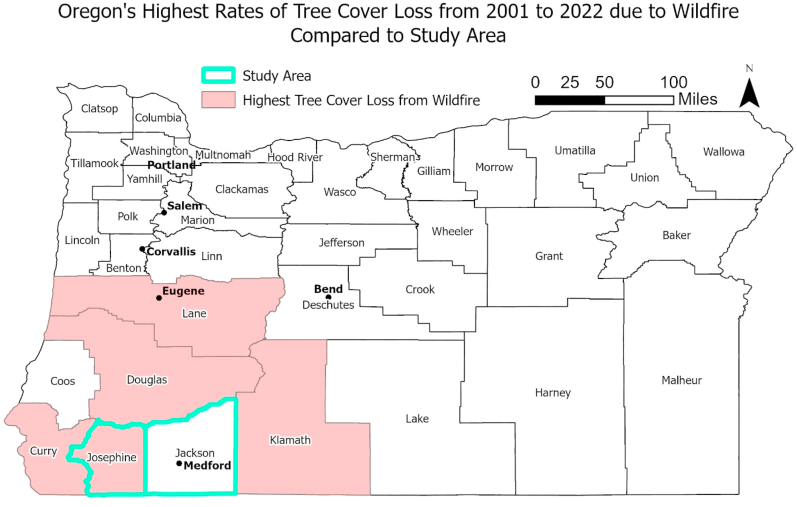
With the increasing prevalence of wildfire smoke in the Pacific Northwest, it is important to quantify health impacts to plan for adequate health services. The Rogue Valley region has historically faced some of the greatest wildfire threats in the state. Health impacts from smoke have been estimated in several recent studies that include Oregon's Rogue Valley, but the results between studies are conflicting.
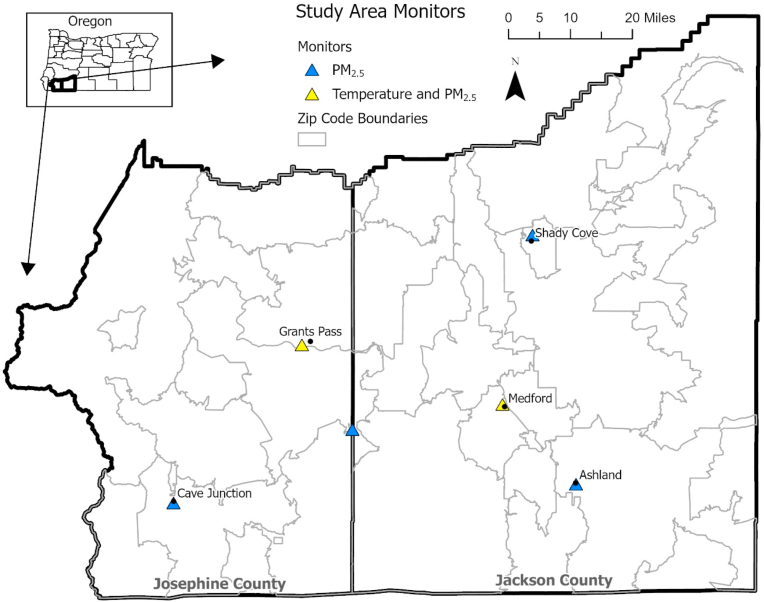
The objective is to critically examine impacts of wildfire smoke on health in the Rogue Valley area and translate the results to support hospital staffing decisions.
The study adopts a case-crossover approach.
Apply a conditional Poisson regression to analyze time stratified counts while controlling for mean temperature.
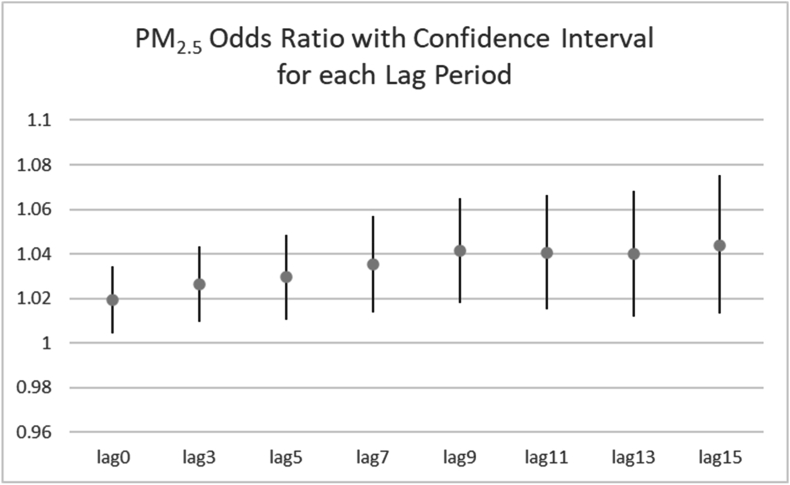
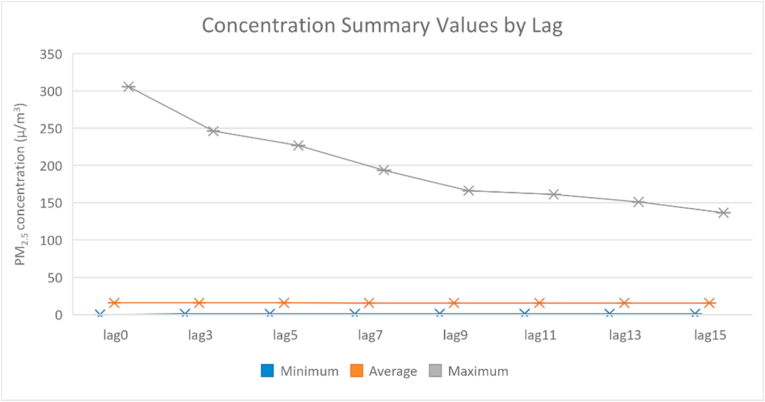
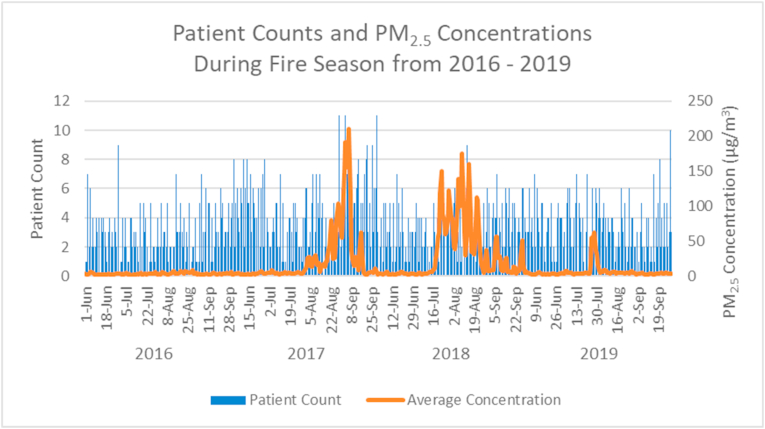
Every 10 μ/m increase in PM is associated with a 2% increase in same-day hospital or emergency room admission rates for respiratory conditions during fire season after adjusting for temperature and time (OR = 1.020; 95% CI: 1.004-1.034); a 10 μ/m increase in PM lasting nine days is associated with a 4% increase in admission rates (OR = 1.041; 95% CI: 1.018-1.065). In other words, for each 10 μ/m single day increase in pollution from smoke, an additional 0.26 respiratory patients would be expected in the area hospitals. With a single day increase from 10 μ/m to 150 μ/m, hospitals could expect an additional four patients.
There are small but significant health impacts in the Rogue Valley. These impacts are smaller than some statewide estimates. We need further research to understand these differences.
随着太平洋西北地区野火烟雾的日益普遍,量化其对健康的影响对于规划充足的医疗服务至关重要。罗格河谷地区历来面临该州一些最严重的野火威胁。最近的几项研究对包括俄勒冈州罗格河谷在内的烟雾对健康的影响进行了估计,但研究结果相互矛盾。
批判性地研究野火烟雾对罗格河谷地区健康的影响,并转化研究结果以支持医院人员配置决策。
本研究采用病例交叉法。
应用条件泊松回归分析时间分层计数,同时控制平均温度。
在调整温度和时间后,火灾季节期间,颗粒物(PM)每增加10微克/立方米,当日呼吸道疾病的医院或急诊室入院率就会增加2%(比值比[OR]=1.020;95%置信区间[CI]:1.004-1.034);持续九天的PM每增加10微克/立方米,入院率会增加4%(OR=1.041;95%CI:1.018-1.065)。换句话说,烟雾污染单日每增加10微克/立方米,该地区医院预计会额外增加0.26名呼吸道疾病患者。污染从10微克/立方米单日增加到150微克/立方米时,医院预计会额外增加四名患者。
罗格河谷地区存在虽小但显著的健康影响。这些影响小于该州的一些估计。我们需要进一步研究以了解这些差异。