Xu Qiangqiang, Liu Cong, Jia Shuqi, Wang Peng, Liu Qing, Ding Feng, Ren Yuxi, Ma Xiaochen, Zhu Jianghua
Department of Physical Education, Donghua University, Shanghai, China.
School of Physical Education, Shanghai University of Sport, Shanghai, China.
Gland Surg. 2024 Aug 31;13(8):1494-1510. doi: 10.21037/gs-24-255. Epub 2024 Aug 22.
The shoulder pain and reduced range of motion caused by breast cancer seriously affect the quality of life of women. Such persistent impairments can escalate into chronic pain, diminished muscle strength, lymphedema, and compromised cardiorespiratory health potentially culminating in permanent disability. This systematic review aims to evaluate how physical exercise impacts shoulder mobility and upper limb function in breast cancer patients post-surgery, examining various aspects of exercise such as type, intensity, duration, frequency, and intervention timing to determine the influence on outcomes.
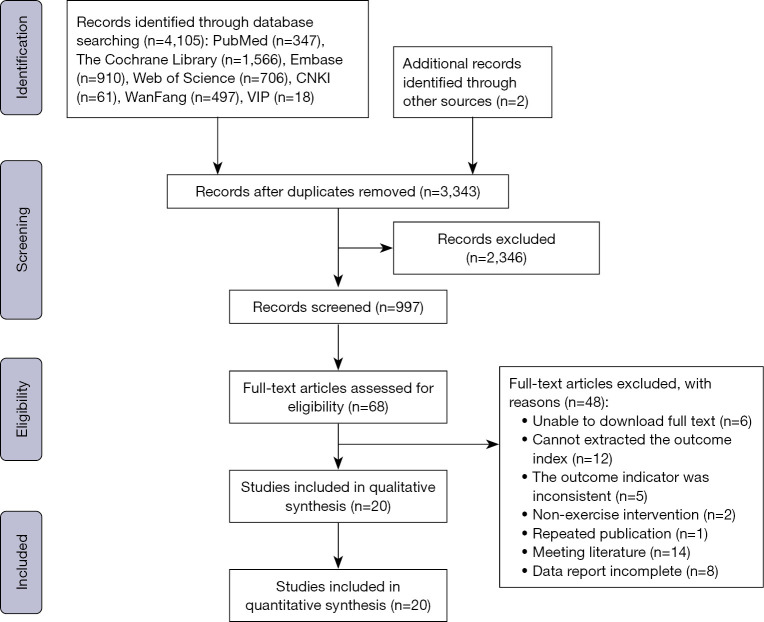
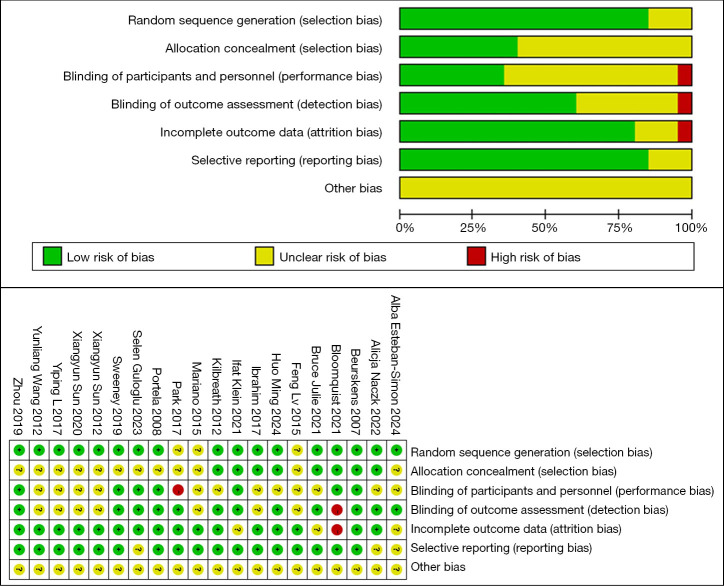
A comprehensive search was conducted across seven databases up to April 16, 2024. Two reviewers independently assessed randomized controlled trials (RCTs) focusing on the effects of physical exercise on postoperative outcomes in breast cancer patients. Quality was assessed using the Cochrane risk of bias tool, with meta-analyses and publication bias tests performed via RevMan5.4, and evidence quality evaluated using GRADEPro. Effect sizes were calculated using standardized mean differences (SMDs) with 95% confidence intervals (CIs).
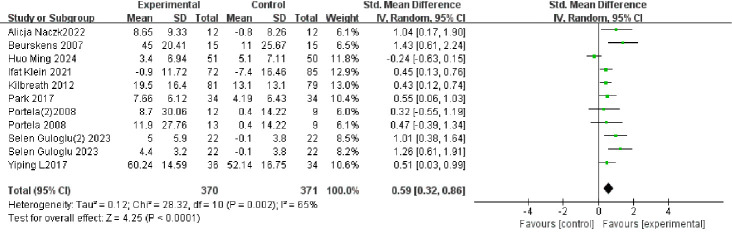
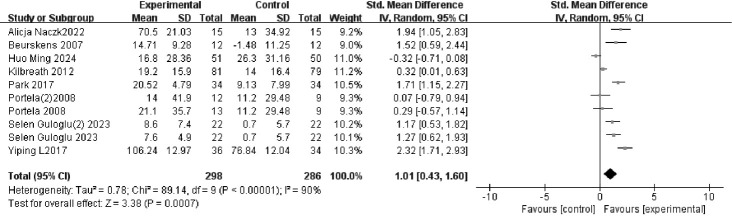
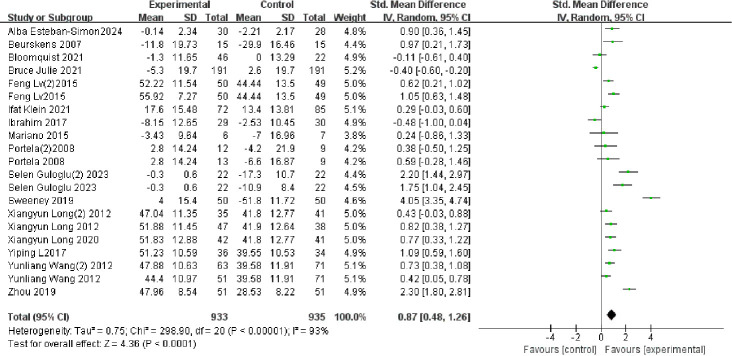
Twenty studies (25 RCTs involving 2,171 patients) were included for both the systematic review and the meta-analysis. Meta-analysis confirmed that physical exercise significantly enhanced shoulder flexion (SMD =0.59; 95% CI: 0.32, 0.86; P<0.001) and abduction (SMD =1.01; 95% CI: 0.43, 1.60; P<0.001) in postoperative patients, and improved upper limb function (SMD =0.87; 95% CI: 0.48, 1.26; P<0.001). Subgroup analyses indicated that comprehensive exercise, particularly when performed ≤3 times a week or over 8-12 weeks, was most effective for improving shoulder flexion, while shorter durations (<8 weeks) and similar frequencies were optimal for abduction. Resistance exercises, especially when started early (<2 weeks post-surgery), showed significant benefits for upper limb function.
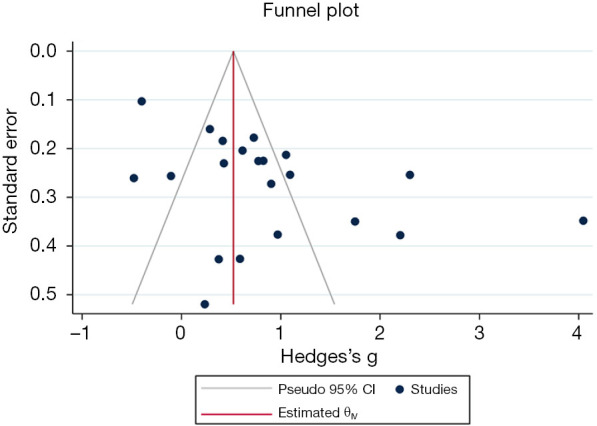
The included studies were of moderate to high quality, though some lacked detailed reporting on blinding or allocation concealment. Analysis suggests that the timing of intervention initiation, along with exercise type and frequency, may contribute to observed variations in outcomes. Evidence quality assessments did not reveal significant issues with indirectness or imprecision, and no significant publication bias was detected. Given the low heterogeneity and absence of significant downgrade factors, intermediate evidence quality was assigned for upper limb function and shoulder abduction, with high quality for shoulder flexion. Physical exercise is notably effective in enhancing both upper limb function and shoulder mobility in breast cancer patients, with the timing and frequency of exercise interventions influencing these improvements. This provides valuable evidence for clinical rehabilitation strategies.
乳腺癌导致的肩部疼痛和活动范围受限严重影响女性的生活质量。这种持续的损伤可能会升级为慢性疼痛、肌肉力量减弱、淋巴水肿以及心肺健康受损,最终可能导致永久性残疾。本系统评价旨在评估体育锻炼对乳腺癌患者术后肩部活动度和上肢功能的影响,研究锻炼的各个方面,如类型、强度、持续时间、频率和干预时机,以确定其对结果的影响。
截至2024年4月16日,在七个数据库中进行了全面检索。两名 reviewers 独立评估了聚焦于体育锻炼对乳腺癌患者术后结果影响的随机对照试验(RCTs)。使用Cochrane偏倚风险工具评估质量,通过RevMan5.4进行荟萃分析和发表偏倚测试,并使用GRADEPro评估证据质量。使用标准化均数差(SMDs)及95%置信区间(CIs)计算效应量。
纳入了20项研究(25项RCTs,涉及2171名患者)进行系统评价和荟萃分析。荟萃分析证实,体育锻炼显著提高了术后患者的肩部前屈(SMD =0.59;95% CI:0.32,0.86;P<0.001)和外展(SMD =1.01;95% CI:0.43,1.60;P<0.001),并改善了上肢功能(SMD =0.87;95% CI:0.48,1.26;P<0.001)。亚组分析表明,综合锻炼,尤其是每周进行≤3次或持续8 - 12周以上时,对改善肩部前屈最有效,而较短的持续时间(<8周)和相似的频率对外展最为理想。抗阻锻炼,尤其是在早期(术后<2周)开始时,对上肢功能有显著益处。
纳入的研究质量为中等至高,尽管有些研究缺乏关于盲法或分配隐藏的详细报告。分析表明,干预开始的时机以及锻炼类型和频率可能导致观察到的结果差异。证据质量评估未发现间接性或不精确性方面的重大问题,也未检测到显著的发表偏倚。鉴于异质性较低且没有显著的降级因素,上肢功能和肩部外展的证据质量为中等,肩部前屈的证据质量为高。体育锻炼在提高乳腺癌患者的上肢功能和肩部活动度方面显著有效,锻炼干预的时机和频率会影响这些改善。这为临床康复策略提供了有价值的证据。