Naz Maira, Shafique Hira, Majeed Muhammad Irfan, Nawaz Haq, Rashid Nosheen, Alshammari Abdulrahman, Albekairi Norah A, Amber Arooj, Zohaib Muhammad, Shahid Urwa, Zafar Fareeha, Ali Muhammad, Shahid Habiba
Department of Chemistry, University of Agriculture Faisalabad Faisalabad 38000 Pakistan
School of Chemistry and Chemical Engineering, Huazhong University of Science and Technology Wuhan P. R. China.
RSC Adv. 2024 Sep 13;14(40):29151-29159. doi: 10.1039/d4ra03816a. eCollection 2024 Sep 12.
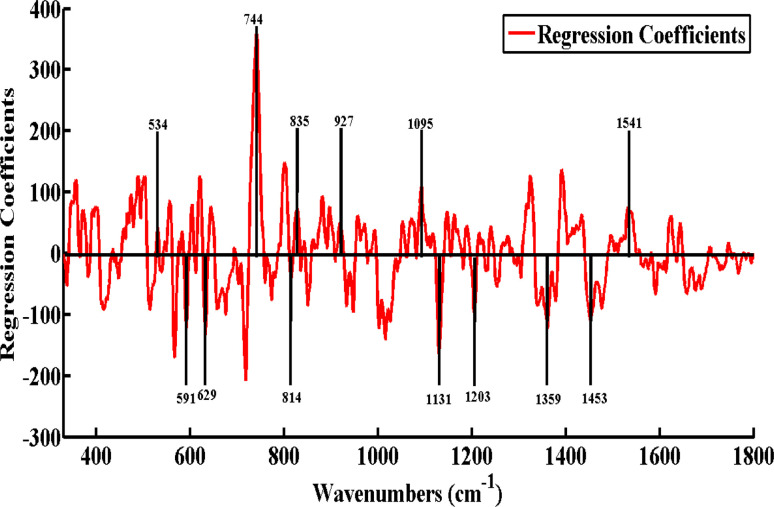
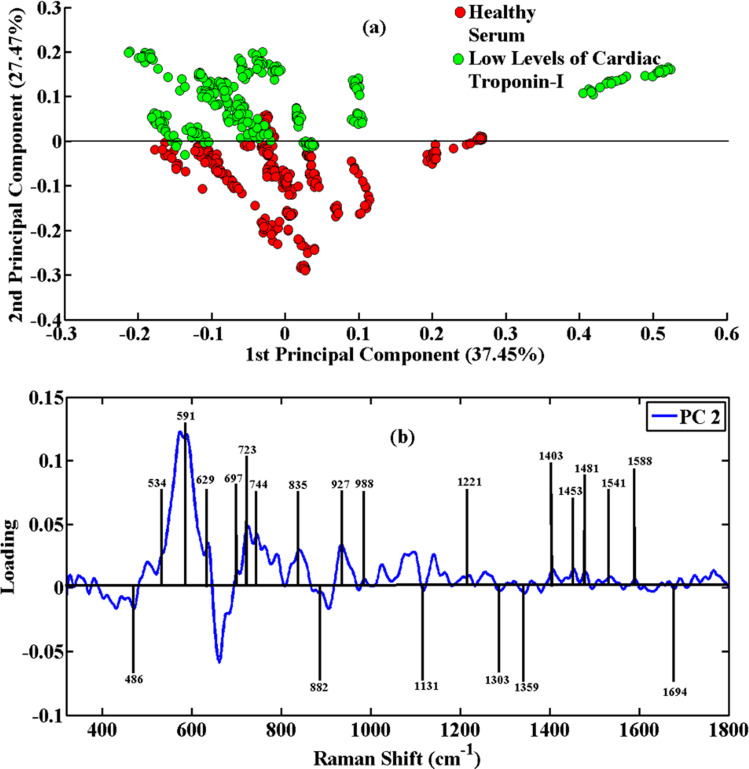
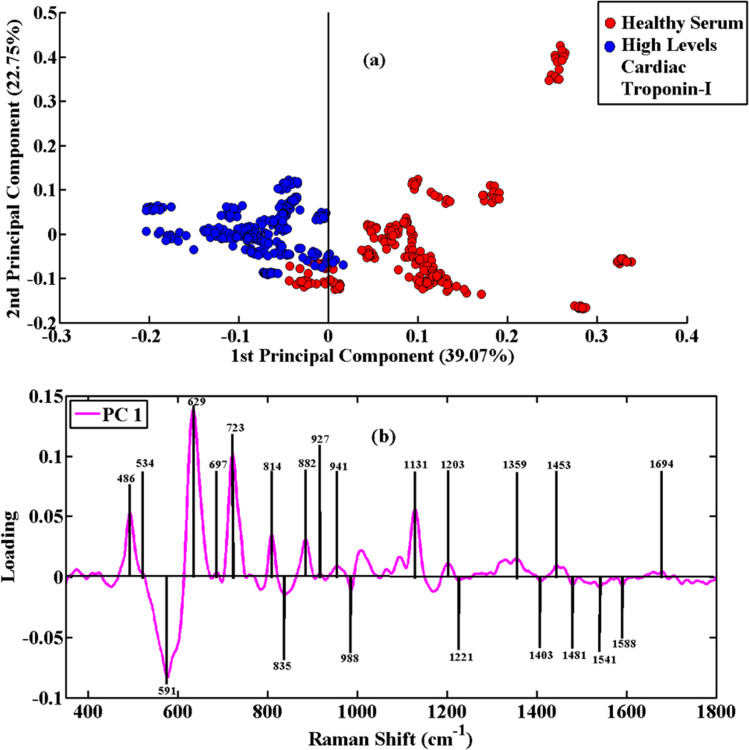
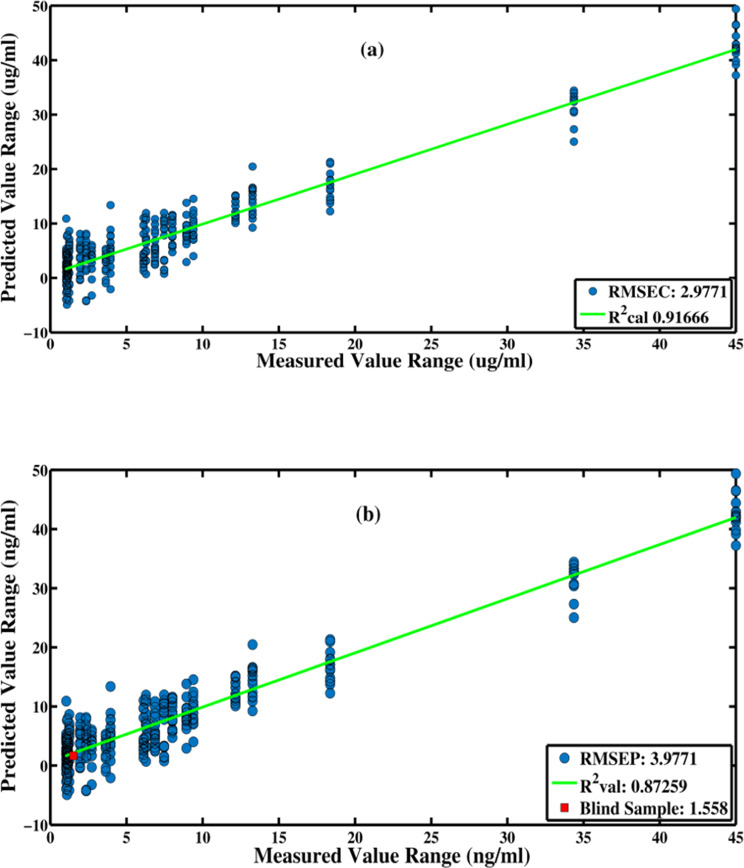
Acute myocardial infarction (AMI) is a serious medical condition generally known as heart attack, which is caused by the decreased or completely blocked blood flow to a part of the heart muscle. It is a significant cause of both mortality and morbidity throughout the world. Cardiac troponin-I (cTnI) is an important biomarker at different stages of AMI and is one of the most specific and widely used cardiac skeletal muscle proteins. Delays in medical treatment and inaccurate diagnosis might be the main cause of death of AMI patients. To overcome the death rate of AMI patients, early diagnosis of this disease is crucial. In the current study, surface-enhanced Raman spectroscopy (SERS) is employed for the characterization and diagnosis of this disease using blood serum samples from 49 clinically confirmed acute myocardial infarction (AMI) patients and 17 healthy persons. Silver nanoparticles (AgNPs) are used as the SERS substrate for the recognition of characteristic SERS spectral features, differentiating between healthy and AMI-positive samples. The acute myocardial infarction-positive blood serum samples reveal remarkable differences in spectral intensities at 534, 697, 744, 835, 927, 941, 988, 1221, 1303, 1403, 1481, 1541, 1588 and 1694 cm. For the differentiation and quantitative analysis of the SERS spectra, multivariate chemometric tools (including principal component analysis (PCA) and partial least squares regression (PLSR)) are employed. A PLSR model established on the basis of differentiating the SERS spectral features is found to be helpful in the prediction of the levels of cardiac troponin-I (cTnI) in the blood serum samples with the root mean square error of calibration (RMSEC) value of 2.98 ng mL and root mean square errors of prediction (RMSEP) value of 3.98 ng mL for S7.
急性心肌梗死(AMI)是一种严重的病症,通常被称为心脏病发作,它是由流向部分心肌的血流减少或完全阻塞引起的。它是全球死亡率和发病率的一个重要原因。心肌肌钙蛋白I(cTnI)是AMI不同阶段的一种重要生物标志物,是最具特异性且应用最广泛的心肌骨骼肌蛋白之一。医疗延误和诊断不准确可能是AMI患者死亡的主要原因。为了降低AMI患者的死亡率,对这种疾病进行早期诊断至关重要。在当前的研究中,采用表面增强拉曼光谱(SERS),利用49例临床确诊的急性心肌梗死(AMI)患者和17名健康人的血清样本对该疾病进行表征和诊断。银纳米颗粒(AgNPs)用作SERS底物,以识别特征性SERS光谱特征,区分健康样本和AMI阳性样本。急性心肌梗死阳性血清样本在534、697、744、835、927、941、988、1221、1303、1403、1481、1541、1588和1694 cm处的光谱强度显示出显著差异。为了对SERS光谱进行区分和定量分析,采用了多元化学计量工具(包括主成分分析(PCA)和偏最小二乘回归(PLSR))。基于区分SERS光谱特征建立的PLSR模型有助于预测血清样本中心肌肌钙蛋白I(cTnI)的水平,对于S7,校准均方根误差(RMSEC)值为2.98 ng/mL,预测均方根误差(RMSEP)值为3.98 ng/mL。