Zhang Tao, Sheng Shihao, Cai Weihuang, Yang Huijian, Li Jiameng, Niu Luyu, Chen Wanzhuo, Zhang Xiuyuan, Zhou Qirong, Gao Chuang, Li Zuhao, Zhang Yuanwei, Wang Guangchao, Shen Hao, Zhang Hao, Hu Yan, Yin Zhifeng, Chen Xiao, Liu Yuanyuan, Cui Jin, Su Jiacan
Department of Orthopedics, Xinhua Hospital, Shanghai Jiao Tong University School of Medicine, Shanghai, 200433, China.
Department of Orthopedics, First Affiliated Hospital, Naval Medical University, Shanghai, 200433, China.
Bioact Mater. 2024 Sep 4;42:257-269. doi: 10.1016/j.bioactmat.2024.08.036. eCollection 2024 Dec.
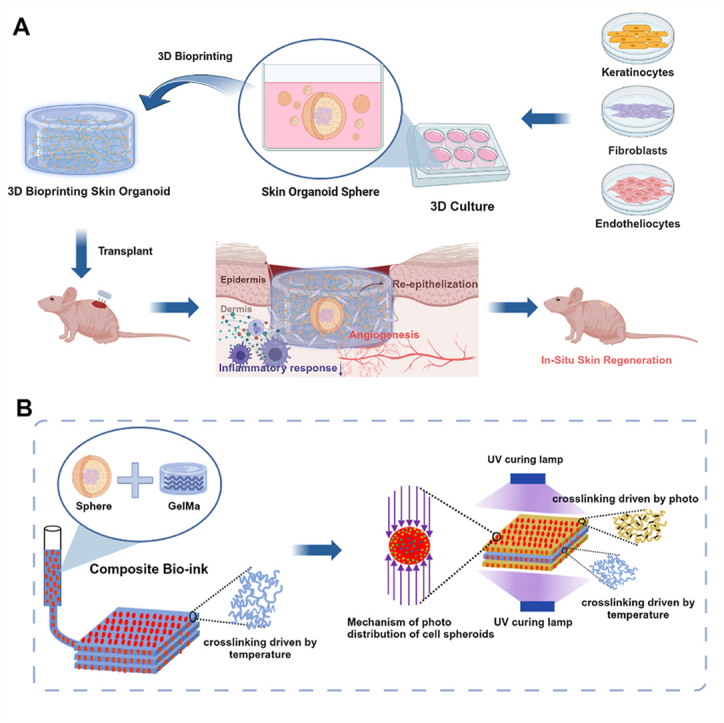
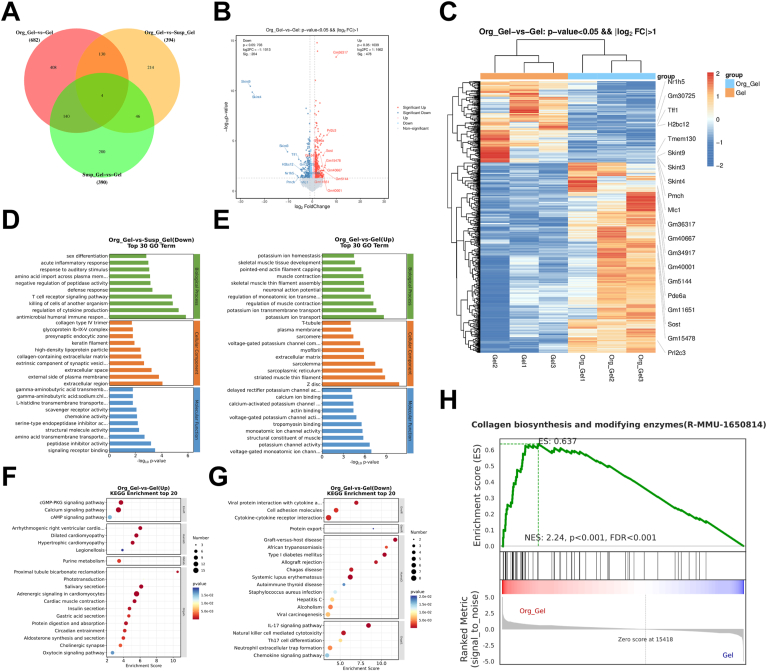
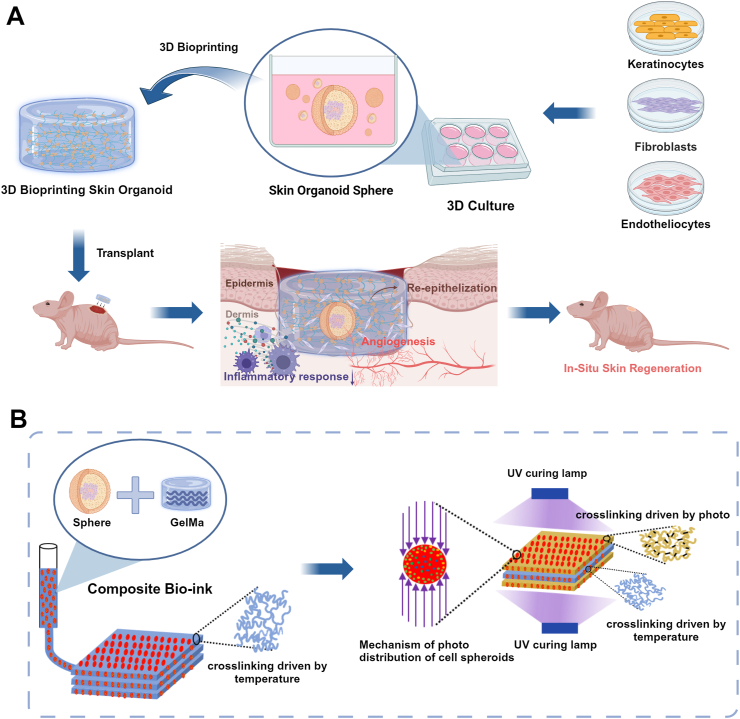
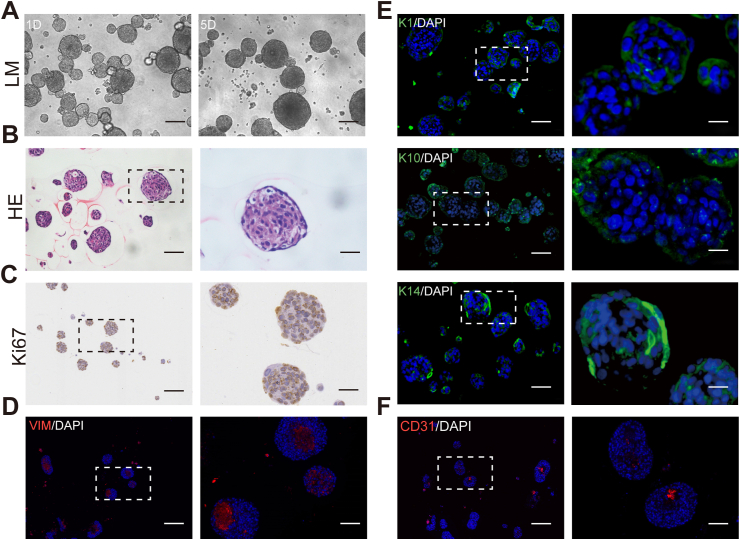
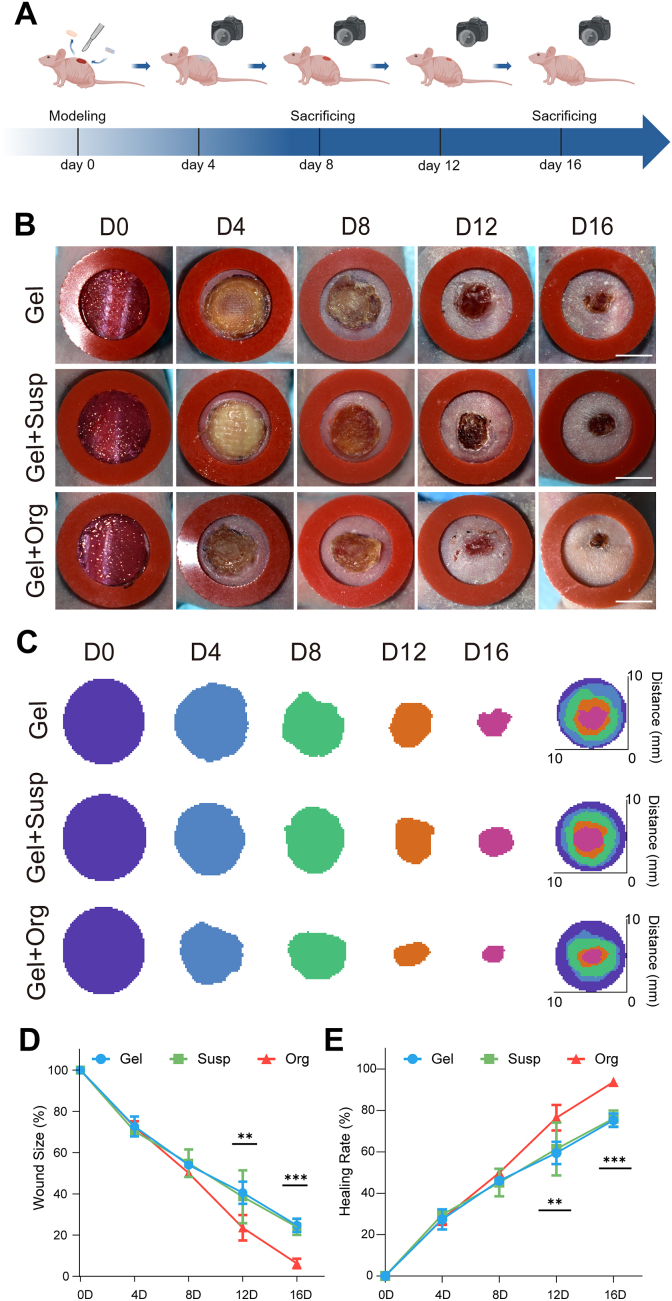
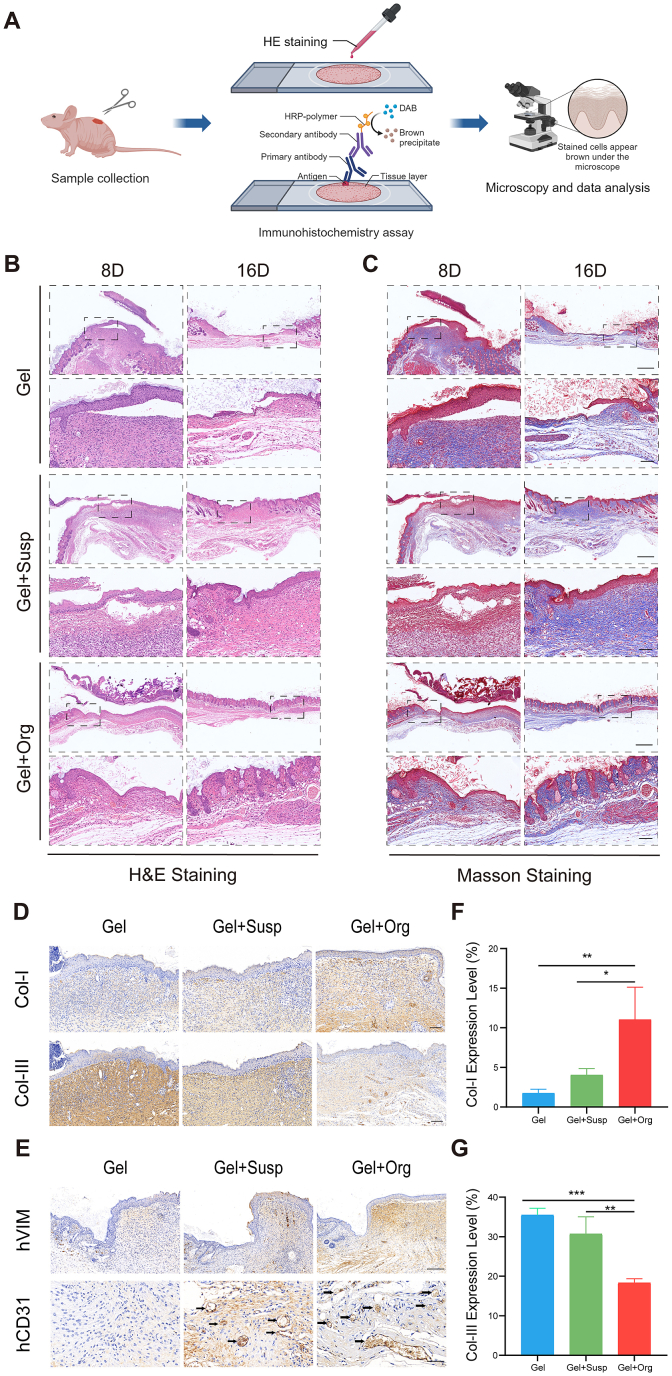
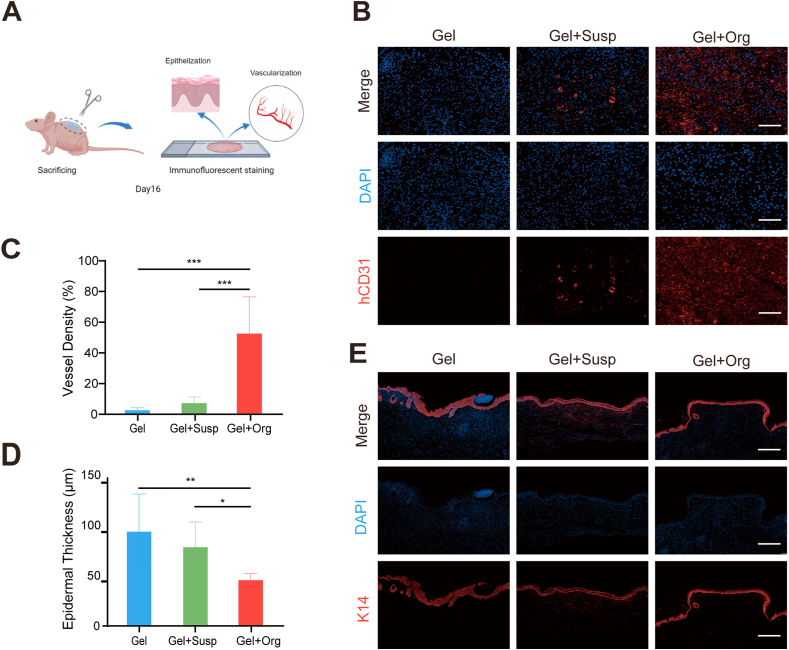
The healing of large skin defects remains a significant challenge in clinical settings. The lack of epidermal sources, such as autologous skin grafting, limits full-thickness skin defect repair and leads to excessive scar formation. Skin organoids have the potential to generate a complete skin layer, supporting in-situ skin regeneration in the defect area. In this study, skin organoid spheres, created with human keratinocytes, fibroblasts, and endothelial cells, showed a specific structure with a stromal core surrounded by surface keratinocytes. We selected an appropriate bioink and innovatively combined an extrusion-based bioprinting technique with dual-photo source cross-linking technology to ensure the overall mechanical properties of the 3D bioprinted skin organoid. Moreover, the 3D bioprinted skin organoid was customized to match the size and shape of the wound site, facilitating convenient implantation. When applied to full-thickness skin defects in immunodeficient mice, the 3D bioprinted human-derived skin organoid significantly accelerated wound healing through in-situ regeneration, epithelialization, vascularization, and inhibition of excessive inflammation. The combination of skin organoid and 3D bioprinting technology can overcome the limitations of current skin substitutes, offering a novel treatment strategy to address large-area skin defects.
在临床环境中,大面积皮肤缺损的愈合仍然是一项重大挑战。缺乏表皮来源,如自体皮肤移植,限制了全层皮肤缺损的修复,并导致过度瘢痕形成。皮肤类器官有潜力生成完整的皮肤层,支持缺损区域的原位皮肤再生。在本研究中,用人角质形成细胞、成纤维细胞和内皮细胞构建的皮肤类器官球体呈现出一种特定结构,其基质核心被表面角质形成细胞包围。我们选择了合适的生物墨水,并创新性地将基于挤出的生物打印技术与双光源交联技术相结合,以确保3D生物打印皮肤类器官的整体力学性能。此外,定制3D生物打印皮肤类器官以匹配伤口部位的大小和形状,便于植入。当应用于免疫缺陷小鼠的全层皮肤缺损时,3D生物打印的人源皮肤类器官通过原位再生、上皮化、血管化和抑制过度炎症显著加速了伤口愈合。皮肤类器官与3D生物打印技术的结合可以克服当前皮肤替代物的局限性,为解决大面积皮肤缺损提供一种新的治疗策略。